
First Man
Damien Chazelle · 2018
The story of Neil Armstrong's path from test pilot to the Apollo 11 lunar landing in 1969 — told as an intimate portrait of a man processing the death of his daughter through the discipline of the impossible mission. Damien Chazelle's film is about grief as a form of propulsion.
Techniques Used
4 techniques identified in this film
Handheld Cinema Vérité
CinematographyA documentary-influenced shooting style using handheld cameras to create spontaneous, unpolished images that feel observed rather than constructed.
How this film uses it
Linus Sandgren shoots the test flights and early space sequences with a handheld grammar that replicates the chaos and danger of experimental aviation — the camera vibrating, losing its subject, recovering — making the technological achievement feel physically precarious.
Single POV Restriction
NarrativeA storytelling constraint that limits the audience's information to what a single character perceives, creating intimacy and shared vulnerability.
How this film uses it
Chazelle restricts the film almost entirely to Armstrong's perspective — the moon landing shown from inside the capsule, from behind the visor, from Neil's private experience rather than the global broadcast — the film giving the most public event in human history an intensely private grammar.
IMAX Large-Format Space
CinematographyThe use of IMAX cameras and format to produce images of overwhelming scale that place human figures within environments of cosmic vastness.
How this film uses it
Chazelle reserves the IMAX format specifically for the lunar surface sequences — the moon's vast grey expanse photographed in a format large enough to make its scale physically felt, the contrast with the cramped capsule sequences encoding the enormity of what Armstrong has reached.
Strategic Silence
SoundThe purposeful removal of music or ambient sound to make a moment feel raw and unmediated.
How this film uses it
Justin Hurwitz's score is present throughout the film but drops entirely for the lunar surface sequences — the vacuum of space rendered as true silence, the most dramatic moments of the mission stripped of the emotional scaffolding of music.
You Might Also Like
Films that share at least one technique with First Man
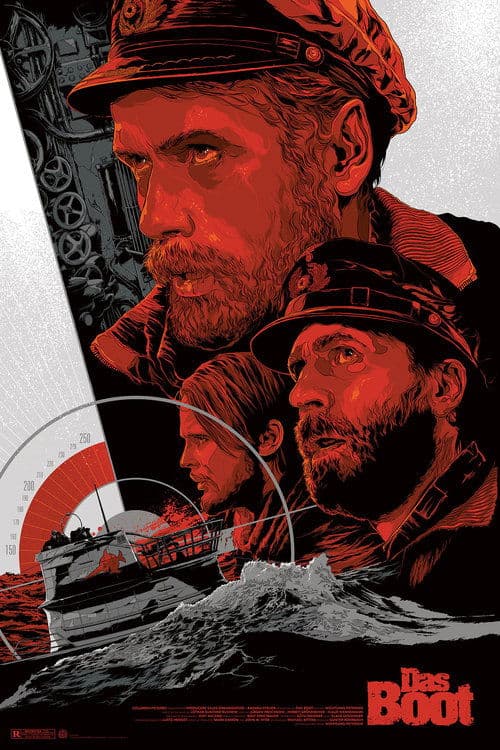
A German U-boat crew patrols the North Atlantic during World War II, enduring mechanical failure, allied depth charges, and the slow psychological erosion of men trapped in a steel tube under the sea. The definitive submarine film and one of cinema's most sustained exercises in claustrophobic dread.
Das Boot
Wolfgang Petersen · 1981

After his brother's death, a withdrawn handyman named Lee Chandler returns to his hometown to become guardian to his teenage nephew, where he must confront the catastrophic grief that exiled him from the community. The film is a precise and devastating study of guilt that cannot be dissolved.
Manchester by the Sea
Kenneth Lonergan · 2016

A Sonderkommando prisoner at Auschwitz-Birkenau in 1944 becomes convinced a boy killed in the gas chamber is his son and fixates on giving the child a proper Jewish burial, even as an uprising is being planned around him. László Nemes' debut is a film about one man's need to preserve a single human act inside an industrial atrocity.
Son of Saul
László Nemes · 2015