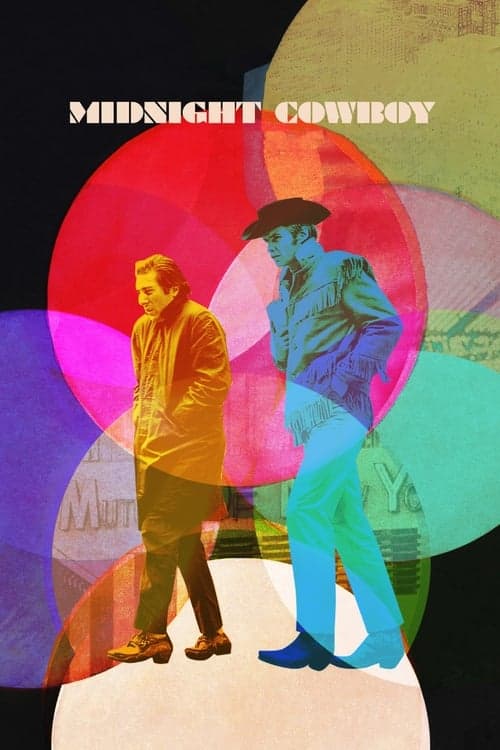
Midnight Cowboy
John Schlesinger · 1969
A naive Texas dishwasher arrives in New York City expecting to make easy money as a male escort and instead falls into friendship with a crippled street hustler named Ratso Rizzo — the two of them surviving on the city's margins as their plans deteriorate and their bond deepens. The only X-rated film to win Best Picture.
Techniques Used
4 techniques identified in this film
Odd Couple Class Structure
NarrativeA narrative pairing of two characters whose temperamental and circumstantial oppositions generate both comedy and unexpected intimacy.
How this film uses it
Joe Buck's naïve cowboy romanticism and Ratso's cynical urban survivalism are mirror failures — one too innocent for the city, one too damaged to leave it — their mutual dependency born from shared inadequacy rather than compatibility.
Handheld Cinema Vérité
CinematographyA documentary-influenced shooting style using handheld cameras to create images that feel observed rather than constructed.
How this film uses it
Adam Holender's handheld photography puts the camera at street level in actual New York locations — the grime, the crowd indifference, the neon — making the film feel like documentary evidence of the city's capacity for abandonment.
Fractured Memory Editing
EditingThe intrusion of past events into the present timeline through abrupt cuts that replicate how trauma surfaces involuntarily.
How this film uses it
Schlesinger cuts between Joe's New York present and fragmented memories of Texas — sexual violence, religious shame, a girl named Annie — the memories arriving without warning, the trauma that made him run encoded in the city's hostile replacement for home.
Urban Crowd Indifference
CinematographyThe use of urban crowd behavior — the deliberate non-attention of city life — as a visual and thematic argument about alienation and the collapse of community.
How this film uses it
Schlesinger films New York's crowds as a defining environment — the city's famous indifference to suffering not a failing but a structural feature, the anonymity that Joe thought was freedom revealed as the precondition for his exploitation.
You Might Also Like
Films that share at least one technique with Midnight Cowboy

A woman in her early thirties reviews footage from a holiday she took with her father when she was eleven, trying to recover something she didn't understand at the time. Wells's debut film reconstructs a past through the double lens of a child's incomplete perception and an adult's incomplete understanding.
Aftersun
Charlotte Wells · 2022
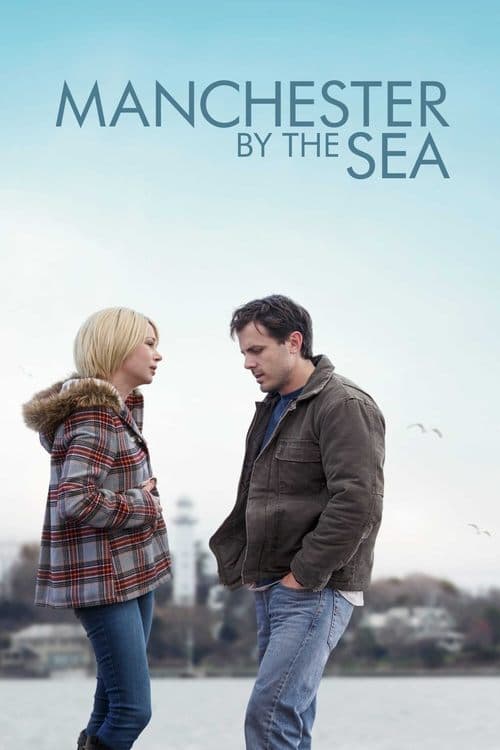
After his brother's death, a withdrawn handyman named Lee Chandler returns to his hometown to become guardian to his teenage nephew, where he must confront the catastrophic grief that exiled him from the community. The film is a precise and devastating study of guilt that cannot be dissolved.
Manchester by the Sea
Kenneth Lonergan · 2016

A perfectionist ballerina wins the lead in Swan Lake but becomes consumed by paranoia and hallucination as opening night approaches. A psychosexual horror film about the violence of perfectionism and the dissolution of identity.
Black Swan
Darren Aronofsky · 2010