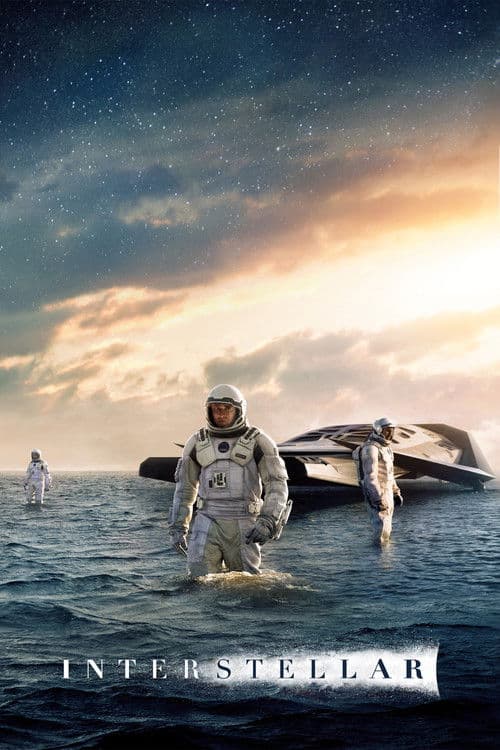
Interstellar
Christopher Nolan · 2014
A former NASA pilot leads a crew through a wormhole to find a new habitable planet while his daughter grows old waiting for him on Earth, the two separated by the physics of spacetime. A film about love as a force that operates across dimensions and the impossible arithmetic of sacrifice.
Techniques Used
5 techniques identified in this film
Hard Science Fiction Aesthetics
CinematographyDesigning the visual and narrative world of a science fiction film around verified scientific principles, using physics as a source of drama rather than a constraint to circumvent.
How this film uses it
Kip Thorne, Nobel Prize-winning physicist, served as scientific consultant and executive producer. The wormhole and black hole Gargantua are based on his equations — the rendering of Gargantua created new scientific insights about gravitational lensing that were published in peer-reviewed journals.
Time Dilation as Emotional Distance
NarrativeUsing the physics of relativistic time dilation — where time passes differently for observers in different gravitational fields — as the literal mechanism of dramatic separation between characters.
How this film uses it
One hour on Miller's water planet equals seven years on Earth. Cooper watches his children age in video messages while experiencing almost no time himself. The physics of the universe becomes the instrument of an unbearable parent-child separation — science as tragedy.
Pipe Organ Score
SoundUsing a pipe organ as the primary voice of a film score, choosing an instrument whose acoustic properties — sustained tones, physical air movement, ecclesiastical associations — generate a specific combination of transcendence and dread.
How this film uses it
Hans Zimmer built the Interstellar score around a custom pipe organ, treating its sustained tones as the sound of deep time and cosmic scale. The organ connects the film's science to its spirituality — the church instrument in space, making the physical feel theological.
The Tesseract Interior
CinematographyConstructing a physical set to represent a higher-dimensional space — using architecture and cinematography to make the impossible legible without reducing it to mere abstraction.
How this film uses it
Production designer Nathan Crowley built the Tesseract as a physical set of stacked bookshelves extending in all directions. The camera and Cooper move through it as a space that is simultaneously dimensional and temporal — love and gravity made architecturally visible.
IMAX Large-Format Space
CinematographyShooting on 70mm IMAX film to capture space and astronomical environments at a resolution and scale that places the audience inside the image rather than observing it from outside.
How this film uses it
Hoyte van Hoytema shot the film's space sequences on 65mm and IMAX film, with the frame expanding to the full 1.43:1 IMAX ratio in space. The physical grain of the large-format negative gives the cosmos a tactile material presence — space as something felt rather than rendered.
You Might Also Like
Films that share at least one technique with Interstellar
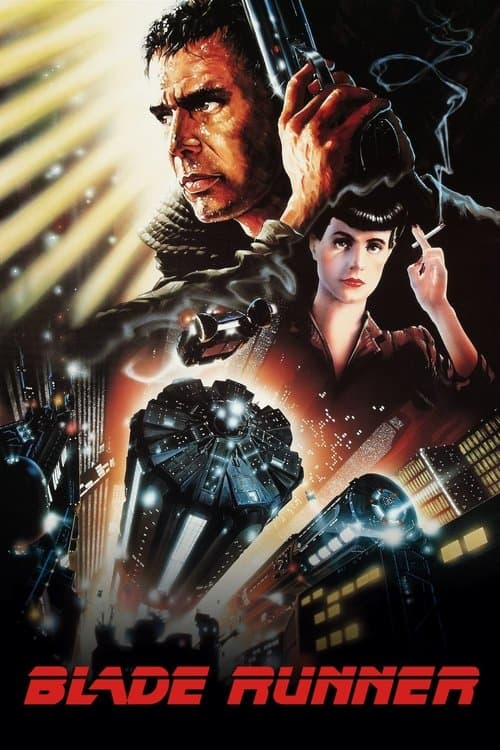
A detective in a rain-soaked 2019 Los Angeles hunts down escaped synthetic humans called replicants, and begins to question the nature of his own humanity. The film that defined the visual grammar of cinematic dystopia.
Blade Runner
Ridley Scott · 1982

In 2027, eighteen years after global human infertility has rendered the future extinct, a bureaucrat is tasked with escorting the world's only pregnant woman to safety. Cuarón's film uses long takes and documentary aesthetics to make a political allegory feel physically immediate.
Children of Men
Alfonso Cuarón · 2006
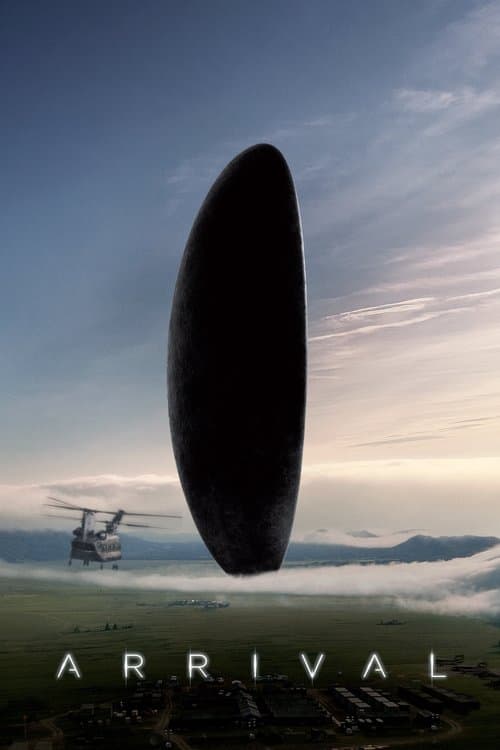
When twelve alien spacecraft appear around the world, linguist Louise Banks is recruited to decode the visitors' language — a process that begins to alter her perception of time itself. Denis Villeneuve's film uses first contact as a vehicle for a devastating meditation on grief, language, and the cost of knowing the future.
Arrival
Denis Villeneuve · 2016