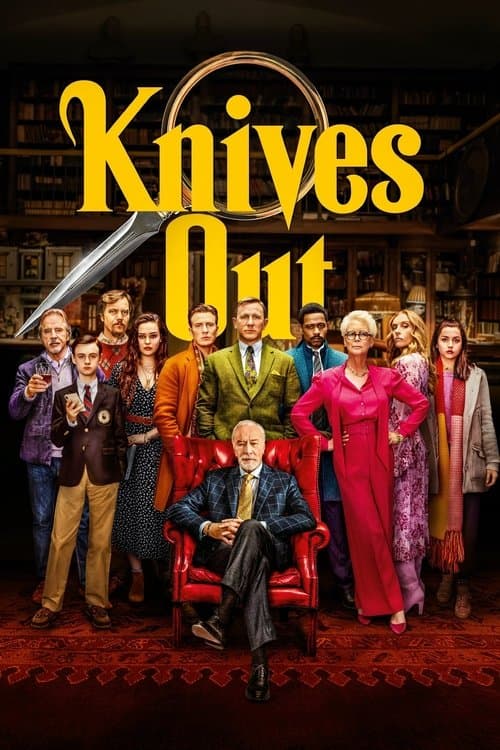
Knives Out
Rian Johnson · 2019
When a celebrated mystery novelist is found dead the morning after his birthday party, a private detective is hired to investigate — and reveals the solution early, making the rest of the film about a different problem entirely. Johnson's most purely entertaining film uses the whodunit's conventions as a magician uses misdirection.
Techniques Used
4 techniques identified in this film
Pre-Revealed Mystery
NarrativeRevealing the apparent solution to the mystery before the conventional midpoint — converting the second half from a whodunit into a different kind of thriller, the audience's foreknowledge becoming the new dramatic instrument.
How this film uses it
Johnson shows us what Marta did in the first act. The mystery appears solved. What remains — and what the film is actually about — is how the truth will emerge, who will be harmed, and what the Thrombey family's reactions reveal about their character. The pre-revelation converts the whodunit into a character study.
Ensemble Characterization Without Backstory
NarrativeDefining a large cast of characters entirely through their present behavior and dialogue — giving each person a complete identity without expository backstory.
How this film uses it
The Thrombey family — a dozen characters with distinct personalities, agendas, and comic registers — are defined entirely through how they behave in the investigation. Johnson gives no flashbacks, no expository monologues. Every character tells us who they are by what they do when under pressure, which is the method's argument about how character actually works.
Frame Narrative as Trap
NarrativeA framing structure — an investigation, a confession — that promises to deliver truth and instead reveals that truth is more complicated than the frame can contain.
How this film uses it
The investigation frame promises a conventional whodunit resolution. Johnson uses it as a trap — the frame delivers a solution, then reveals a different problem, then delivers another solution that is also incomplete. By the end, the frame has been used to ask why wealthy families investigate crimes and what they do with the answers.
Deadpan Absurdism
NarrativeA tonal register in which grotesque or farcical elements are presented with complete seriousness — the comedy arising from straight-faced treatment of inherently ridiculous premises.
How this film uses it
The Thrombey family's dysfunction — their casual cruelty, their oblivious entitlement, their theatrical grieving — is played completely straight. No one acknowledges the comedy. The film's satire of upper-class liberal hypocrisy lands precisely because the characters believe completely in their own performances of decency.
You Might Also Like
Films that share at least one technique with Knives Out

A legendary hotel concierge and his lobby boy are embroiled in the theft of a priceless painting and a family inheritance battle in a fictional European republic between the wars. Wes Anderson's most fully realized comedy uses nostalgia as a frame for examining what is lost when elegance is replaced by brutality.
The Grand Budapest Hotel
Wes Anderson · 2014

A delusional beekeeper convinced that a pharmaceutical CEO is an alien infiltrator kidnaps her and imprisons her in his basement to extract a confession. A darkly absurdist hostage thriller in which paranoia, corporate power, and human self-deception become indistinguishable.
Bugonia
Yorgos Lanthimos · 2025
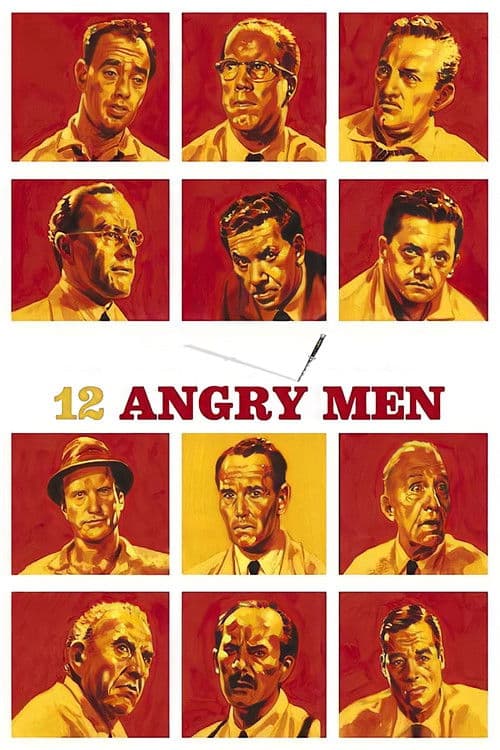
Twelve jurors deliberate the fate of a teenager accused of murder, and one holdout methodically dismantles the case through logic and moral persistence. A real-time chamber film about prejudice, groupthink, and the fragility of reasonable doubt.
12 Angry Men
Sidney Lumet · 1957