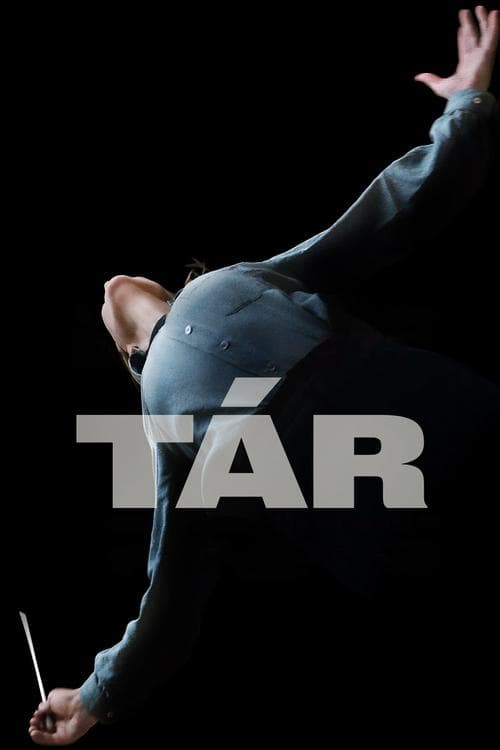
Tár
Todd Field · 2022
Lydia Tár — a legendary conductor at the peak of her powers — begins to unravel as past abuses of power catch up with her. Todd Field's film is as interested in the nature of genius and institutional authority as it is in moral accountability.
Techniques Used
4 techniques identified in this film
Unreliable Narrator
NarrativeA protagonist through whose perspective we experience events — but whose account of themselves and the world is systematically self-serving, leaving the audience to construct a more accurate picture from the gaps.
How this film uses it
Everything we know about Lydia Tár we know through her performance of herself: the New Yorker profile, the Juilliard masterclass, the rehearsals. Field never provides an external corrective. The audience must read the gaps — what she doesn't say, what others' reactions mean — to construct an account that differs from the one she presents.
Performance Anxiety as Theme
PsychologyUsing the psychological stakes of public performance — the terror of exposure, the compulsion to control, the relationship between identity and audience — as the film's central psychological argument.
How this film uses it
Lydia Tár's entire identity is constituted by performance: conducting, teaching, speaking, being watched. Her anxiety is not about failure — she is supremely confident — but about the possibility of the performance ending, of the audience that constructs her identity withdrawing. When the audience does withdraw, the film tracks what remains.
Observational Restraint
CinematographyA visual approach that refuses dramatic emphasis — watching events at a measured distance without editorial guidance — treating the camera as uninflected witness.
How this film uses it
Field and cinematographer Florian Hoffmeister shoot in long takes with minimal camera movement, observing Lydia without the film telling us how to feel about what we see. The restraint is the argument: the audience must do the interpretive work that conventional filmmaking would do for them. The film's moral position emerges from this gap.
Ambiguous Antagonist
NarrativeA narrative that refuses to assign the antagonist role stably — where the figure who causes harm is also the film's most compelling character, and the positions of victim and perpetrator are deliberately unstable.
How this film uses it
Lydia is the film's abuser and its most interesting person. The film gives her the best arguments, the most developed interiority, the most screen time. Field refuses to simplify her into a cautionary tale, which means the audience must hold her genuine genius and her genuine harm simultaneously — which is the film's actual subject.
You Might Also Like
Films that share at least one technique with Tár
A German novelist is tried for the murder of her husband after he is found dead in the snow outside their French chalet — the trial reconstructing their marriage through evidence that proves nothing and accuses everything. Justine Triet's Palme d'Or winner is about how courts tell stories and what truth can survive a legal proceeding.
Anatomy of a Fall
Justine Triet · 2023
A writer takes a job as winter caretaker at a remote hotel, where supernatural forces — or his own fracturing psyche — drive him toward violence against his family. Kubrick's definitive study in geometric dread.
The Shining
Stanley Kubrick · 1980
A jazz drumming prodigy at a cutthroat conservatory is pushed to the breaking point by a ferociously demanding conductor. A visceral examination of obsession, abuse, and the price of greatness.
Whiplash
Damien Chazelle · 2014