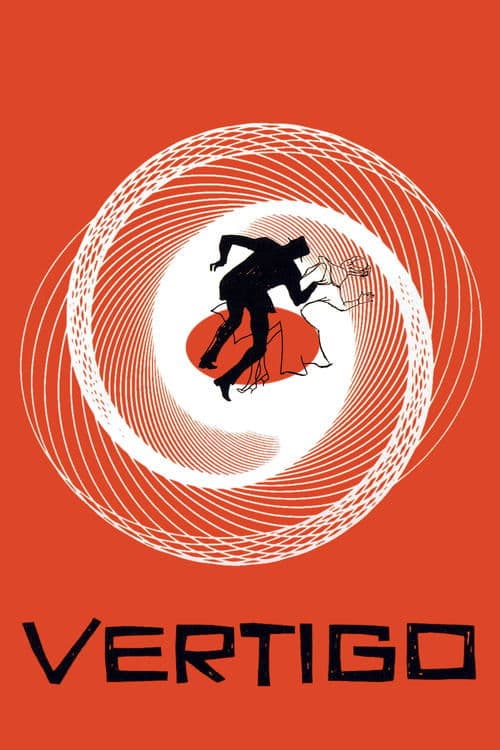
Vertigo
Alfred Hitchcock · 1958
A retired detective with acrophobia is hired to follow a mysterious woman, falls obsessively in love with her, and after her death attempts to reconstruct her in another woman's body. Hitchcock's most psychologically complex film, and arguably cinema's most rigorous study of obsession.
Techniques Used
5 techniques identified in this film
Dolly Zoom
CinematographyThe simultaneous tracking of the camera backward while the lens zooms in — or forward while zooming out — creating a spatial impossibility in which the subject remains the same size while the background distorts, externalizing psychological instability.
How this film uses it
Hitchcock invented the technique specifically for this film to visualize Scottie's vertigo. When he looks down a stairwell, the walls seem to recede while the floor rushes up. The camera shows us not what is there but what his mind tells him is there — the psychological and the perceptual fused in a single shot.
Necrophiliac Romance
NarrativeA love story in which the protagonist loves the dead over the living — and attempts to resurrect the dead person in a living body — making the romantic structure itself the film's horror.
How this film uses it
Scottie does not fall in love with Judy. He falls in love with Madeleine, then attempts to reconstruct her in Judy's body — choosing hair color, clothing, posture — until Judy becomes the woman he lost. The film's romance is about the impossibility of loving a real person when you are in love with a fantasy.
Green Obsession Motif
PsychologyA single color appearing at every moment of the protagonist's consuming obsession — in clothing, lighting, and neon — becoming the visual signal of a psychological state that language cannot name.
How this film uses it
Green haunts the film: Madeleine's gray-green suit, the neon outside Judy's hotel that bathes her in emerald light during the reconstruction scene, the cemetery's filtered light. The color is not symbolic in the simple sense — it is the color of Scottie's obsession itself, appearing wherever his fixation manifests.
Pre-Revealed Mystery
NarrativeRevealing the mystery's solution to the audience before the protagonist discovers it — converting the final act from a whodunit into a sustained dramatic irony, where we watch a man stumble toward a truth we already hold.
How this film uses it
Hitchcock makes an unusual structural choice: Judy's letter, revealing she was Madeleine all along, gives the audience the answer halfway through. The second half is not about discovery — it's about watching Scottie re-create the trap he's already in, while we know the snare and he doesn't.
Spiraling Unresolved Score
SoundAn orchestral score built on ascending, harmonically unresolved motifs that circle back without arriving — mirroring a film's obsessive circular structure through musical form.
How this film uses it
Bernard Herrmann's score uses Wagnerian chromaticism and unresolved harmonic cycles. The main theme climbs and turns without cadence — it never lands. Like Scottie's obsession and like Hitchcock's narrative, the music goes around and around, returning always to the same unresolved chord.
You Might Also Like
Films that share at least one technique with Vertigo

When a celebrated mystery novelist is found dead the morning after his birthday party, a private detective is hired to investigate — and reveals the solution early, making the rest of the film about a different problem entirely. Johnson's most purely entertaining film uses the whodunit's conventions as a magician uses misdirection.
Knives Out
Rian Johnson · 2019
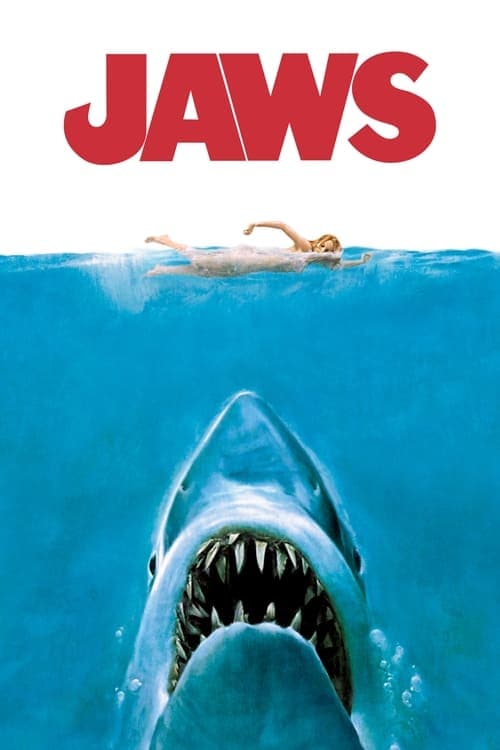
A massive great white shark terrorizes a New England beach town, and the police chief who fears water must join a marine biologist and a grizzled shark hunter to hunt it down before the summer season is destroyed. Spielberg's breakthrough film invented the summer blockbuster by making the shark the least frightening thing in the movie.
Jaws
Steven Spielberg · 1975