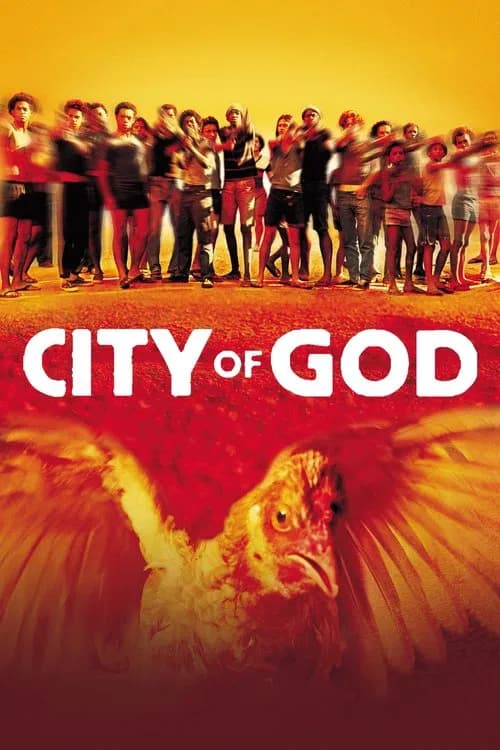
A young photographer documents 20 years of growing gang warfare in the Cidade de Deus housing project outside Rio de Janeiro, from the 1960s through the 1980s. It's a fast, energetic portrait of poverty, violence and the few narrow ways out for people born inside the machine.
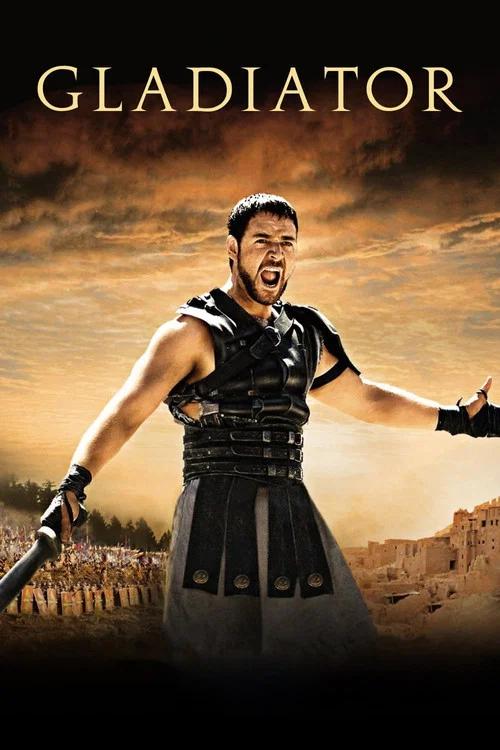
City of God is a 2002 crime and drama film directed by Fernando Meirelles. This breakdown covers 5 techniques (2 cinematography, 1 editing and 2 narrative), each with the scene where you can see it. If you like how it is made, Gladiator uses several of the same techniques.
Keeping an unsteadied handheld camera in constant motion during action, panning, circling and rushing in. You feel like you are inside the event with no safe distance.
How this film uses it
César Charlone's camera rarely settles. It circles faces in conversation, rushes through alleyways and tilts and pivots with the energy of the favela itself. It can look like chaos, but the restless movement is precisely controlled. It is made to feel like the improvised way people survive in the world it documents.
Where to see it
The opening chicken sequence. The camera spins to catch threats coming from every direction at once.
Cutting out bits of time within a continuous shot so the image suddenly jumps forward. This adds energy and urgency, shortens the scene and reminds you the film is constructed.
How this film uses it
Editor Daniel Rezende uses jump cuts (cuts that skip ahead in time) throughout. They suit a world where things happen faster than ordinary smooth editing can follow. The cuts speed things up without confusing you, and the favela feels like a place where survival squeezes time itself.
Where to see it
Li'l Zé's early rampage sequences. The jump cuts make the violence feel like weather.
Casting real people from the community being shown, such as workers and local residents, with no trained actors in those roles. Their looks and behavior feel true in a way acting can't copy.
How this film uses it
Meirelles and co-director Kátia Lund ran an extensive workshop in the actual Cidade de Deus and cast favela residents in nearly every role. The performances feel lived-in (the slang, the posture, the way people occupy space), and that gives the film the authority of a documentary.
Where to see it
The children's gang scenes. You see how physically at ease the young performers are in a place they actually know.
Wrapping the story in a frame that opens and closes the film, such as the same scene revisited or a question that finally gets answered. The return can make events feel inevitable.
How this film uses it
The film opens and closes with the same standoff, with Rocket caught between the police and the gang. The first time you see it, you have no context. The second time, you have 20 years of it. The circle says that nothing has changed and nothing will, because the favela runs as a closed system.
Where to see it
The chicken-chase standoff at the opening and the close. It's the same moment with 2 different meanings.
Changing the color, film texture and camera style for each time period, and using the fashion and architecture of the day. Every era gets its own distinct feel.
How this film uses it
Charlone and Meirelles give each decade its own look. The 1960s have a warm, yellow-tinged texture. The 1970s are more naturalistic. The 1980s are hard, washed-out and fast. The camera style shows history as a decline, with the world getting more dangerous as it gets more modern.
Where to see it
The transition from the 1960s Tender Trio sequences to the 1970s Li'l Zé sequences. The look gets harder.
Questions
City of God: quick answers
What filmmaking techniques does City of God use?
CineCode breaks down 5 techniques in City of God (2002): Handheld Kinetic Cinematography, Jump Cut Propulsion, Non-Professional Cast Authenticity, Circular Narrative Frame and Era-Coded Visual Grammar.
Who directed City of God?
Fernando Meirelles directed City of God, released in 2002. CineCode also covers The Two Popes (2019).
What films are similar to City of God?
Films that share techniques with City of God include Gladiator (2000), Braveheart (1995), La Dolce Vita (1960), 3 Idiots (2009).