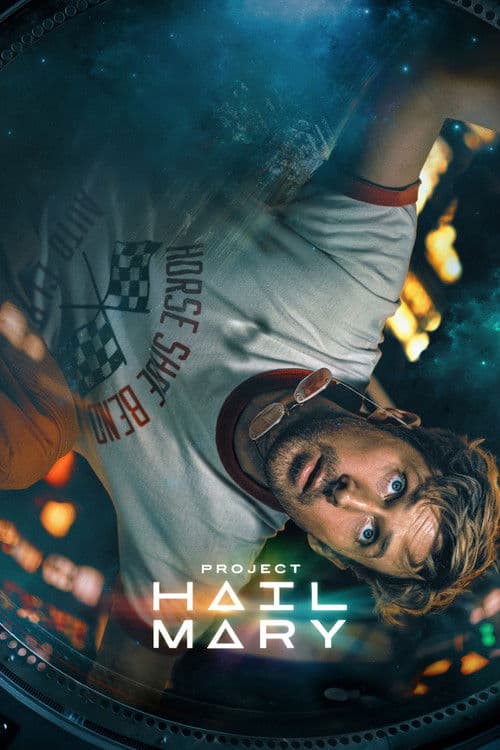
Project Hail Mary
Phil Lord & Christopher Miller · 2026
An astronaut wakes up alone on a spacecraft with no memory, slowly piecing together that he is humanity's last hope against an extinction-level threat. A first-contact survival story that finds warmth and humor in the void of deep space.
Techniques Used
5 techniques identified in this film
In Medias Res
NarrativeBeginning a story in the middle of the action — often at a moment of crisis — and revealing prior context through flashback or gradual disclosure.
How this film uses it
The film opens with Ryland Grace already aboard the Hail Mary, disoriented and amnesiac, with no exposition about his mission or why he is alone. Context is earned scene by scene as memory returns, sustaining mystery for the film's entire first act.
Fractured Memory Editing
EditingIntercutting between a character's present circumstances and fragmented, non-sequential flashbacks to reconstruct the story's backstory through recovered memory rather than linear exposition.
How this film uses it
As Ryland regains consciousness over multiple days, the film cuts between the spacecraft's present and incomplete memory sequences on Earth — each flashback arriving at a psychologically motivated moment, so the backstory lands as revelation rather than information.
Constructed Sound Language
SoundDesigning an entirely original sonic system — with its own internal grammar and emotional register — to represent a non-human form of communication.
How this film uses it
Rocky's speech is rendered as a layered system of musical tones and frequencies, designed by the sound team as a genuinely functional language. The audience learns to read emotional content from pitch and rhythm, so the friendship reads as real before a single word is shared.
Single-Location Cinematography
CinematographyStaging a film primarily or entirely within one confined physical space, using production design and camera movement to prevent visual monotony while letting the space accumulate psychological meaning.
How this film uses it
The Hail Mary's interior is shot to feel both claustrophobically small and infinitely isolated. The camera rarely moves to the exterior vacuum except as punctuation — the ship becomes a character whose geometry the audience maps intimately over the film's runtime.
Physicalized Problem-Solving
NarrativeDramatizing intellectual or scientific problem-solving as a sequence of visible, physical actions rather than dialogue or voiceover, so the audience experiences discovery kinetically.
How this film uses it
Every major scientific breakthrough — from identifying the Astrophage to engineering a solution with Rocky — is staged as tactile, hands-on experimentation. The camera stays close to instruments, materials, and hands, making the science feel earned and embodied rather than expository.
You Might Also Like
Films that share at least one technique with Project Hail Mary
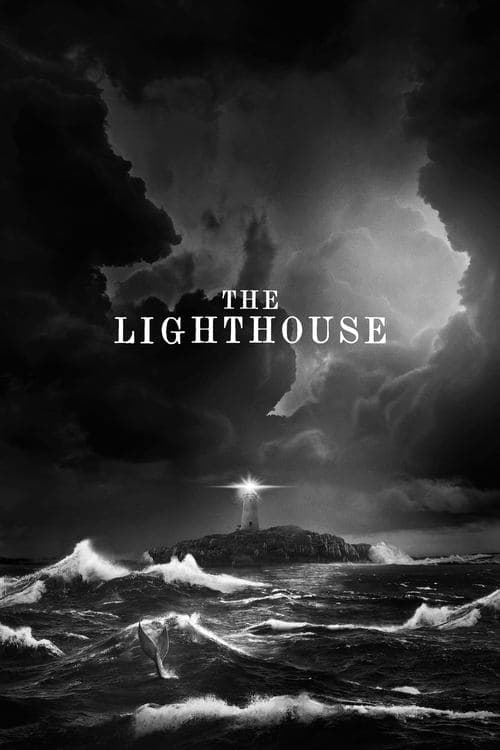
Two lighthouse keepers — a grizzled veteran and a young laborer — are stranded on a remote New England rock when a storm extends their posting indefinitely, and their cohabitation descends into madness, violence, and myth. Robert Eggers uses the confined setting as a pressure cooker for every masculine anxiety the nineteenth century produced.
The Lighthouse
Robert Eggers · 2019
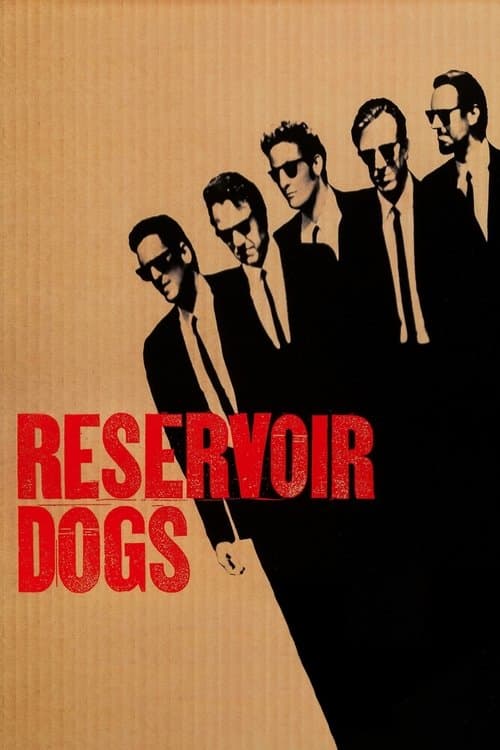
The aftermath of a diamond heist gone catastrophically wrong plays out in a warehouse as the surviving thieves — all using color-coded pseudonyms — try to determine which of them is the police informant. Tarantino's debut is a diamond-sharp exercise in tension, dialogue, and the grammar of the crime film.
Reservoir Dogs
Quentin Tarantino · 1992

A German U-boat crew patrols the Atlantic in 1941, facing boredom, terror, mechanical failure, and depth charges in equal measure. The definitive submarine film, and one of the most physically claustrophobic experiences in cinema.
Das Boot
Wolfgang Petersen · 1981