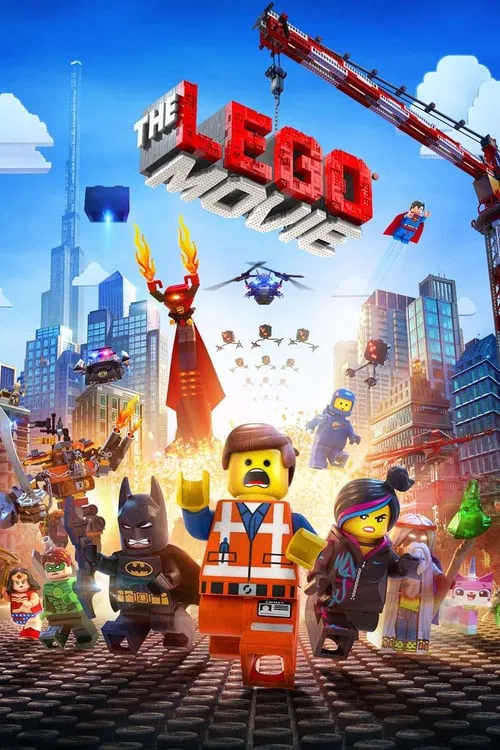
Emmet is a cheerful construction worker in a Lego city who follows an instruction booklet for everything. When he is mistaken for a prophesied hero called the Special, he joins a band of rebels to stop the tyrant Lord Business. Watch how the last act changes the meaning of everything you laughed at before.
The Lego Movie is a 2014 animation, adventure and comedy film directed by Phil Lord & Christopher Miller. This breakdown covers 4 techniques (2 narrative, 1 cinematography and 1 psychology), each with the scene where you can see it. If you like how it is made, WALL-E uses several of the same techniques.
Saving a reveal for the climax that changes the meaning of every scene before it. You have to rebuild the whole film in your head with the new knowledge.
How this film uses it
For most of the film you think you are watching a quest through a Lego world. Then Emmet falls out of that world and you see a boy named Finn playing in his father's basement, and everything before was his game. His father glues Finn's mixed-up creations back into their original sets, which is exactly what Lord Business wants to do to the universe. The jokes now carry a family argument.
Where to see it
The basement reveal. Emmet drops off the edge of the universe and lands in a real basement, where Finn plays with his father's Lego collection while his father glues the sets back together.
Mocking a specific world, such as an industry, an institution or consumer culture, by exaggerating what is already there. A sci-fi future built from present trends can do this with no direct argument.
How this film uses it
Bricksburg is a city where everyone follows the same instructions, sings the same cheerful song and does the same job. The film pokes fun at the instruction booklet that comes in every Lego box, and at a society that rewards fitting in. The joke lands because the toy really does come with that booklet.
Where to see it
Emmet's life in Bricksburg. He is a construction worker who goes through his day by the book, and he is so ordinary that nobody notices him.
Bringing live-action camera thinking and fine detail to animation, with realistic landscapes, lenses and varied frame rates. The images feel more physical than a drawing usually does.
How this film uses it
The film was made entirely with computer animation, yet it looks like stop-motion with real plastic. The sets were built from the official Lego brick library, and some minifigures were photographed under microscopes so the textures could show seam lines and grime. The cameras imitate live-action lenses and a Steadicam, so the toys feel like physical objects you could pick up.
Where to see it
The double-decker couch. Emmet's invention saves him and his group as they escape Cloud Cuckoo Land, and it looks like a pile of real bricks clicked together.
Showing a character coming to recognize their own worth or voice, often through contact with someone who contrasts with them. The change is internal before it is visible.
How this film uses it
Emmet starts as a man with no ideas of his own. The prophecy that called him the Special turns out to be invented, but the film lets him become the hero anyway. He sacrifices himself for the others, and he does it because he has decided he matters. The change happens inside him before any plan does.
Where to see it
Vitruvius' last words. As Lord Business kills him, Vitruvius admits he made up the prophecy. His spirit later tells Emmet that believing in himself is what makes him the Special.
Questions
The Lego Movie: quick answers
What filmmaking techniques does The Lego Movie use?
CineCode breaks down 4 techniques in The Lego Movie (2014): Retroactive Reframing Revelation, Environmental Satire, Animated Realism Craft and Personal Awakening Arc.
Who directed The Lego Movie?
Phil Lord & Christopher Miller directed The Lego Movie, released in 2014. CineCode also covers Project Hail Mary (2026).
What films are similar to The Lego Movie?
Films that share techniques with The Lego Movie include WALL-E (2008), Digger (2026), Downsizing (2017), Star Wars: The Empire Strikes Back (1980).