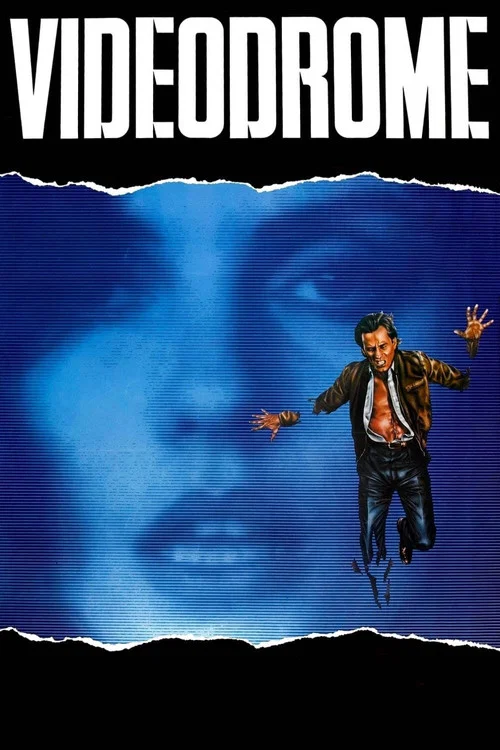
Max Renn runs CIVIC-TV, a small Toronto station that lives on sensationalist programming. His satellite operator shows him Videodrome, a broadcast of torture and murder, and Max goes looking for where it comes from. Soon he can't tell his hallucinations from his life. Watch it to see how body horror can carry an argument about what screens do to the people watching them.
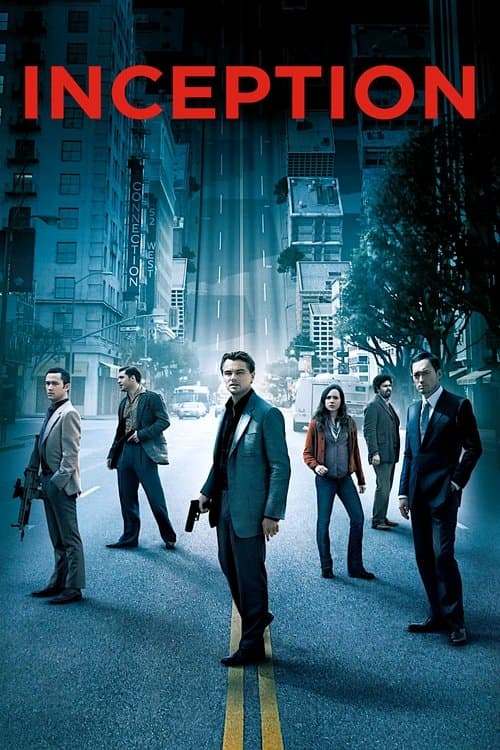
Videodrome is a 1983 horror and science fiction film directed by David Cronenberg. This breakdown covers 5 techniques (2 psychology, 1 cinematography, 1 sound and 1 narrative), each with the scene where you can see it. If you like how it is made, Inception uses several of the same techniques.
Showing the human body being changed, damaged or falling apart. The horror works because you imagine it happening to your own body, and it often stands for mental suffering.
How this film uses it
The Videodrome signal gives its viewers brain tumors, and Max's exposure starts showing up on his body. A slit opens in his stomach, and later his hand fuses with his gun. Cronenberg turns watching TV into something that physically rewrites the viewer.
Where to see it
The stomach slit: Max sees an opening in his abdomen and pushes his handgun into it.
Creating effects physically on set with makeup, prosthetics, built props and camera tricks, with no computer graphics added later. The results look solid and real.
How this film uses it
Rick Baker's team built the effects for real on set. For the TV that swells toward Max, a video projector threw the image from behind onto a stretchy sheet of dental dam, after a weather balloon test failed to stretch far enough. The tapes pushed into Max's stomach were Betamax because VHS cassettes were too big.
Where to see it
The pulsing TV: Nicki's lips fill the screen, the set bulges outward and Max kisses it.
Keeping it unclear what is real and what is imagined in the film's world. You end up as unsure as the main character.
How this film uses it
Once the signal gets into Max, the film stops telling you which scenes are hallucinations. Events that look impossible have real consequences, and ordinary scenes feel just as suspect. You end up as unsure as Max about what is happening to him.
Where to see it
The Betamax tape: Barry Convex pushes a tape into the slit in Max's torso and programs him to kill.
Scoring with synthesizers, club beats or electronic instruments. The texture can suggest a period, a mood or a character's inner state.
How this film uses it
Howard Shore wrote the score for orchestra, programmed it into a Synclavier II digital synthesizer and recorded that alongside a small string section. The blend makes it hard to tell which sounds are real instruments. As Max loses his grip, the music moves further from orchestral toward electronic.
Where to see it
Max's hallucinations: the score grows more synthetic as the line between Max and the video signal disappears.
Letting characters or stories cross the boundary between fiction and the real world inside the film. It plays with how much we rely on stories to cope with life.
How this film uses it
Brian O'Blivion, a media theorist based on Marshall McLuhan, is dead and exists only on videotape, yet his tapes keep speaking to Max. By the end, a TV screen shows Max what to do next and he follows it. The film pushes the idea that what you watch can step out of the screen and run your life.
Where to see it
Ending: on a derelict boat in Toronto's Port Lands, Max watches a TV show him shooting himself, then says "Long live the new flesh" and does it.
Questions
Videodrome: quick answers
What filmmaking techniques does Videodrome use?
CineCode breaks down 5 techniques in Videodrome (1983): Body Horror, Practical In-Camera Effects, Unreliable Reality, Electronic Score and Fiction Crossing Into Reality.
Who directed Videodrome?
David Cronenberg directed Videodrome, released in 1983.
What films are similar to Videodrome?
Films that share techniques with Videodrome include Inception (2010), Perfect Blue (1997), Annihilation (2018), The Substance (2024).