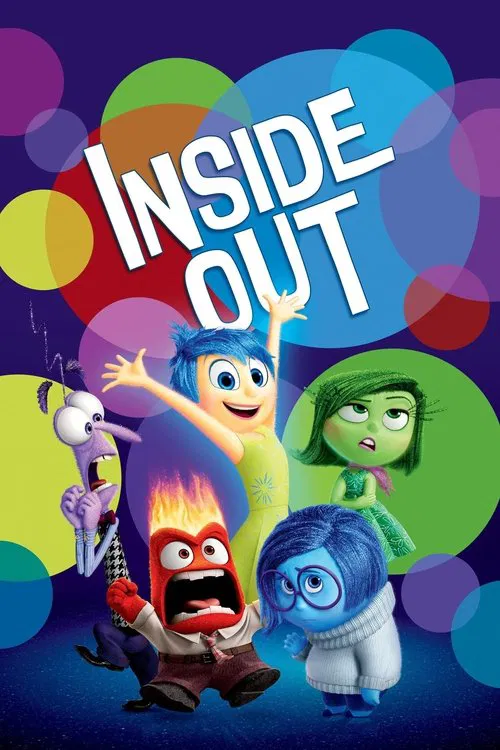
Eleven-year-old Riley moves to San Francisco, and the five emotions in her head, led by Joy, try to keep her happy. When Joy and Sadness get lost far from Headquarters, Riley's inner world starts to collapse. Docter turns psychology into a trip you can follow, and gives sadness a job.
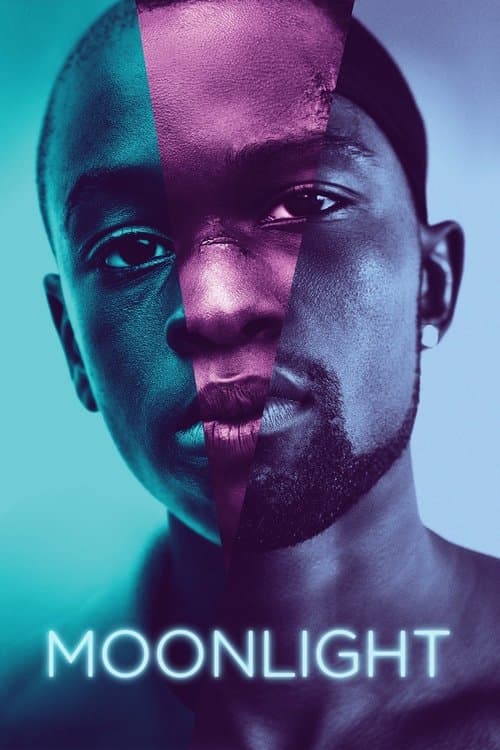
Inside Out is a 2015 animation, family and comedy film directed by Pete Docter. This breakdown covers 4 techniques (1 editing, 2 cinematography and 1 narrative), each with the scene where you can see it. If you like how it is made, Moonlight uses several of the same techniques.
Using animation, for a whole film or for short sequences inside live action, to make emotions hit harder. Drawn images can show inner feelings that realistic footage can't reach.
How this film uses it
Each emotion has its own look and movement, from Joy's glow to Anger's flaming head. The animators drew on classic cartoon exaggeration, so feelings are easy to read at a glance. You understand a scene in Riley's mind before anyone explains it.
Where to see it
Riley's first day at school. Sadness touches a happy memory and turns it blue, and Riley cries in front of her new class.
Showing an inner problem as something you can see, such as a visible lie, a blurred actor or a fully built imagination. The idea becomes a physical sight.
How this film uses it
Memories are colored glass orbs, and the strongest ones power islands that stand for Riley's personality. When those islands crumble into the Memory Dump, you see her changing without a word of dialogue. An abstract idea becomes a place you can watch fall apart.
Where to see it
The collapse of Riley's islands. Without Joy to steer, Anger, Fear and Disgust push Riley away from her family and hobbies, and the islands drop into the Memory Dump.
Limiting the film to a tightly chosen set of colors, or giving each place or state its own set. The colors tell you about the world and its mood without dialogue.
How this film uses it
The inside of Riley's head uses soft shapes, glowing light and saturated color. The real world is drawn with the opposite look, so you always know which place you are in. Each emotion also gets its own color, which keeps a crowded control room readable.
Where to see it
Headquarters at work. Five colored characters stand at a console and react to Riley's day, and each memory orb takes the color of the emotion that made it.
Building up to a big emotional release slowly, by investing in the characters and giving small bits of hope. When the release comes, it feels deserved after all the suffering.
How this film uses it
The film builds slowly toward Riley admitting she is unhappy. Joy learns that a sad memory turned happy when Riley's parents and friends comforted her. When Riley turns back from the bus and tells her parents she misses Minnesota, the release lands because you have watched her hold it in.
Where to see it
The homecoming. Riley returns from the bus station and admits she misses her old life, and her parents say they miss it too.
Questions
Inside Out: quick answers
What filmmaking techniques does Inside Out use?
CineCode breaks down 4 techniques in Inside Out (2015): Animation as Emotional Amplifier, Visual Literalization of Inner State, Color Palette as Worldbuilding and Earned Catharsis.
Who directed Inside Out?
Pete Docter directed Inside Out, released in 2015. CineCode also covers Soul (2020).
What films are similar to Inside Out?
Films that share techniques with Inside Out include Moonlight (2016), Lost in Translation (2003), Midsommar (2019), Soul (2020).