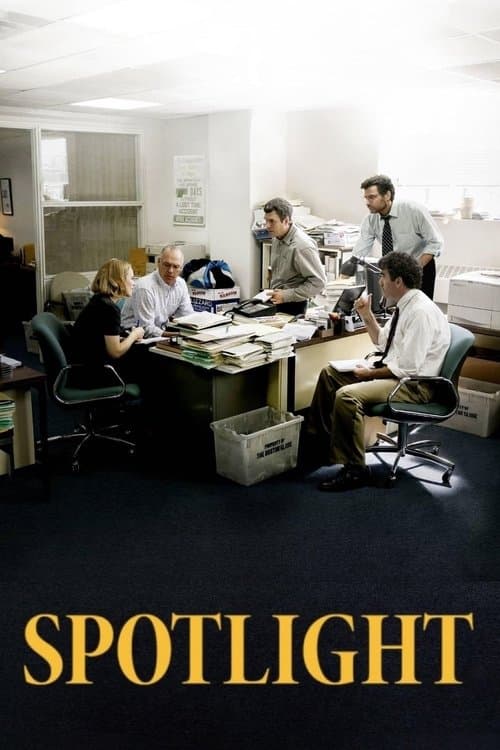
The Boston Globe's investigative journalism team uncovers the systematic cover-up of child sexual abuse by Catholic priests. They work through every institutional obstacle and survivor account until the Church can no longer bury the story. Tom McCarthy's film is about how institutions protect themselves and how journalism exposes them.
Spotlight is a 2015 drama and thriller film directed by Tom McCarthy. This breakdown covers 4 techniques (2 narrative and 2 cinematography), each with the scene where you can see it. If you like how it is made, Fargo uses several of the same techniques.
Revealing character and motive through physical evidence and a detective's step-by-step reasoning, with no confessions or backstory dumps. You piece together the truth alongside the investigator.
How this film uses it
The Spotlight team's investigation moves forward by patiently gathering church directories, legal filings and survivor accounts. The suspense comes from watching a case built on evidence get laid out step by step.
Where to see it
The team overlaying priest transfers on a city map. They spot the pattern: abusers were rotated from place to place to shield them from accountability.
Showing an institution as the source of power in the story, through its walls, corridors, watchful sightlines and procedures. The system itself confines people more than any single villain.
How this film uses it
McCarthy shoots Boston's churches, law offices, archdiocesan buildings and the Globe newsroom. These places show how deeply the Church is woven into the life of the city. I feel like that is why the cover-up comes across as part of the system, something bigger than any individual.
Where to see it
Marty Baron meeting Cardinal Law in the Archdiocese offices. You can read the Cardinal's power in every inch of the institutional space around him.
Casting unknown or non-professional actors with real accents and everyday looks alongside the leads. The group feels like an actual community, and nothing seems scripted or glamorous.
How this film uses it
McCarthy directs Ruffalo, McAdams, Tucci, Keaton and Slattery as journalists with their own rhythms and histories. The cast plays like a working team, with the undramatic competence of real professionals. Nobody performs like a star.
Where to see it
The Spotlight team meeting to debate whether to publish early. The argument plays out as a disagreement about procedure, with no big dramatic confrontation.
Watching events from a measured distance with no swelling music, tear-jerking close-ups or showy camera moves. The film trusts what happens to carry the weight on its own.
How this film uses it
McCarthy uses no dramatic music in the survivor interview scenes. The camera simply watches as men describe abuse in plain language. The horror comes through with nothing added to heighten it.
Where to see it
Phil Saviano recounting his own abuse to the Spotlight team. There is no music and there are no dramatic close-ups, only testimony received in silence.
Questions
Spotlight: quick answers
What filmmaking techniques does Spotlight use?
CineCode breaks down 4 techniques in Spotlight (2015): Forensic Inference Narration, Institutional Architecture, Naturalistic Ensemble Casting and Observational Restraint.
Who directed Spotlight?
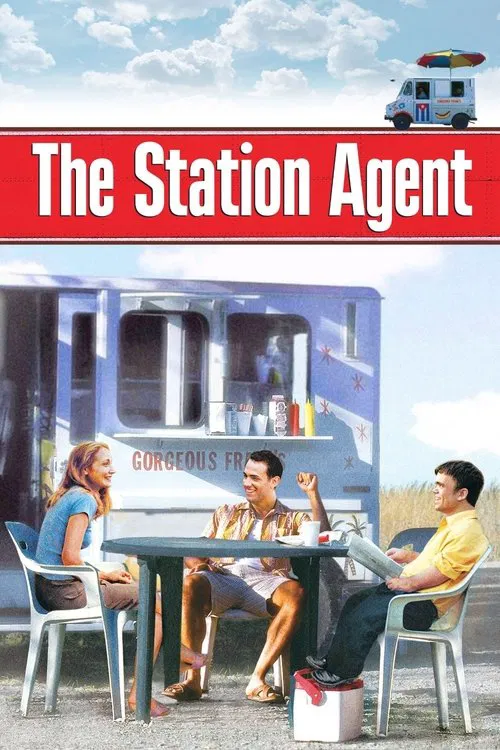
Tom McCarthy directed Spotlight, released in 2015. CineCode also covers The Station Agent (2003).
What films are similar to Spotlight?
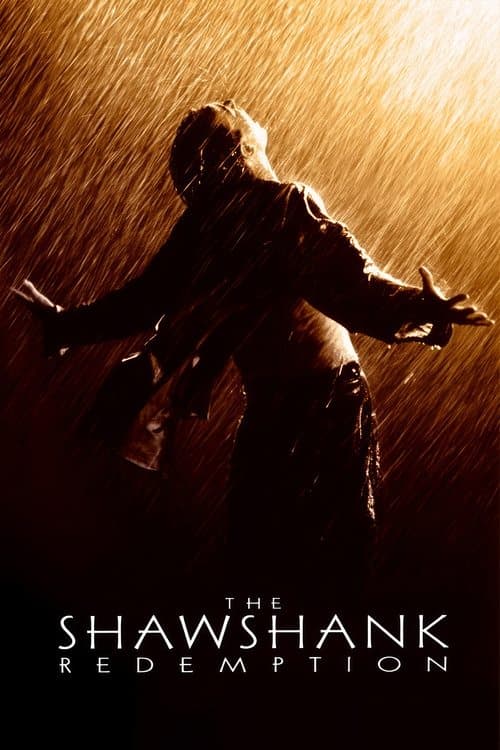
Films that share techniques with Spotlight include Fargo (1996), All the President's Men (1976), Moneyball (2011), The Shawshank Redemption (1994).