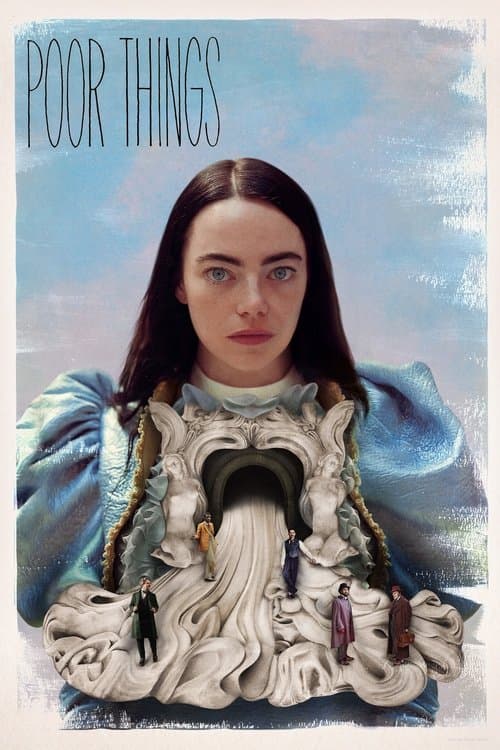
Poor Things
Yorgos Lanthimos · 2023
A young woman brought back to life by a brilliant but unorthodox scientist explores the world with the mind of a child growing rapidly into adult consciousness — pursuing pleasure, knowledge, and eventually liberation with absolute freedom from social convention. Lanthimos's most joyful and expansive film.
Techniques Used
4 techniques identified in this film
Fish-Out-of-Water Comedy
NarrativeA protagonist placed in an environment they do not belong to — defined by their incompatibility with social norms — the comedy generated by their honest, unfiltered engagement with conventions they have no reason to observe.
How this film uses it
Bella Baxter has an adult body and a newly developing consciousness. She has no socialization, no shame, no understanding of why she should behave as expected. Her progress through Victorian society is the fish-out-of-water comedy at its most radical: the fish is not naive but philosophically unconstrained, and the water's conventions are revealed as arbitrary by her refusal to adopt them.
Color Palette as Worldbuilding
CinematographyUsing deliberately stylized color to construct the film's world as an emotionally legible space rather than a realistic record.
How this film uses it
Robbie Ryan's cinematography moves the film through distinct color regimes as Bella's consciousness develops: the desaturated black-and-white of the opening gives way to tinted and finally full color as she grows. The palette is not decorative — it maps Bella's inner life, the world becoming more vivid as her engagement with it deepens.
Wide-Angle Observational Staging
CinematographyUsing wide-angle or fish-eye lenses to observe characters within distorted environments — the curved periphery making the social world visible as simultaneously grand and slightly absurd.
How this film uses it
Lanthimos and Ryan use fish-eye lenses throughout — the architecture of Victorian England warped at the edges, the social world of the film rendered as both real and grotesque. The wide-angle distortion is the visual argument: this society, seen clearly, is as strange as anything Bella does within it.
Unreliable Reality
PsychologyA film whose world may be subjective or constructed — where the line between the protagonist's perception and objective reality is deliberately unstable.
How this film uses it
Bella's consciousness is literally constructed by Godwin Baxter — her brain is that of a foetus inserted into an adult body. The film never entirely resolves whether Bella's experience of the world is a genuine consciousness developing or a scientific experiment proceeding. The instability is the film's philosophical question: what constitutes a real self?
You Might Also Like
Films that share at least one technique with Poor Things

In postwar Francoist Spain, a young girl retreats into a dark fairy tale world to escape her brutal stepfather — a world the film refuses to confirm as real or imaginary. Del Toro's most complete film uses fantasy and reality as moral mirrors of each other.
Pan's Labyrinth
Guillermo del Toro · 2006
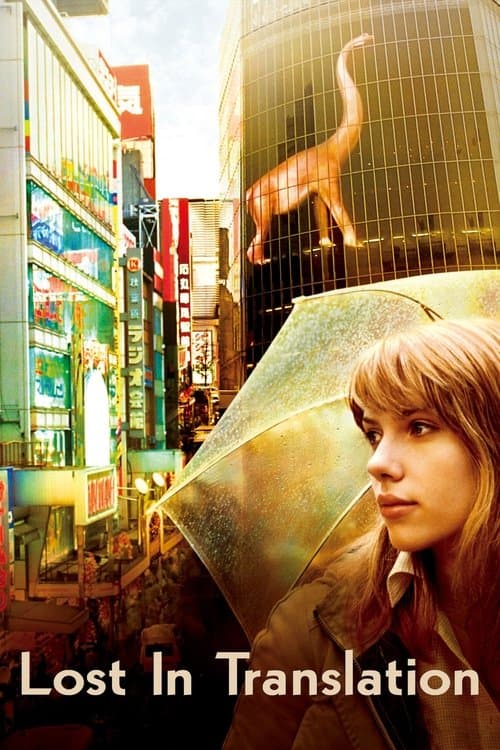
A fading American movie star and a young newlywed woman meet in a Tokyo hotel and form an unexpected connection that neither can fully name or act on. Sofia Coppola's film is about the specific texture of intimacy between strangers — the kind that only exists because it cannot last.
Lost in Translation
Sofia Coppola · 2003
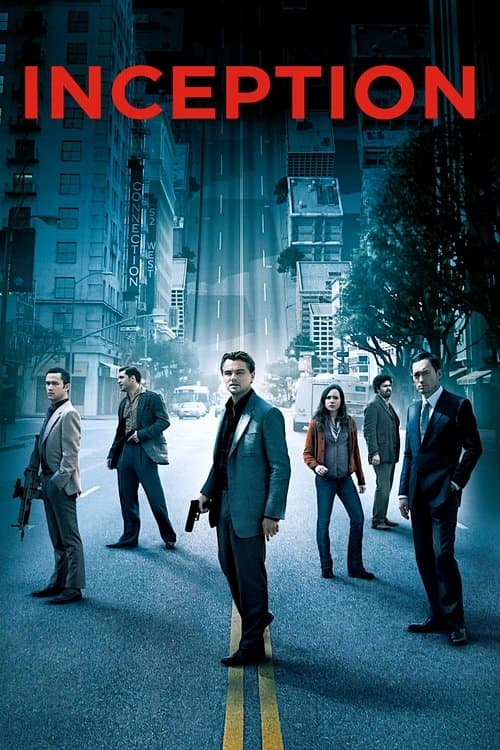
A skilled thief who enters people's dreams is offered a chance to have his criminal record erased if he can implant an idea into a CEO's mind. A labyrinthine heist film about grief, reality, and the architecture of the unconscious.
Inception
Christopher Nolan · 2010