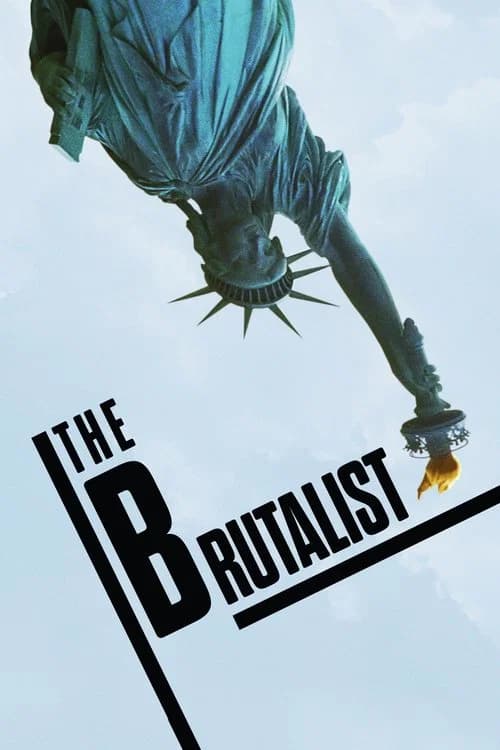
László Tóth is a Hungarian Jewish architect who survives the Holocaust and emigrates to America in 1947. A wealthy patron in Pennsylvania hires him to build an immense community center. Over 3 decades, their relationship involves creation, dependency and violation. Brady Corbet's film is an epic about art, America and what ambition costs.
The Brutalist is a 2024 drama and history film directed by Brady Corbet. This breakdown covers 4 techniques (2 cinematography and 2 narrative), each with the scene where you can see it. If you like how it is made, Saltburn uses several of the same techniques.
Using the full width of a very wide 2.35:1 frame to set small human figures against huge, empty landscapes. All that empty space makes the characters look isolated and insignificant.
How this film uses it
Lol Crawley shot the film on VistaVision, a large-format widescreen process. It gives the American landscapes and Brutalist architecture the sweeping look of 1950s Hollywood epics. So the film borrows the look of the same American myth it is questioning.
Where to see it
The 1980 Venice Biennale epilogue, where the completed Van Buren Institute is shown. The VistaVision frame gives the building the weight of a monument.
Running the film longer than its genre normally needs, on purpose. The extra time lets you live with the characters, so the emotional payoff feels in proportion to the wait.
How this film uses it
The film runs 3 and a half hours with an intermission, and I feel like it earns that epic length. László's story can't be told in 2 hours. You have to live with the cost of creating something for a long time before you understand the price.
Where to see it
The second half, which begins after the intermission with a disorienting time jump. The gap between the halves makes a point about how much of any life we miss.
Building the whole plot on one character's fixation with a person, goal or rival. Every scene ties back to it, and the obsession keeps feeding itself while it destroys them.
How this film uses it
The community center commission becomes László's reason to exist and also his prison. You can't separate his creative obsession from his patron's control. The building is a monument to both genius and exploitation.
Where to see it
László agreeing to work unpaid to cover the cost of the contractors' changes to his design. The obsession eats at him well past the point where he should protect himself.
Showing an institution as the source of power in the story, through its walls, corridors, watchful sightlines and procedures. The system itself confines people more than any single villain.
How this film uses it
The Brutalist buildings are heavy concrete, severe in their geometry and indifferent to human comfort. They show you what László has made and what America has made of him.
Where to see it
The completed Institute shown at the 1980 Venice Biennale, where Zsofia says its geometry echoes Buchenwald and Dachau. The Brutalist geometry is both a triumph and a ruin. It is as beautiful as it is inhuman.
Questions
The Brutalist: quick answers
What filmmaking techniques does The Brutalist use?
CineCode breaks down 4 techniques in The Brutalist (2024): Anamorphic Scope Composition, Slow Build Runtime, Obsession as Structural Engine and Institutional Architecture.
Who directed The Brutalist?
Brady Corbet directed The Brutalist, released in 2024. CineCode also covers Vox Lux (2018).
What films are similar to The Brutalist?
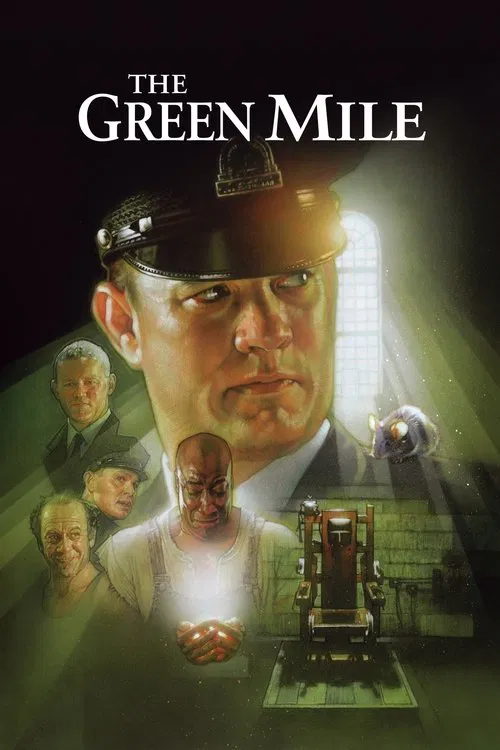
Films that share techniques with The Brutalist include Saltburn (2023), The Master (2012), The Shawshank Redemption (1994), The Good, the Bad and the Ugly (1966).