Science Fiction · Animation · Thriller

A Scanner Darkly

Richard Linklater, 2006

In a near future where a drug called Substance D has hooked a fifth of the country, undercover cop Bob Arctor is ordered to surveil his own housemates, and himself. As the drug damages his brain, he loses track of who he is. Look at how Linklater animated live footage to make that confusion visible.

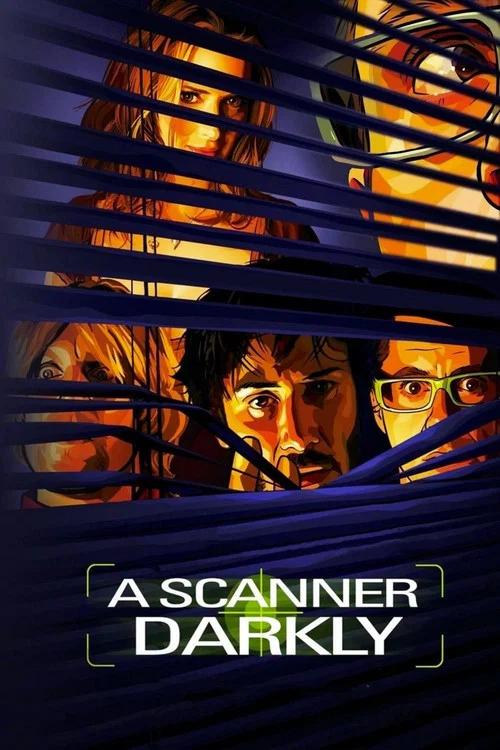
A Scanner Darkly (2006) poster

At a glance

A Scanner Darkly is a 2006 science fiction, animation and thriller film directed by Richard Linklater. This breakdown covers 4 techniques (1 editing, 1 cinematography and 2 psychology), each with the scene where you can see it. If you like how it is made, Perfect Blue uses several of the same techniques.

Editing

Animation as Emotional Amplifier

Using animation, for a whole film or for short sequences inside live action, to make emotions hit harder. Drawn images can show inner feelings that realistic footage can't reach.

How this film uses it

Linklater shot the film with digital cameras, then animated over it for 18 months using a program called Rotoshop. The slightly wobbling lines make faces and rooms look like they are drifting. You feel the drug's hallucinations without being shown a single special effect.

Where to see it

The housemates' drug talk: Arctor, Luckman and Barris sit in the house and take D while having complex, possibly paranoid conversations.

Cinematography

Surveillance Camera Grammar

Shooting with the look of surveillance footage: fish-eye lenses, hidden or high angles, static wide frames and cameras placed inside objects. You feel like you are watching remotely, and the image looks strange.

How this film uses it

Arctor's house is the center of a police surveillance system, and his bosses order extra watching of it. The film keeps showing him as a suspect on someone else's screen. You see Arctor the way the people spying on him do.

Where to see it

Hank's order to Fred: At the police station, Hank orders Fred to increase surveillance on Arctor and his associates, which means Arctor himself.

Psychology

Psychological Doubling

Pairing the main character with a second character who mirrors them. The double shows what the hero wants, fears or secretly is.

How this film uses it

Arctor lives two lives. At work he hides behind a scramble suit, a cloak that constantly changes every detail of his appearance and voice, and is known only as Fred. Fred is the cop and Arctor is the addict, and they slowly forget they are the same man.

Where to see it

The scramble suit: Arctor wears it at the police station, so no one, including his fellow officers, can tell who is inside.

Psychology

Epistemic Collapse

Taking away, piece by piece, any way of telling truth from delusion. A character's whole understanding of events falls apart, and you end up just as lost.

How this film uses it

Each scene takes away another way for Arctor to tell what is real. When his boss reveals that he has long known who Fred is, Arctor sounds disoriented as he repeats his own name. By the time he reaches the clinic, he can barely understand what has happened to him.

Where to see it

The reveal from Hank: Hank tells Fred he is Arctor, explains how brain-damaged he has become, and sends him to the New-Path clinic.

Questions

A Scanner Darkly: quick answers

What filmmaking techniques does A Scanner Darkly use?
CineCode breaks down 4 techniques in A Scanner Darkly (2006): Animation as Emotional Amplifier, Surveillance Camera Grammar, Psychological Doubling and Epistemic Collapse.
Who directed A Scanner Darkly?
Richard Linklater directed A Scanner Darkly, released in 2006. CineCode also covers Dazed and Confused (1993), Before Sunrise (1995), The School of Rock (2003), Before Sunset (2004), Bernie (2012), Before Midnight (2013).
What films are similar to A Scanner Darkly?
Films that share techniques with A Scanner Darkly include Perfect Blue (1997), A Life Less Ordinary (1997), Black Swan (2010), Bugonia (2025).