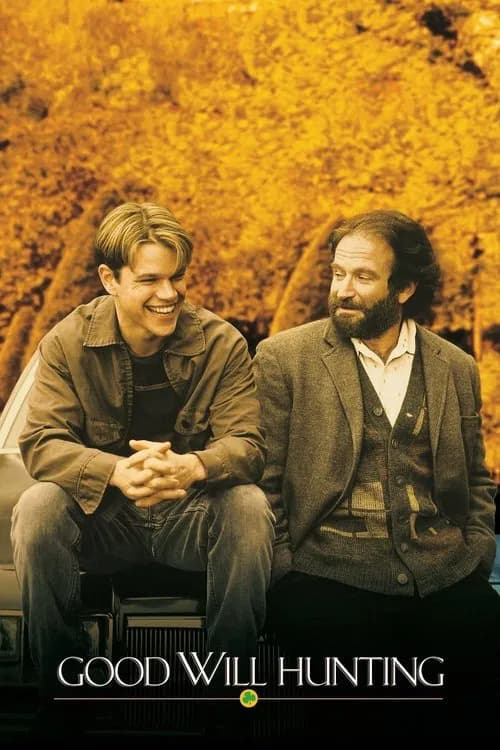
A janitor at MIT has a genius-level talent for math. He hides it behind a working-class identity and a wall of defensive aggression, until a therapist refuses to be beaten by those defenses. As cliche as it sounds, the film is about the gap between being smart and having the courage to let someone know you.
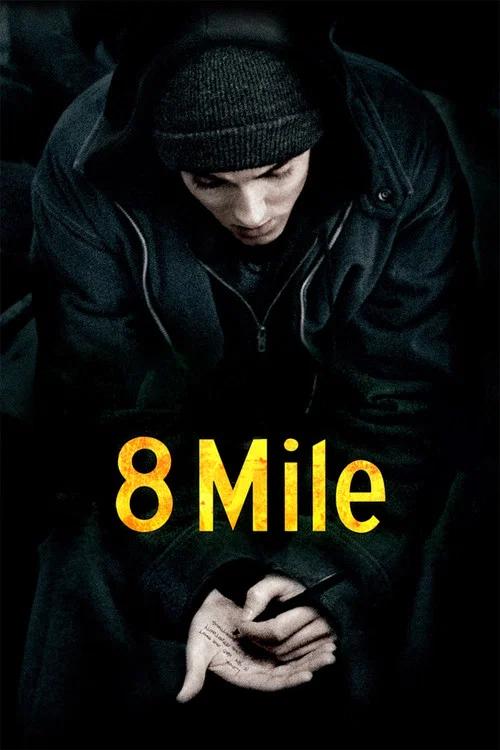
Good Will Hunting is a 1997 drama film directed by Gus Van Sant. This breakdown covers 5 techniques (1 editing, 1 psychology, 1 cinematography, 1 narrative and 1 sound), each with the scene where you can see it. If you like how it is made, 8 Mile uses several of the same techniques.
Structuring the film as a series of therapy or training sessions, each one wearing down more of the main character's defenses. They build toward one scene where all the pressure is released.
How this film uses it
Every session between Will and Sean ends with Will either winning an argument or walking out. The film stacks up these failures until Sean says 'It's not your fault'. He repeats the line and holds on it, with no room for a witty comeback, until Will breaks. Every earlier scene was built to prepare for this one.
Where to see it
The 'it's not your fault' scene. Sean refuses to accept Will's deflection. The repetition pulls out an emotional response that no argument could get.
Giving a character a protective manner, such as charm, cynicism or intellect, that hides vulnerability. The audience sees the defense first and the wound it covers later.
How this film uses it
Will's genius lets him humiliate anyone who comes near him. He turns every relationship into a contest he wins by being smarter. He knows everything about history, science and mathematics, yet he knows nothing about himself. Knowing himself would mean being vulnerable, and his intelligence is the armor he built against that.
Where to see it
Will demolishing the Harvard student in the bar. He uses his intelligence as a weapon to push people away.
Using specific working-class parts of a city, like its bars, docks and construction sites, to define the characters. The places show who they are expected to be and what leaving would cost.
How this film uses it
South Boston is everywhere in the film. You see the triple-decker houses, the bars and the parks, and you hear the accent. The neighborhood stands for the life Will was handed at birth. Choosing Skylar and mathematics means leaving it, and the film shows you what that choice costs him as a person.
Where to see it
Will and his friends driving through Southie. The neighborhood shows you the life Will is being asked to leave behind.
Placing the main character between 2 mentors with opposing ideas of who they should become. One may want to use their gift and the other to free them from it, and they have to choose.
How this film uses it
Lambeau sees Will as a mathematical asset, a genius to be put to use. Sean sees Will as a person who needs to be freed from the gift that traps him. The 2 men disagree on principle, and the film is built so that Will's choice between them is its central question.
Where to see it
The hallway argument between Lambeau and Sean. Each man has his own idea of what he owes Will, and the 2 ideas clash.
Writing songs for the film that carry story, feeling or payoff. Characters burst into music or a theme song resolves the plot.
How this film uses it
Elliott Smith's songs 'Miss Misery', 'Between the Bars' and 'Angeles' play over Will's inner life. They carry the yearning under his aggression and the grief under his wit. The music says what the characters can't say out loud. Will's intelligence is also a kind of prison, and wanting to escape it is also wanting to be loved.
Where to see it
The closing drive. Will chooses to leave for California. Elliott Smith's music makes the departure feel hopeful and heartbreaking at once.
Questions
Good Will Hunting: quick answers
What filmmaking techniques does Good Will Hunting use?
CineCode breaks down 5 techniques in Good Will Hunting (1997): Breakthrough Session Architecture, Defensive Persona, Working-Class Geography, Dueling Mentor Ideologies and Original Songs as Narrative.
Who directed Good Will Hunting?
Gus Van Sant directed Good Will Hunting, released in 1997. CineCode also covers Milk (2008).
What films are similar to Good Will Hunting?
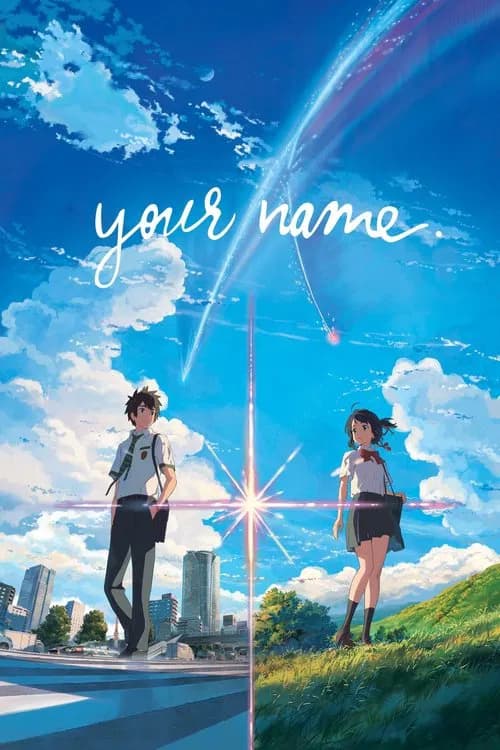
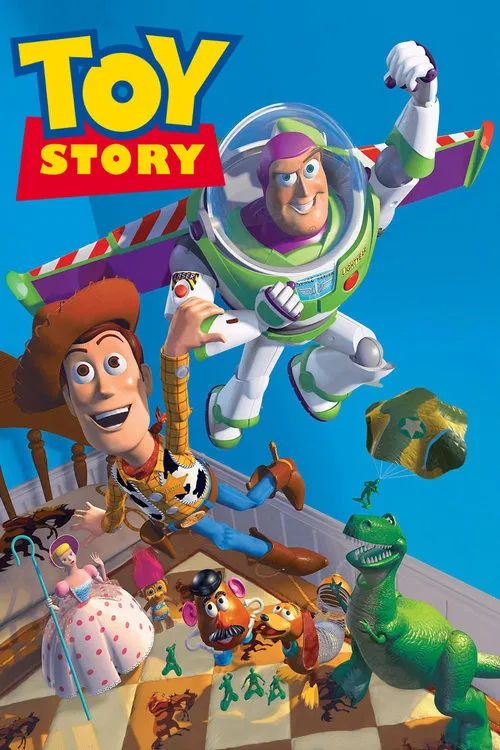
Films that share techniques with Good Will Hunting include 8 Mile (2002), Your Name (2016), Toy Story (1995), On the Waterfront (1954).