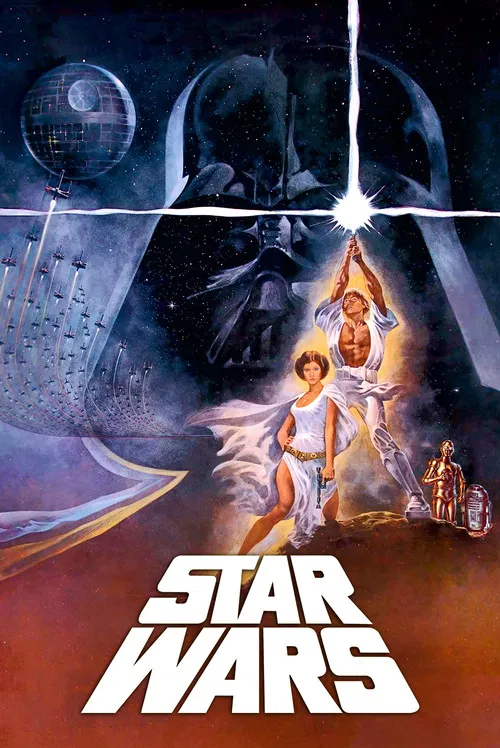
A farm boy from a desert planet joins a rebellion against a brutal empire. He destroys its planet-killing superweapon with a single shot, guided by a mystical instinct. Lucas took Joseph Campbell's monomyth (the classic hero's journey), World War II aerial combat and samurai films. He blended them into a new mythology.
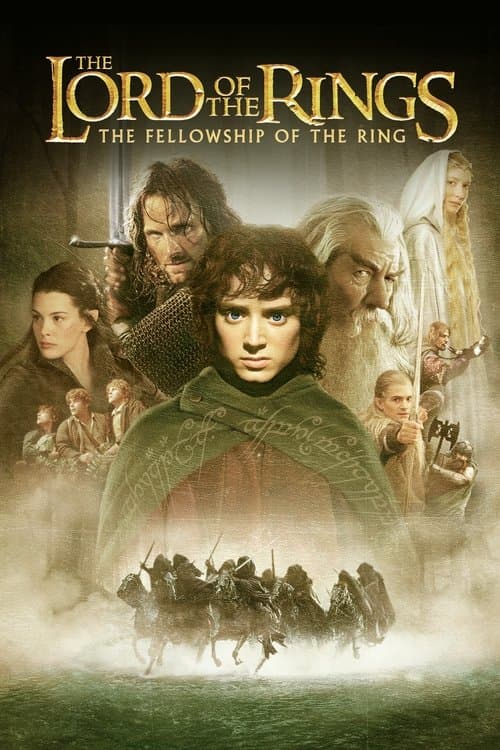
Star Wars: A New Hope is a 1977 action, adventure and science fiction film directed by George Lucas. This breakdown covers 4 techniques (1 narrative, 2 cinematography and 1 editing), each with the scene where you can see it. If you like how it is made, The Lord of the Rings: The Fellowship of the Ring uses several of the same techniques.
Structuring the story on the classic hero's journey, with its call to adventure, trials, ordeal and return home. The pattern feels familiar because myths in many cultures share it.
How this film uses it
Lucas drew directly from Campbell's book The Hero with a Thousand Faces and from Kurosawa's The Hidden Fortress. Luke's story follows Campbell's monomyth, the hero's journey found in myths everywhere, beat for beat. He is an orphan on a remote world who meets a mentor and crosses into adventure. He goes through a kind of death and rebirth and returns with the prize. As cliche as it sounds, the structure works because it is so familiar.
Where to see it
Obi-Wan's death. The mentor's sacrifice forces the hero to commit fully.
Designing a science fiction world that looks worn, dirty, rusty and patched up. The wear tells you this world had a long history before the story started.
How this film uses it
Production designer John Barry and Lucas wanted a "used future" where every piece of technology looks used and repaired. The Millennium Falcon's engine panels are taped and patched, the stormtroopers' armor is scuffed and the Mos Eisley cantina is properly dirty. You get the sense that this world existed long before the story started.
Where to see it
The Millennium Falcon's first appearance. It is a broken-down freighter, the opposite of a sleek science fiction ship.
Pausing on a wordless dreamlike image, such as a distant look, a blinding light or falling snow. The picture alone tells you what a character longs for or accepts.
How this film uses it
John Williams's theme rises as Luke looks out at Tatooine's twin suns setting over the desert. In that one image, you get his longing, how small he is and how huge the adventure ahead will be. The shot does nothing for the plot. It is there purely for the emotion.
Where to see it
The twin sunset. Luke watches it from the edge of the moisture farm.
Changing scenes by having 1 image slide off screen as the next slides in. The technique comes from 1930s serials and samurai films, and using it nods to that tradition.
How this film uses it
Lucas's editor John Jympson, and later Paul Hirsch, Marcia Lucas and Richard Chew, used wipes throughout, where the next shot slides across the screen. They were a deliberate nod to Kurosawa and old Hollywood serials. The wipes tell you this is an adventure story from a long tradition, a long way from realistic drama.
Where to see it
The transitions between Tatooine and the Death Star. The wipe tells you this story moves like an adventure serial.
Questions
Star Wars: A New Hope: quick answers
What filmmaking techniques does Star Wars: A New Hope use?
CineCode breaks down 4 techniques in Star Wars: A New Hope (1977): Monomyth Blueprint, Used Universe Aesthetic, Lyrical Yearning Image and Wipe Transition.
Who directed Star Wars: A New Hope?
George Lucas directed Star Wars: A New Hope, released in 1977.
What films are similar to Star Wars: A New Hope?
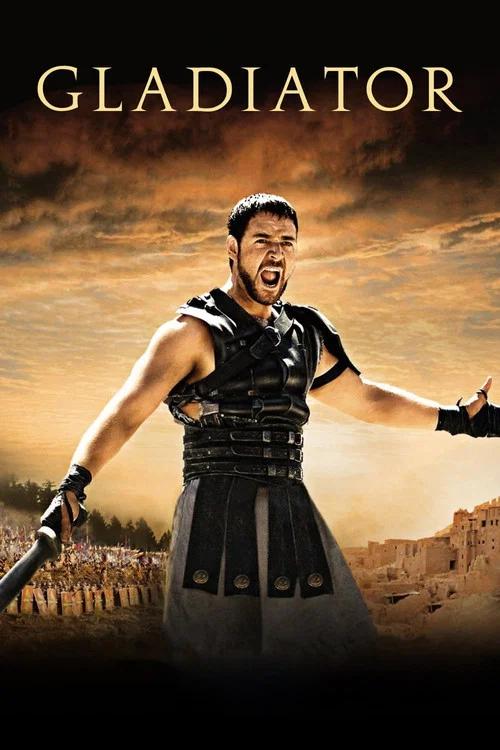
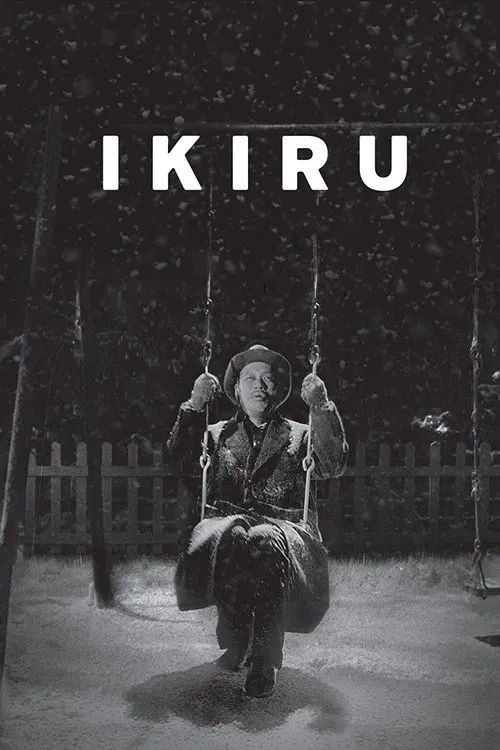
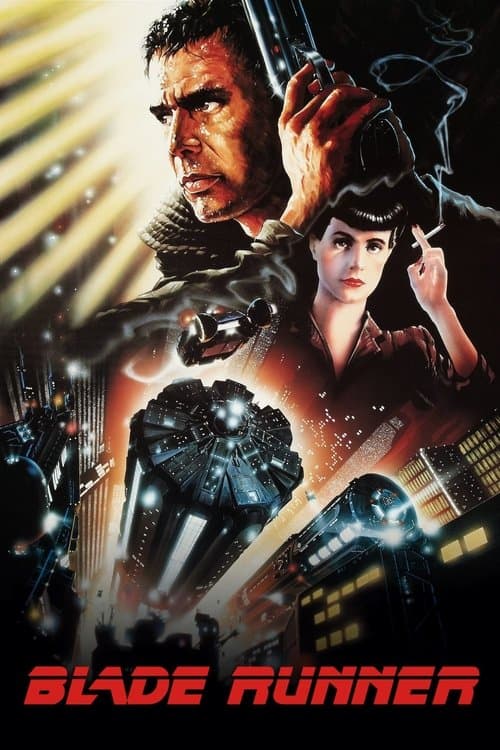
Films that share techniques with Star Wars: A New Hope include The Lord of the Rings: The Fellowship of the Ring (2001), Gladiator (2000), Ikiru (1952), Blade Runner (1982).