Musical · Romance · Drama

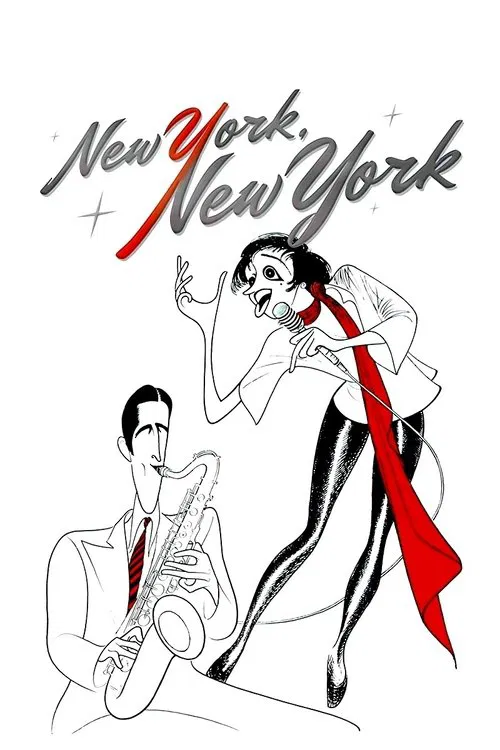
New York, New York

Martin Scorsese, 1977

On V-J Day in 1945, saxophonist Jimmy Doyle chases singer Francine Evans, and they fall into a rocky marriage while their careers go in different directions. Scorsese tried to mix the old Hollywood musical with a documentary feel. Worth watching for the contrast between painted sets and raw fights.

New York, New York (1977) poster

At a glance

New York, New York is a 1977 musical, romance and drama film directed by Martin Scorsese. This breakdown covers 5 techniques (1 cinematography, 3 narrative and 1 sound), each with the scene where you can see it. If you like how it is made, Se7en uses several of the same techniques.

Cinematography

Scorsese Visual Citation

Copying the camera choices, look and tone of a famous filmmaker or film tradition on purpose. It is an open homage that invites comparison and makes your knowledge of film history part of the meaning.

How this film uses it

Scorsese called the film a homage to classical Hollywood musicals, with deliberately artificial sets and storyline. The sets are big and unreal while the actors behave in a rough, natural way. That gap is the whole style of the film.

Where to see it

The V-J Day opening: Jimmy chases Francine through a crowded, larger-than-life party set.
Narrative

Actor Improvisation

Letting actors invent dialogue and action inside a scene's outline. The exchanges feel unrehearsed and a little dangerous.

How this film uses it

Scorsese had his actors improvise within the large sets. The conversations between Jimmy and Francine stumble, overlap and go on past where a musical would cut. They sound like people, not like characters in a number.

Where to see it

The cab ride and morning after: Jimmy and Francine share a cab and start bickering in a loose, unscripted style.

Sound

Original Songs as Narrative

Writing songs for the film that carry story, feeling or payoff. Characters burst into music or a theme song resolves the plot.

How this film uses it

Kander and Ebb wrote the title song, and in the story Jimmy turns it into a saxophone hit. By the end it tops the jazz charts. The success is real, but it cannot give him back Francine.

Where to see it

The finale: Jimmy's saxophone version of New York, New York tops the jazz charts as he waits to see Francine.

Narrative

Expectation Collapse

Building up the usual genre expectations, like the villain getting caught and the climax approaching, then refusing to deliver them. Your own anticipation is what makes the letdown hit so hard.

How this film uses it

A musical romance builds toward a reunion, and the film sets one up. Jimmy and Francine speak, she agrees to dinner, and you wait for the kiss. She leaves through another exit and he is stood up.

Where to see it

The final phone call: Francine agrees to dinner with Jimmy, then slips out by a different door.

Narrative

Staged Performance Within Film

Embedding a play or musical inside the film, so the staged piece mirrors or comments on the characters' real lives.

How this film uses it

Scorsese spent $350,000 on Happy Endings, a musical-within-a-musical of about 12 minutes that shows Francine as a movie star. It was cut from the original release and restored for the 1981 re-release. Critics praised its ironic view of Hollywood musicals.

Where to see it

Happy Endings: a lavish, choreographed number shows Francine in a movie star story that mirrors and mocks her own.

Questions

New York, New York: quick answers

What filmmaking techniques does New York, New York use?
CineCode breaks down 5 techniques in New York, New York (1977): Scorsese Visual Citation, Actor Improvisation, Original Songs as Narrative, Expectation Collapse and Staged Performance Within Film.
Who directed New York, New York?
Martin Scorsese directed New York, New York, released in 1977. CineCode also covers Mean Streets (1973), Alice Doesn't Live Here Anymore (1974), Taxi Driver (1976), Raging Bull (1980), The King of Comedy (1982), After Hours (1985).
What films are similar to New York, New York?
Films that share techniques with New York, New York include Se7en (1995), Psycho (1960), Django Unchained (2012), Joker (2019).