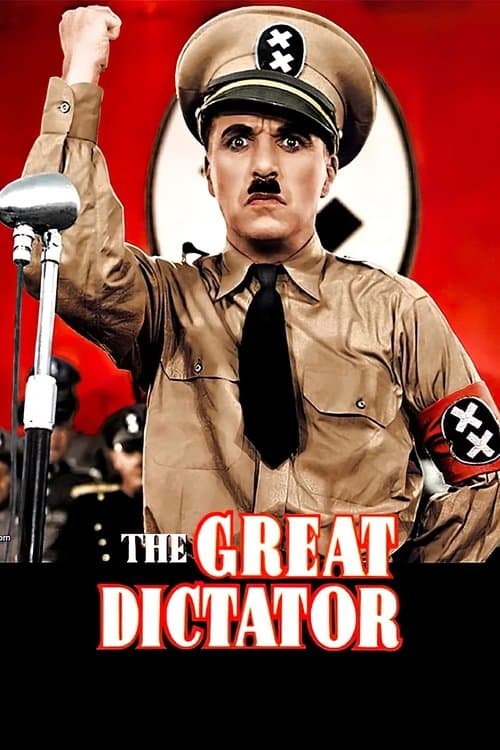
The Great Dictator
Charlie Chaplin · 1940
A Jewish barber and the dictator of Tomania — who happens to look exactly like him — are confused for each other, with the barber accidentally ending up before a stadium of fascists and delivering a speech for peace. Chaplin's first sound film is simultaneously his funniest and his most explicitly political — a direct attack on Hitler made while the world was still uncertain whether to fight.
Techniques Used
5 techniques identified in this film
Silent Comedy Homage
NarrativeA sound film that deliberately deploys the physical comedy vocabulary of the silent era — pratfalls, timed gags, expressive body language — as a formal statement about cinema's history and the speaker's own origins.
How this film uses it
Chaplin's Barber sequences operate entirely in the physical grammar of the Tramp: timed gags with shaving implements, wordless expressiveness, the body as the site of all comedy. In a sound film about a world being destroyed by rhetoric, the man who defeats the dictator through the power of physical comedy is the film's political argument.
Psychological Doubling
PsychologyConstructing two characters as structural mirrors of each other — sharing drives, disciplines, or psychological profiles that make them equivalents whose difference is context rather than essence.
How this film uses it
The Barber and Hynkel occupy identical bodies — Chaplin's body — and the film's political argument rests on this physical indistinguishability. The oppressor and the victim are physically identical; what separates them is power, not nature. The doubling is the film's most radical political claim.
Black Comedy as Political Weapon
NarrativeUsing comedy — slapstick, absurdism, satire — as a means of political attack, denying a target the gravity it requires to function by rendering it ridiculous.
How this film uses it
Chaplin made Hitler ridiculous — the globe ballet, the sycophantic generals, the Phooey's vanity — at a moment when many powerful people treated fascism as a serious political program deserving engagement. The comedy was a political act: to laugh at Hitler was to deny him the reverence on which fascist theater depends.
Direct Address
NarrativeA character speaking directly to the camera — collapsing the boundary between the film's fictional world and the audience's real one, making the viewer complicit in or accused by what they observe.
How this film uses it
The final speech breaks every fictional convention: the Barber becomes Chaplin becomes a man speaking to the world in 1940, directly, about fascism, about hope, about human possibility. The direct address is the film's most formal and most human moment — the comedian laying down the comedy to say what he actually means.
Documentary Realism as Satire
NarrativeUsing the visual grammar of documentary — newsreel aesthetics, observational staging, reported speech — as a satirical tool, exposing the constructed nature of political theater by mimicking its own methods.
How this film uses it
Chaplin mimics Nazi visual propaganda throughout the Hynkel sequences — the rallies, the newsreel coverage, the ceremonial stagings — deploying the grammar of fascism to expose it. The satire is most effective when it is most accurate: the Phooey sequences work because they resemble the actual footage.
You Might Also Like
Films that share at least one technique with The Great Dictator

A paranoid Air Force general launches an unauthorized nuclear strike on the USSR and the President, generals, and a wheelchair-bound ex-Nazi scientist scramble helplessly to stop World War III. A political satire so absurdist it made nuclear annihilation funny — and thereby more frightening than any earnest treatment could.
Dr. Strangelove
Stanley Kubrick · 1964
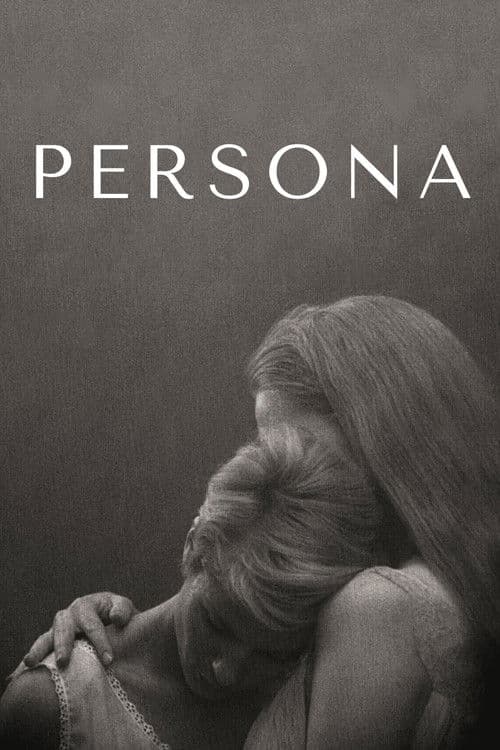
A famous actress abruptly stops speaking and is assigned to the care of a nurse named Alma at a remote seaside cottage, where the boundary between their identities begins to dissolve. Bergman's most formally radical film makes the cinema screen itself the site of psychological collapse.
Persona
Ingmar Bergman · 1966

A perfectionist ballerina wins the lead in Swan Lake but becomes consumed by paranoia and hallucination as opening night approaches. A psychosexual horror film about the violence of perfectionism and the dissolution of identity.
Black Swan
Darren Aronofsky · 2010