
Dr. Strangelove
Stanley Kubrick · 1964
A paranoid Air Force general launches an unauthorized nuclear strike on the USSR and the President, generals, and a wheelchair-bound ex-Nazi scientist scramble helplessly to stop World War III. A political satire so absurdist it made nuclear annihilation funny — and thereby more frightening than any earnest treatment could.
Techniques Used
4 techniques identified in this film
Black Comedy as Political Weapon
NarrativeUsing humor — absurdism, farce, caricature — to bypass the audience's political defenses, making arguments that would be rejected if stated seriously acceptable because they arrive as jokes.
How this film uses it
Kubrick understood that a serious anti-nuclear film would be dismissed as propaganda. Comedy let him say the same thing — that the logic of mutually assured destruction was insane — in a form the audience would receive. The jokes are the argument.
Three-Role Performance
NarrativeCasting a single actor in three distinct roles as a Brechtian alienation device — the tripling preventing full identification with any single character and foregrounding the performative nature of political and social roles.
How this film uses it
Peter Sellers plays President Muffley, Group Captain Mandrake, and Dr. Strangelove — three figures from the political, military, and scientific establishments respectively. The device argues that these institutions are performances: different costumes on the same fundamental absurdity.
Ken Adam War Room Design
CinematographyCreating a production design for a military or governmental space that is simultaneously realistic and theatrical — designed for the camera's eye as much as for functional plausibility.
How this film uses it
Ken Adam's circular War Room — the single overhead light, the round table, the big board — has no real-world equivalent but feels completely authoritative. It is designed as a stage, and Kubrick shoots it as one: the space as theater for the performance of geopolitical absurdity.
Documentary Realism as Satire
CinematographyUsing the visual grammar of documentary cinema — handheld camera, naturalistic lighting, functional staging — in a satirical context, so that the realistic style creates comedy through contrast with absurdist content.
How this film uses it
Gilbert Taylor shoots the B-52 sequences in a quasi-documentary style with handheld camera and available-light aesthetics, while the War Room is theatrical and stylized. The contrast between the documentary realism of the pilots and the absurdist theater of the politicians makes both funnier.
You Might Also Like
Films that share at least one technique with Dr. Strangelove
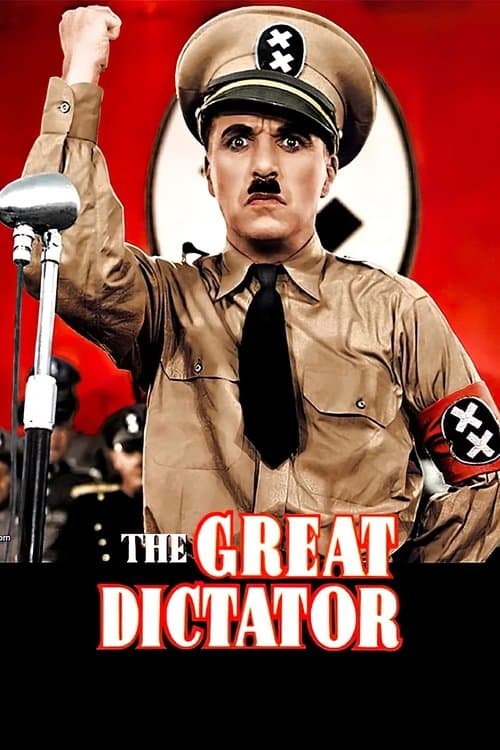
A Jewish barber and the dictator of Tomania — who happens to look exactly like him — are confused for each other, with the barber accidentally ending up before a stadium of fascists and delivering a speech for peace. Chaplin's first sound film is simultaneously his funniest and his most explicitly political — a direct attack on Hitler made while the world was still uncertain whether to fight.
The Great Dictator
Charlie Chaplin · 1940
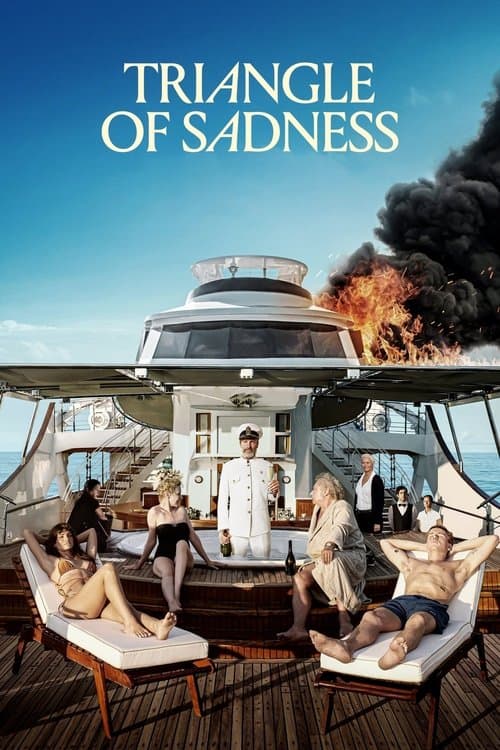
A male model and his influencer girlfriend are invited onto a luxury yacht where the ultra-wealthy and their staff are subject to a catastrophic storm — and then a shipwreck that inverts the social hierarchy entirely. Ruben Östlund's film is a three-act assault on class, beauty, and the performance of power.
Triangle of Sadness
Ruben Östlund · 2022