Comedy · Crime

Take the Money and Run

Woody Allen, 1969

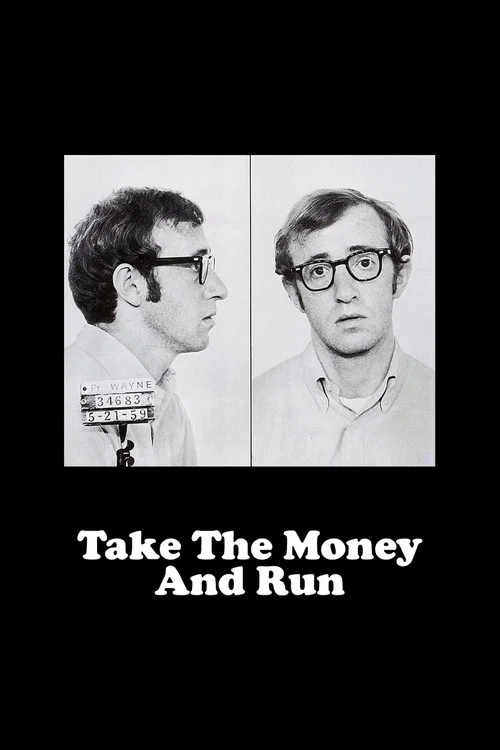
Virgil Starkwell is a hopeless bank robber, and his life is told as a documentary with a narrator and an interview. We see his clumsy holdups, his time on a chain gang and his marriage. Watch how Woody Allen builds a whole film from visual gags played with a straight face.

Take the Money and Run (1969) poster

At a glance

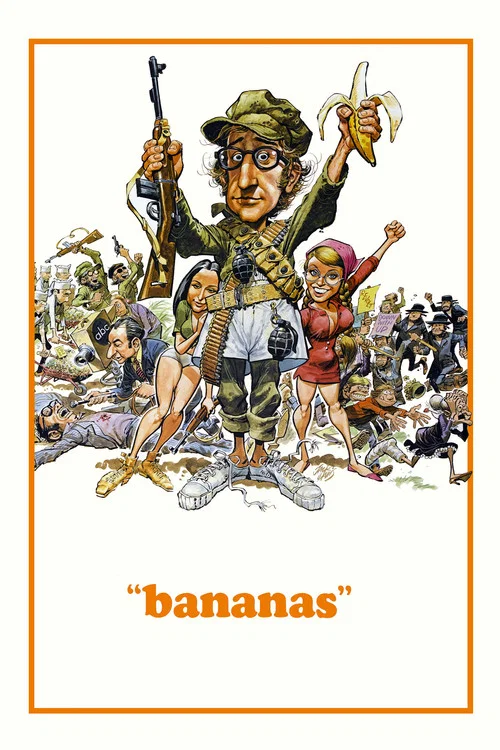
Take the Money and Run is a 1969 comedy and crime film directed by Woody Allen. This breakdown covers 4 techniques (2 cinematography, 1 narrative and 1 editing), each with the scene where you can see it. If you like how it is made, Bananas uses several of the same techniques.

Cinematography

Documentary Realism as Satire

Filming absurd material in documentary style, with handheld camera, natural light and newsreel-like staging. The serious look makes the content funnier and exposes how staged political events are.

How this film uses it

Jackson Beck narrates Virgil's life in the flat voice of a serious documentary. Near the end, Virgil appears in an interview. The sober style makes the gags funnier, because nothing on screen admits it is a joke.

Where to see it

Virgil's childhood: The narrator describes young Virgil being bullied and having his glasses stamped on.
Cinematography

Silent Comedy Homage

Borrowing the physical comedy of silent films, such as pratfalls, precisely timed gags and expressive body language. It is a nod to where cinema came from.

How this film uses it

The soap gun is a perfectly timed visual gag. A prop fails because of the weather, and you need no dialogue to get the joke. Allen builds his jokes the way silent comedians did, out of a simple object and a bad turn of luck.

Where to see it

The soap gun: Virgil carves a gun from soap for an escape attempt, and it dissolves in the rain.

Narrative

Deadpan Absurdism

Showing extreme, violent or surreal events while the characters react as if nothing unusual is happening. That mismatch is funny and unsettling at the same time.

How this film uses it

Bank staff argue over whether Virgil's holdup note says 'gub' or 'gun'. Everyone treats it as a serious office question while a robbery is in progress. The police arrive before they settle it.

Where to see it

The bank note: Bank staff cannot agree whether the note says 'gub' or 'gun', and police arrive before they decide.

Editing

Callback Editing

Bringing back an earlier image, line, location or piece of staging later in the film, often with the situation reversed. You enjoy recognizing it, and the comparison adds meaning.

How this film uses it

The ending returns to the soap. Virgil, sentenced to 800 years, is seen in an interview carving soap and asking whether it is raining. The callback shows he never learned anything.

Where to see it

The interview ending: Virgil, now in prison, carves soap and asks whether it is raining.

Questions

Take the Money and Run: quick answers

What filmmaking techniques does Take the Money and Run use?
CineCode breaks down 4 techniques in Take the Money and Run (1969): Documentary Realism as Satire, Silent Comedy Homage, Deadpan Absurdism and Callback Editing.
Who directed Take the Money and Run?
Woody Allen directed Take the Money and Run, released in 1969. CineCode also covers Bananas (1971), Everything You Always Wanted to Know About Sex *But Were Afraid to Ask (1972), Sleeper (1973), Love and Death (1975), Annie Hall (1977), Manhattan (1979).
What films are similar to Take the Money and Run?
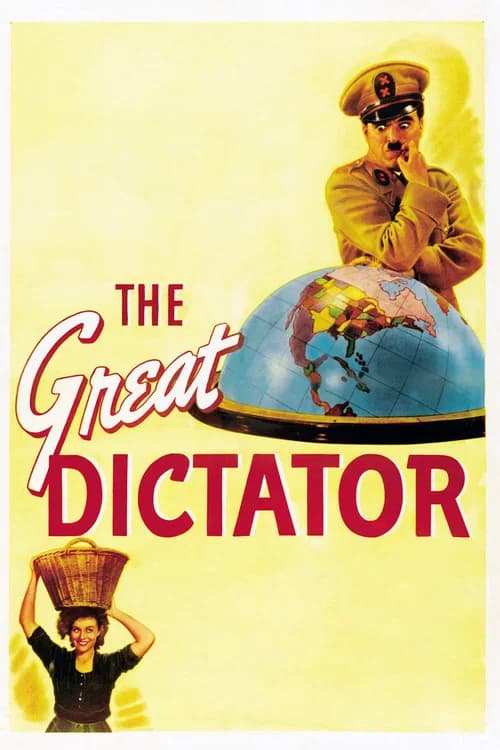
Films that share techniques with Take the Money and Run include Bananas (1971), The Great Dictator (1940), The Big Lebowski (1998), Honey Don't! (2025).