Biography · Drama · Adventure

The Walk

Robert Zemeckis, 2015

French street performer Philippe Petit dreams of stringing a wire between the Twin Towers and gathers a small team to pull it off in 1974. Most of the film is a heist, and the last act is the walk itself. Watch how the camera makes you feel the height.

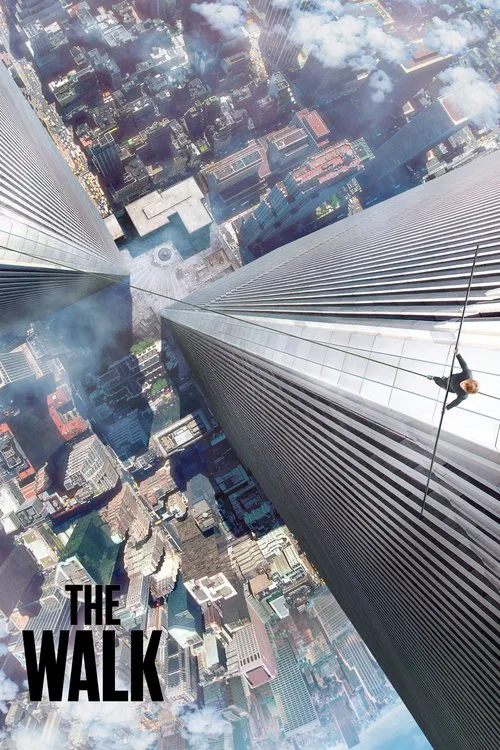
The Walk (2015) poster

At a glance

The Walk is a 2015 biography, drama and adventure film directed by Robert Zemeckis. This breakdown covers 5 techniques (3 narrative, 1 cinematography and 1 psychology), each with the scene where you can see it. If you like how it is made, Dog Day Afternoon uses several of the same techniques.

Narrative

Direct Address

Having a character look into the camera and speak to the audience, also called breaking the fourth wall. It makes you feel like their confidant and reminds you this is a film.

How this film uses it

Philippe tells the story to the camera from the torch of the Statue of Liberty, with the towers behind him. He asks you questions and speaks as if you were part of his crew. It makes you a confidant, which suits a man who needs an audience.

Where to see it

The opening: Philippe speaks straight to the camera from the Statue of Liberty's torch and begins to tell the story of the walk.
Narrative

Ticking Clock Structure

Building the story around a clear deadline the hero must beat. The time pressure and the obstacles grow with each scene until the climax.

How this film uses it

The team has to get the wire up before the construction crews arrive at 7:00 a.m. They fall about 3 hours behind, run into guards and nearly drop the heavy cable. The deadline makes every setback matter.

Where to see it

The night before the walk: The team strings the cable and sets the wires while behind schedule and dodging guards. They nearly drop the cable off the roof.

Narrative

Obsession as Structural Engine

Building the whole plot on one character's fixation with a person, goal or rival. Every scene ties back to it, and the obsession keeps feeding itself while it destroys them.

How this film uses it

Philippe sees a photo of the towers in a dentist's waiting room, and every scene after that points toward them. His apprenticeship with Papa Rudy, his practice and his practice walk between the towers of Notre Dame all build toward the one crossing.

Where to see it

The dentist's waiting room: Philippe sees a magazine photo of the Twin Towers and decides to walk a wire between them.

Cinematography

Vertigo Staging

Framing a character so the drop below stays in view, using height and depth to make you feel danger in your body. Watching becomes a test of nerve.

How this film uses it

The film was released in IMAX 3D, and critics singled out the wire walk for its visual effects. The crossing runs for several minutes of strolling, kneeling and lying down high above New York. The effects aim to make you feel the height.

Where to see it

The wire walk: Philippe crosses the gap between the towers 6 times in about 45 minutes. He kneels to the crowd and lies down on the wire while police wait.

Psychology

Flow State Portrayal

Showing a character so absorbed in one task that everything else fades away. You feel their calm focus and see why they risk so much for it.

How this film uses it

Philippe says that once he began walking, everything around him faded except the wire and himself. For the first time in his life, he felt thankful and at peace. The danger becomes the one place where he is calm.

Where to see it

The first step: Philippe explains in narration that the world fell away once he stepped onto the wire. He feels at peace as the crowd below cheers.

Questions

The Walk: quick answers

What filmmaking techniques does The Walk use?
CineCode breaks down 5 techniques in The Walk (2015): Direct Address, Ticking Clock Structure, Obsession as Structural Engine, Vertigo Staging and Flow State Portrayal.
Who directed The Walk?
Robert Zemeckis directed The Walk, released in 2015. CineCode also covers Romancing the Stone (1984), Back to the Future (1985), Who Framed Roger Rabbit (1988), Back to the Future Part II (1989), Back to the Future Part III (1990), Death Becomes Her (1992).
What films are similar to The Walk?
Films that share techniques with The Walk include Dog Day Afternoon (1975), Strange Days (1995), Fight Club (1999), The Silence of the Lambs (1991).