Adventure · Drama · History

Aguirre, the Wrath of God

Werner Herzog, 1972

In 1560, conquistador Don Lope de Aguirre seizes command of an Amazon expedition searching for El Dorado. He leads his men into the jungle on a mission that turns into a shared descent into madness. Werner Herzog filmed in the actual Amazon with a stolen camera. You can't really separate the reality of the shoot from the reality of the film.

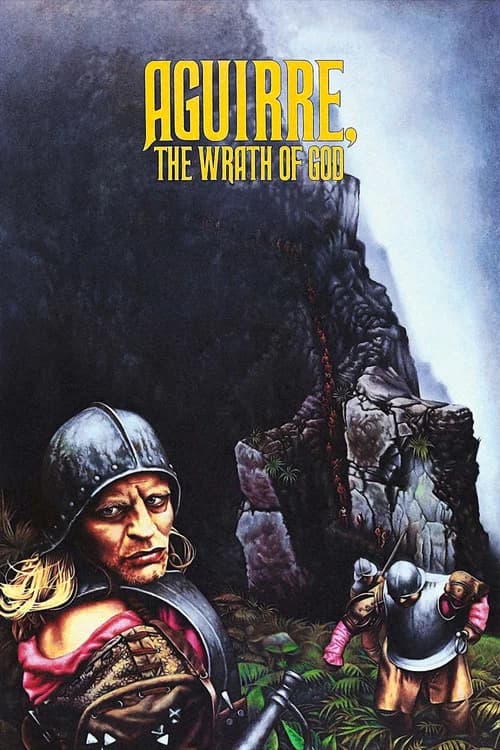
Aguirre, the Wrath of God (1972) poster

At a glance

Aguirre, the Wrath of God is a 1972 adventure, drama and history film directed by Werner Herzog. This breakdown covers 5 techniques (2 cinematography and 3 narrative), each with the scene where you can see it. If you like how it is made, Zero Dark Thirty uses several of the same techniques.

Cinematography

Landscape as Sacred Geography

Photographing real landscapes like mountains, plains and rivers so they feel mythic and full of meaning. The land becomes a spiritual and moral test the characters have to cross.

How this film uses it

The Amazon does not care about the conquistadors, and that slowly becomes overwhelming. Herzog films the river, the jungle and the mist as a world with no place for human ambition. It simply goes on, swallows things and silences them. The landscape is sacred in the sense that it can't be translated. It sits beyond human meaning, and humans still have to find their way through it.

Where to see it

The raft sequences on the river. The jungle closes in around the expedition. The main thing the images tell you is that the landscape has no interest in human purpose.
Cinematography

Handheld Cinema Vérité

Shooting with a handheld camera so the frame shakes and moves with the action. This documentary-style look, called cinema vérité, puts you uncomfortably close to the character.

How this film uses it

Herzog shot in the actual Amazon with a tiny crew. The handheld style came out of necessity and ended up defining the film. The unsteady camera makes the jungle real. In every pan through the undergrowth and every shot from the edge of the raft, a camera operator is in physical contact with the place you're looking at.

Where to see it

The raft navigation sequences. The handheld camera tips with the movement of the raft. You feel the physical reality of the jungle in how unsteady the image is.

Narrative

Obsession as Structural Engine

Building the whole plot on one character's fixation with a person, goal or rival. Every scene ties back to it, and the obsession keeps feeding itself while it destroys them.

How this film uses it

Aguirre is obsessed with El Dorado and with his destiny as emperor. That obsession drives every member of the expedition toward death. Within the film's logic, nobody questions it. It is simply there and it is absolute. It bends reality around itself until only Aguirre and the monkeys are left.

Where to see it

Aguirre's final monologue to the monkeys. He delivers his obsession to an audience that can't understand it. By this point, the delusion is total and needs nobody else.

Narrative

Tragic Inversion Structure

Structuring the story so a character's rise or cruelty is mirrored by its opposite. A parallel story shows a different outcome, or a powerful figure loses everything in ways that echo earlier wrongs.

How this film uses it

Aguirre starts as a subordinate who takes power through murder. He ends alone on a raft of corpses, surrounded by monkeys. Each act of violence that raised him up is turned into a loss. The jungle returns him to nothing. The conqueror's empire shrinks to the one territory he can't control.

Where to see it

The final raft sequence. Aguirre walks among the dead as the raft circles. His empire is down to monkeys, and the reversal is complete.

Narrative

River as Descent Structure

Structuring the film as a river journey, where each stop takes the characters deeper into danger and into moral or mental breakdown. The trip on the map matches the one inside them.

How this film uses it

The Amazon moves in one direction and the expedition can't reverse it. The current gives the story its logic. Each stretch downstream is a stage in the group's madness. The water carries the survivors further from civilization and closer to falling apart. The river passes no judgment on any of it and simply keeps flowing.

Where to see it

The raft's slow progress downriver. The current drives the story. The movement downstream follows the descent from ambition to delusion to silence.

Questions

Aguirre, the Wrath of God: quick answers

What filmmaking techniques does Aguirre, the Wrath of God use?
CineCode breaks down 5 techniques in Aguirre, the Wrath of God (1972): Landscape as Sacred Geography, Handheld Cinema Vérité, Obsession as Structural Engine, Tragic Inversion Structure and River as Descent Structure.
Who directed Aguirre, the Wrath of God?
Werner Herzog directed Aguirre, the Wrath of God, released in 1972. CineCode also covers Rescue Dawn (2007).
What films are similar to Aguirre, the Wrath of God?
Films that share techniques with Aguirre, the Wrath of God include Zero Dark Thirty (2012), Close Encounters of the Third Kind (1977), Manhattan Murder Mystery (1993), Black Swan (2010).

Same director

More from Werner Herzog