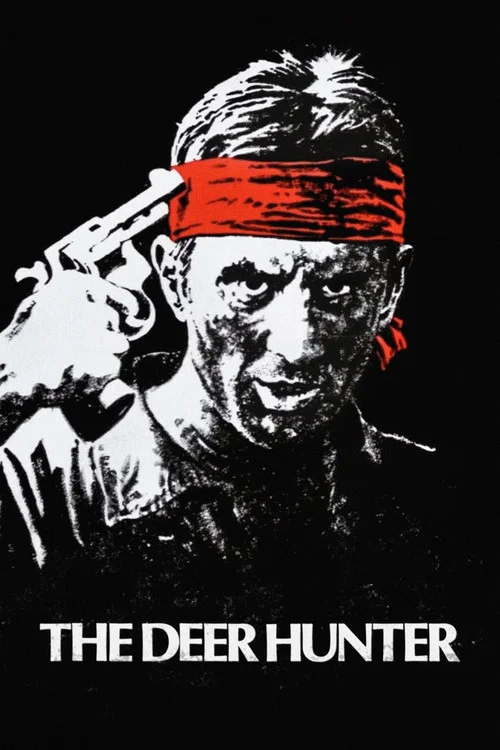
In this one, 3 friends from a Pennsylvania steel town go to Vietnam and come back changed for good: 1 missing, 1 broken and 1 trying to hold together what is left. It's a film that refuses to explain what the war did to the men who fought it.
The Deer Hunter is a 1978 drama and war film directed by Michael Cimino. This breakdown covers 4 techniques (4 narrative), each with the scene where you can see it. If you like how it is made, Three Billboards Outside Ebbing, Missouri uses several of the same techniques.
Moving the film at the slow, deliberate pace of a ritual, with long takes, few cuts and unhurried camera moves. The patience builds dread and gives each step the weight of a ceremony.
How this film uses it
The wedding sequence runs nearly an hour, and Cimino films every dance, every toast and every conversation. The length is the point. You have to live in this community's warmth long enough to understand what Vietnam destroys. The ceremony can't be shortened, because the war takes away exactly that fullness.
Where to see it
The wedding. The Orthodox ceremony, the reception and the dancing are all there. You see the community's rituals at full length before they are interrupted for good.
Giving a film 2 very different tones, such as comedy and tragedy, often split into halves. Each makes the other hit harder, and the film never blends them into 1.
How this film uses it
The first act is warm, communal and full of celebration. The second act is terror that doesn't let up, and the third is grief and feeling out of place. Cimino doesn't soften the jumps between these moods. The shift to Vietnam is sudden and total, so the warmth of the first act feels like something you have lost too.
Where to see it
The cut from the bar after the last hunting trip to Vietnam. Nothing eases you from one to the other. The war's violence replaces the community's warmth without warning.
Building up to a big emotional release slowly, by investing in the characters and giving small bits of hope. When the release comes, it feels deserved after all the suffering.
How this film uses it
At the end of the film, 'God Bless America' is sung quietly around a table, with grief, love and confusion all mixed together. The film has earned this emotional release through 3 hours of loss and loyalty piling up. Cimino doesn't explain the song. It is simply what is left when everything else has been taken.
Where to see it
The final breakfast. The survivors sing 'God Bless America'. The release comes from the group admitting together that some things can't be fixed.
Splitting a story into 2 halves, or 2 films, that each have their own tone, look and main character. The meaning comes from the contrast between them.
How this film uses it
A diptych is a work in 2 matching halves. Before Vietnam and after Vietnam are 2 different films. The first is communal, warm and wide, and it shows the steel town's shared life. The second is broken up, cold and narrow. Its men are on their own and can no longer fit into the shared life the first half set up. The 2 halves say that Vietnam left what these men felt intact and made it impossible for them to be together in the same way.
Where to see it
Nick's fate in Saigon and Michael's return to Clairton. The 2 men's fates split apart. Each one ends up in 1 of the film's 2 worlds, and those worlds don't fit together.
Questions
The Deer Hunter: quick answers
What filmmaking techniques does The Deer Hunter use?
CineCode breaks down 4 techniques in The Deer Hunter (1978): Ceremonial Pacing, Tonal Bifurcation, Earned Catharsis and Two-Film Diptych Structure.
Who directed The Deer Hunter?
Michael Cimino directed The Deer Hunter, released in 1978. CineCode also covers Thunderbolt and Lightfoot (1974).
What films are similar to The Deer Hunter?
Films that share techniques with The Deer Hunter include Three Billboards Outside Ebbing, Missouri (2017), The Banshees of Inisherin (2022), The Shawshank Redemption (1994), Life is Beautiful (1997).