Crime · Drama

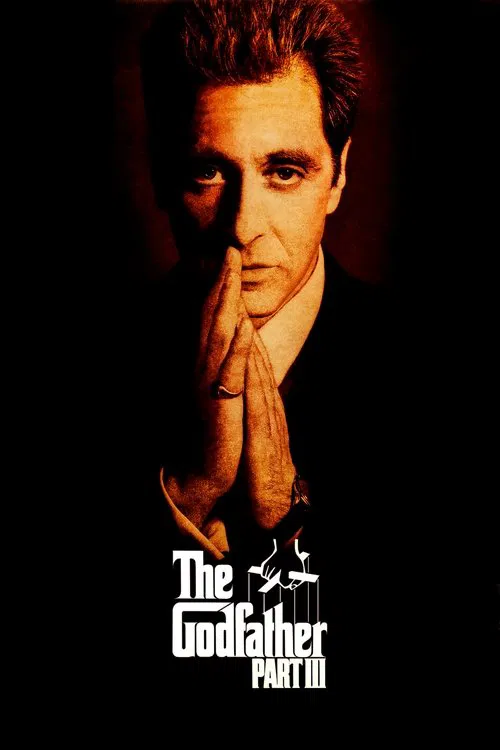
The Godfather Part III

Francis Ford Coppola, 1990

In 1979, an aging Michael Corleone tries to turn his criminal empire into legitimate business, partly through a deal tied to the Vatican Bank. His nephew Vincent and his daughter Mary pull him back toward violence. Watch how Coppola uses an opera to close the film's biggest sequence.

The Godfather Part III (1990) poster

At a glance

The Godfather Part III is a 1990 crime and drama film directed by Francis Ford Coppola. This breakdown covers 4 techniques (1 editing, 1 narrative, 1 sound and 1 psychology), each with the scene where you can see it. If you like how it is made, The Godfather uses several of the same techniques.

Editing

Cross-Cut Sacrament

Cutting back and forth between a sacred ceremony and acts of violence happening elsewhere. Putting the holy next to the brutal makes an ironic comment on both.

How this film uses it

Coppola cuts between the performance of Cavalleria rusticana in Palermo and the killings Michael has ordered. The music and the violence play at the same time. The effect is a call back to the first film's baptism sequence.

Where to see it

The opera in Palermo. Michael's son Anthony makes his operatic debut while revenge killings happen across the city, and Mosca's attempt on Michael kills Mary.
Narrative

Tragic Inversion Structure

Structuring the story so a character's rise or cruelty is mirrored by its opposite. A parallel story shows a different outcome, or a powerful figure loses everything in ways that echo earlier wrongs.

How this film uses it

Michael tries to become legitimate, and each step instead exposes the cost of what he has done. The man who once ordered his brother Fredo's death ends up losing the daughter he wanted to protect. His rise has been undone by the same violence that built it.

Where to see it

Mary's death. At the opera's end, Mary is shot on the steps of the opera house, and Michael cries out.

Sound

Operatic Score Integration

Building the film around its music, with recurring themes for characters, relationships and moral states. The score swells and returns to shape your emotions as deliberately as the editing.

How this film uses it

The film uses the stage opera as a real part of the story, and it carries the music's emotional weight. Themes from the earlier films also return. The score turns Michael's fall into a grand sad song.

Where to see it

The Palermo sequence. The opera's music and Anthony's performance run through the climax.

Psychology

Guilt as Hidden Motive

Letting a character's guilt over a past wrong shape what they do now. The wrong may come out late or only be hinted at, but it colors every choice.

How this film uses it

Michael carries the guilt of ordering Fredo's murder, and it drives his attempts at charity and his confession in Sicily. He keeps trying to buy back his soul. You see a man trying to pay for something that cannot be paid for.

Where to see it

Michael's confession. In Sicily, he confesses to Cardinal Lamberto, who later becomes Pope John Paul I.

Questions

The Godfather Part III: quick answers

What filmmaking techniques does The Godfather Part III use?
CineCode breaks down 4 techniques in The Godfather Part III (1990): Cross-Cut Sacrament, Tragic Inversion Structure, Operatic Score Integration and Guilt as Hidden Motive.
Who directed The Godfather Part III?
Francis Ford Coppola directed The Godfather Part III, released in 1990. CineCode also covers The Godfather (1972), The Godfather Part II (1974), The Conversation (1974), Apocalypse Now (1979), The Outsiders (1983), Rumble Fish (1983).
What films are similar to The Godfather Part III?
Films that share techniques with The Godfather Part III include The Godfather (1972), The Godfather Part II (1974), Ran (1985), Braveheart (1995).