Drama · History

A Passage to India

David Lean, 1984

In British-ruled India, a young Englishwoman visits the Marabar Caves with a local doctor and comes out accusing him of assault. The film then becomes a trial about race and truth. Pay attention to what the echo in the cave does to the soundtrack.

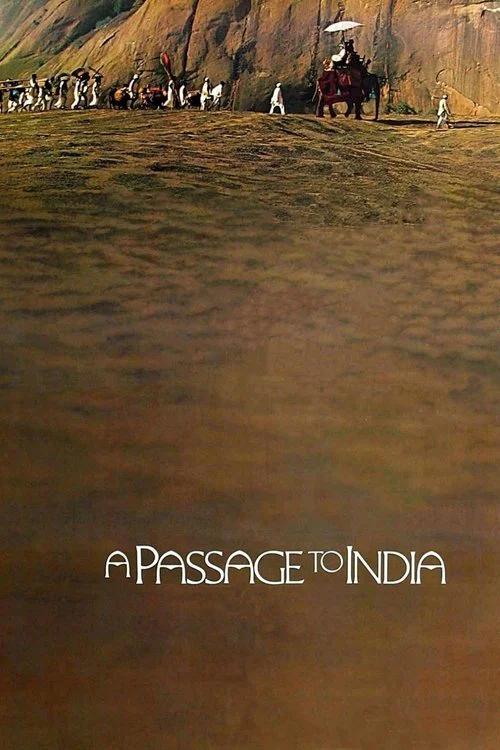
A Passage to India (1984) poster

At a glance

A Passage to India is a 1984 drama and history film directed by David Lean. This breakdown covers 4 techniques (1 sound, 1 psychology, 1 narrative and 1 cinematography), each with the scene where you can see it. If you like how it is made, Magic in the Moonlight uses several of the same techniques.

Sound

Subjective Sound Perspective

Shaping volume and clarity to match what a character is feeling or focused on. You hear the scene as they do, including sounds that trigger memory or fear.

How this film uses it

In the Marabar Caves, the noise of the large group echoes disturbingly, and Mrs. Moore becomes distressed and withdraws. The echo puts you inside her fear. You hear the cave the way she does.

Where to see it

The Marabar Caves. The crowd's noise echoes, and Mrs. Moore pulls away.

Psychology

Unreliable Reality

Keeping it unclear what is real and what is imagined in the film's world. You end up as unsure as the main character.

How this film uses it

Adela goes into a cave alone and comes out dishevelled and delirious, and the film never shows what happened inside. You have to decide for yourself what was real. Her own certainty slips later.

Where to see it

Adela leaves the cave. She flees the scene, and Aziz is arrested.

Narrative

Legal Theater

Staging a trial as a performance, with testimony and cross-examination played like theater. The rules can bring out the truth, or they can hide a verdict that was decided in advance.

How this film uses it

The trial turns into a public performance, with the British community and the Indian crowd on opposite sides. The room is more about empire than the crime. The case collapses when Adela admits that Aziz never entered the cave.

Where to see it

The trial. Adela withdraws her accusation, and Aziz is freed.

Cinematography

Real Locations as Character

Filming in recognizable real places so the setting acts like part of the cast. Streets, buildings and landscapes shape the mood of the story.

How this film uses it

Lean found the real caves unsuitable and used the hills near Bangalore instead, along with other Indian locations. The landscape looks huge and indifferent. It makes the people look small.

Where to see it

The hills near the caves. Adela and Aziz climb toward the caves under a hard sun.

Questions

A Passage to India: quick answers

What filmmaking techniques does A Passage to India use?
CineCode breaks down 4 techniques in A Passage to India (1984): Subjective Sound Perspective, Unreliable Reality, Legal Theater and Real Locations as Character.
Who directed A Passage to India?
David Lean directed A Passage to India, released in 1984. CineCode also covers Brief Encounter (1945), Great Expectations (1946), The Bridge on the River Kwai (1957), Lawrence of Arabia (1962), Doctor Zhivago (1965).
What films are similar to A Passage to India?
Films that share techniques with A Passage to India include Magic in the Moonlight (2014), Ballad of a Small Player (2025), Sleepers (1996), Inception (2010).