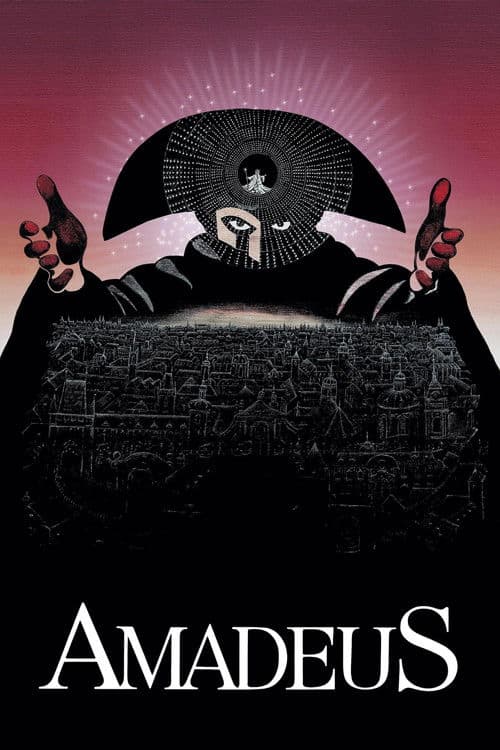
Amadeus
Miloš Forman · 1984
An aging Antonio Salieri confesses to a priest his belief that he murdered Wolfgang Amadeus Mozart — driven mad by the injustice of God giving divine genius to a vulgar, giggling man-child while leaving him only mediocrity. A film about talent, envy, and the cruelty of being almost gifted.
Techniques Used
4 techniques identified in this film
Frame Narrative as Trap
NarrativeA framing story — a character narrating past events — that is itself compromised by the narrator's unreliability, so that the frame becomes the film's central epistemological problem.
How this film uses it
Everything we see of Mozart is filtered through Salieri's memory and hatred. The film never corrects him. We have no access to Mozart except through the account of a man who despised him and may be confabulating. The frame doesn't just contain the story — it contaminates it.
Psychological Doubling
PsychologyTwo characters who mirror each other as shadow versions — one representing what the other wants, fears, or secretly is — their relationship defining the film's psychological core.
How this film uses it
Salieri and Mozart are formal doubles: one has the piety and discipline Mozart lacks; the other has the divine gift Salieri desperately wants. They are each other's nightmare. Salieri hears in Mozart's music the voice of God — which is also the voice that has rejected him. Their mirroring is the film's entire psychological argument.
Period Color Separation
CinematographyUsing distinct color palettes to separate historical periods or social worlds within a film, making visual grammar carry temporal or class meaning.
How this film uses it
Vienna's imperial world is rendered in golds, crimsons, and candlelit warmth — opulence as visual language. The asylum's framing scenes are cold, gray, and stripped of color. The contrast makes the film's structure legible through color alone: the warm past of music and obsession, the cold present of madness and confession.
Leitmotif
SoundA recurring musical theme attached to a character, place, or idea that returns and transforms as the narrative develops.
How this film uses it
Mozart's own compositions function as his leitmotifs — the 'Non più andrai' from The Marriage of Figaro, the opening of Don Giovanni. Forman uses the actual music as character revelation: each piece tells us something about Mozart that Salieri's narration cannot, providing an alternative account of the man that bypasses the unreliable narrator.
You Might Also Like
Films that share at least one technique with Amadeus

A perfectionist ballerina wins the lead in Swan Lake but becomes consumed by paranoia and hallucination as opening night approaches. A psychosexual horror film about the violence of perfectionism and the dissolution of identity.
Black Swan
Darren Aronofsky · 2010
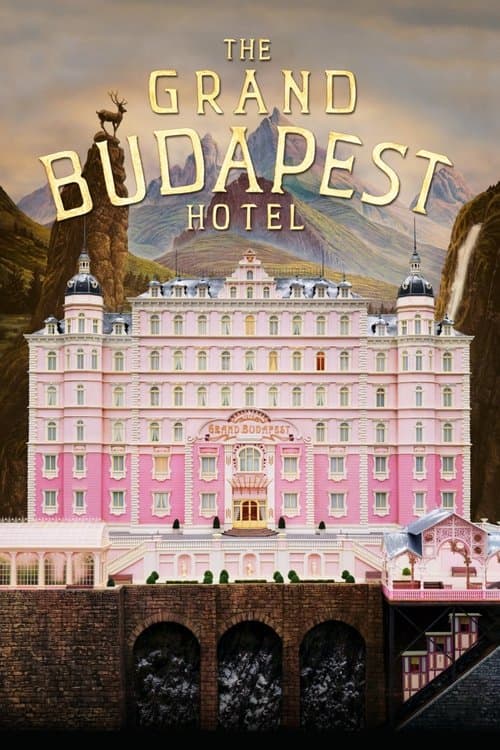
A legendary hotel concierge and his lobby boy are embroiled in the theft of a priceless painting and a family inheritance battle in a fictional European republic between the wars. Wes Anderson's most fully realized comedy uses nostalgia as a frame for examining what is lost when elegance is replaced by brutality.
The Grand Budapest Hotel
Wes Anderson · 2014
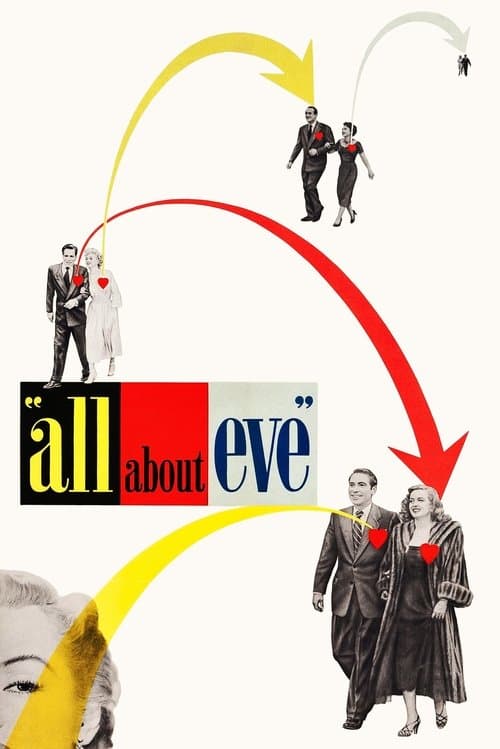
An ambitious young woman named Eve Harrington insinuates herself into the life of Broadway star Margo Channing, systematically displacing her in the theater world and the affections of those she loves. Joseph L. Mankiewicz's film is the most perfectly written screenplay in Hollywood history — a comedy of manners that is also a horror film.
All About Eve
Joseph L. Mankiewicz · 1950