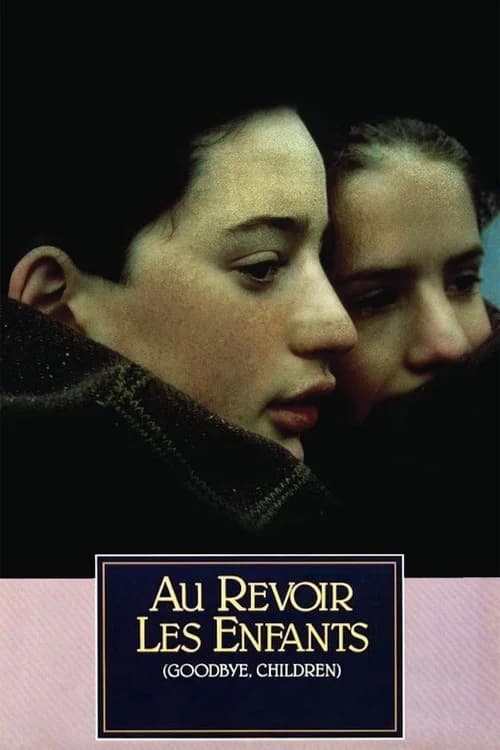
In a French Catholic boarding school during the Occupation, a 12-year-old boy named Julien befriends a mysterious new student named Jean Bonnet. He slowly discovers that Jean is a Jewish child being hidden by the school's Carmelite friars. Louis Malle's masterpiece is drawn from his own life. It is about the day a child understood what the world was capable of.
Au Revoir les Enfants is a 1987 drama, war and history film directed by Louis Malle. This breakdown covers 4 techniques (2 narrative, 1 psychology and 1 cinematography), each with the scene where you can see it. If you like how it is made, The Pianist uses several of the same techniques.
Drawing on the filmmaker's own life but keeping it at arm's length, often through a fictional stand-in. The result is precise and unsentimental, and it can question how memory flatters us.
How this film uses it
Malle puts himself into Julien, the Catholic boy. Julien betrays his friend by accident, and that moment haunted Malle for 40 years. Telling it as fiction lets him go back into his childhood guilt more honestly than a direct confession might allow.
Where to see it
The film's closing narration. Malle's words are: 'More than forty years have passed, but I will remember every second of that January morning until the day I die'.
Placing a child in the middle of adult moral failures and making them face a choice they can't fully understand. You understand what the child doesn't, which is where the horror comes from.
How this film uses it
Julien only understands what is happening to Jean when it is already over. He slowly becomes aware of a danger he never grasped in time. That late understanding is the moral center of the film.
Where to see it
Julien glancing toward Jean as the Gestapo officer searches the classroom. The look gives Jean away and comes too late to take back. He realizes what he failed to protect at the same moment he loses it.
Keeping the worst violence outside the frame. You hear it or see its effects and other people's reactions, and your imagination does the rest.
How this film uses it
You never see what happens to the boys. Malle ends the film before the deportation trains, so the Holocaust is only present as the place they are being taken. The horror stays off screen, and it weighs more because the film refuses to show it.
Where to see it
Father Jean's farewell as he is led away, and the closing narration. Those words are the only information you get about what happened to the boys after the doors closed.
Watching events from a measured distance with no swelling music, tear-jerking close-ups or showy camera moves. The film trusts what happens to carry the weight on its own.
How this film uses it
Malle films the friendship between Julien and Jean with the patience of someone recovering a memory. The boys' bond is built from small shared moments, and nobody declares a feeling. The camera is there as a witness.
Where to see it
Julien waking at night and finding Jean wearing a kippah and praying in Hebrew. Nobody explains it. One gesture shows you Jean's religion and the danger he is in.
Questions
Au Revoir les Enfants: quick answers
What filmmaking techniques does Au Revoir les Enfants use?
CineCode breaks down 4 techniques in Au Revoir les Enfants (1987): Autobiographical Distance, Child's Forced Moral Burden, Off-Screen Atrocity and Observational Restraint.
Who directed Au Revoir les Enfants?
Louis Malle directed Au Revoir les Enfants, released in 1987. CineCode also covers Elevator to the Gallows (1958).
What films are similar to Au Revoir les Enfants?
Films that share techniques with Au Revoir les Enfants include The Pianist (2002), 12 Years a Slave (2013), The Zone of Interest (2023), Lady Bird (2017).