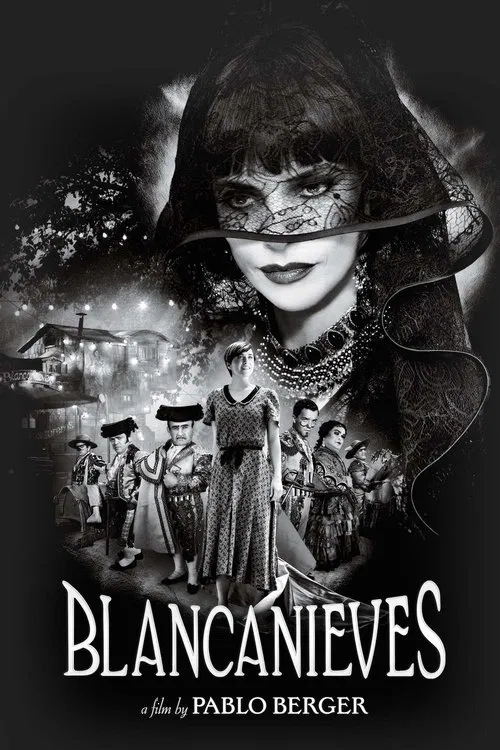
Snow White is retold as a silent black-and-white film set in 1920s Spain. Carmen, the daughter of a famous bullfighter, is raised by a cruel stepmother, then taken in by a troupe of bullfighting dwarfs. Berger's film feels like a lost classic, but darker than the fairy tale.
Blancanieves is a 2012 drama and fantasy film directed by Pablo Berger. This breakdown covers 5 techniques (2 narrative, 2 cinematography and 1 psychology), each with the scene where you can see it. If you like how it is made, Sunset Boulevard uses several of the same techniques.
Moving a known story into a new genre, country or era while keeping its core plot, so the familiar skeleton takes on a different meaning.
How this film uses it
Berger moves Snow White to 1920s Andalusia and swaps the forest cottage for the bullring. The dwarfs are bullfighters, and the poisoned apple remains. The familiar plot takes on a new, grim meaning.
Where to see it
The troupe. Bullfighters with dwarfism find Carmen floating downstream and name her Blancanieves.
Recreating the look of an earlier era's film or television using period cameras, film stock, lighting and contrast. The images feel like real records from that time or a tribute to it.
How this film uses it
The film is silent and black and white, and it was made as a love letter to European silent cinema. It also uses modern tools such as deep staging inside that look. You feel like you are watching an old movie, yet nothing seems dated.
Where to see it
The glass coffin sideshow. The troupe shows Carmen to a paying crowd, filmed in the look of a silent-era picture.
Having an actor perform in the big, physical style of silent movies, where gesture and facial expression do the work of dialogue. In a sound film, it marks a character as out of their time.
How this film uses it
The actors play with big gestures and faces, the way silent actors did. Macarena García won a Silver Shell at San Sebastián for her performance. Without dialogue, her eyes and movement carry everything.
Where to see it
The bullring. Carmen shows natural skill, and her face tells you how proud and scared she is.
Opening the film with a long stretch that has no dialogue. Images, sound and performance alone set up the characters, their world and what is at stake.
How this film uses it
The film begins with the father's accident in the ring and the mother's death in childbirth. Pictures, music and performance set up the whole family in a few minutes. You do not need a word to understand what was lost.
Where to see it
The opening. Carmen's father is injured in a bullfight, and her mother dies giving birth to her.
Closing on an outcome that hurts even where it succeeds. A reunion lacks warmth or a win leaves the character empty.
How this film uses it
The film ends with Carmen in a glass coffin, showing a single tear. Instead of a clean fairy-tale kiss, the troupe charges the public to see her. The ending leaves you sad and a little uneasy.
Where to see it
The final shot. Carmen lies in the glass coffin and a tear rolls down her cheek.
Questions
Blancanieves: quick answers
What filmmaking techniques does Blancanieves use?
CineCode breaks down 5 techniques in Blancanieves (2012): Source Story Transplant, Period Film Look Imitation, Silent Film Performance Register, Dialogue-Free Opening Act and Bittersweet Ending.
Who directed Blancanieves?
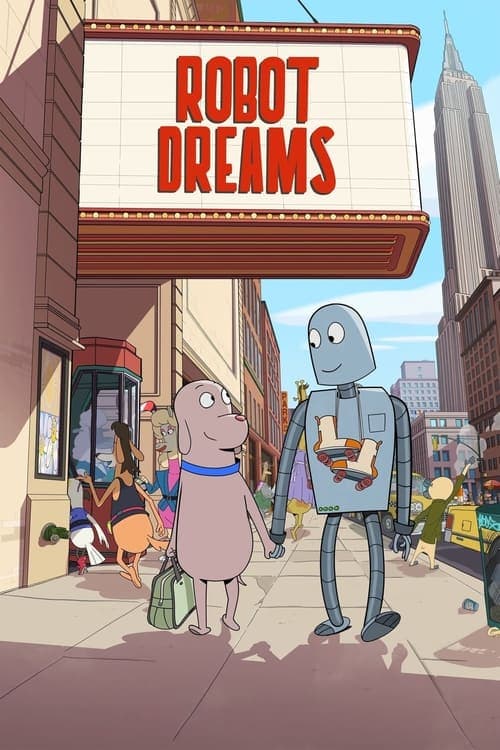
Pablo Berger directed Blancanieves, released in 2012. CineCode also covers Robot Dreams (2023).
What films are similar to Blancanieves?
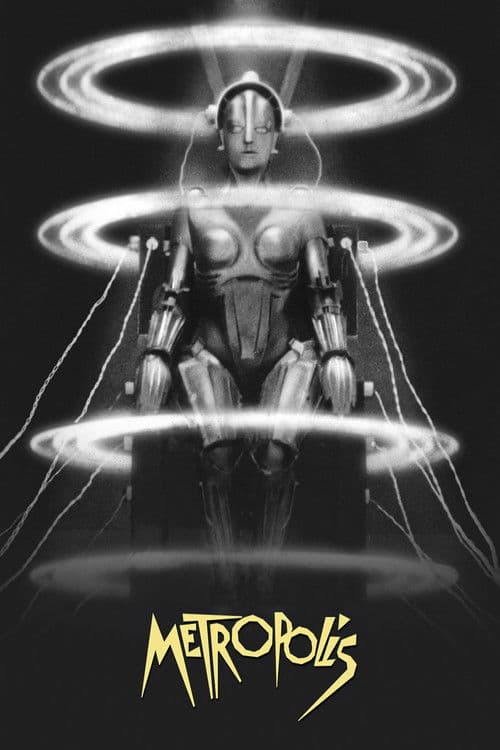
Films that share techniques with Blancanieves include Sunset Boulevard (1950), WALL-E (2008), Mad Max: Fury Road (2015), Metropolis (1927).