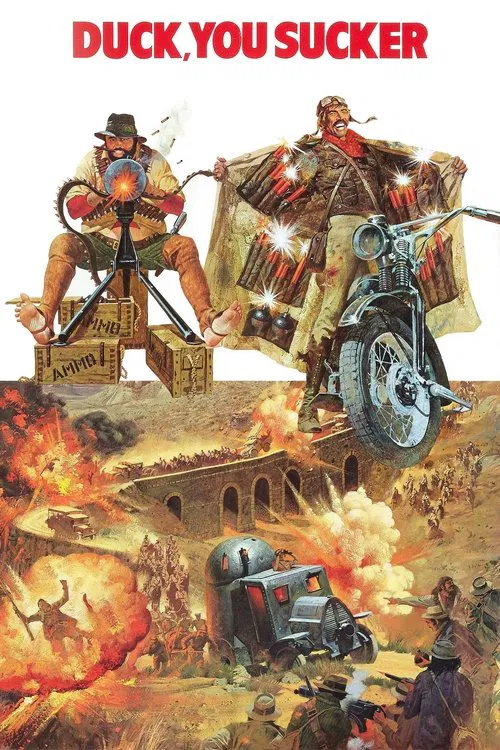
Western · Action

Duck, You Sucker

Sergio Leone, 1971

In Mexico in 1913, bandit Juan Miranda meets John Mallory, an Irish explosives expert on the run. Juan wants to rob a bank, but the two end up as heroes of a revolution neither planned to join. Leone mixes comedy with grief and ends on one small, sad question.

Duck, You Sucker (1971) poster

At a glance

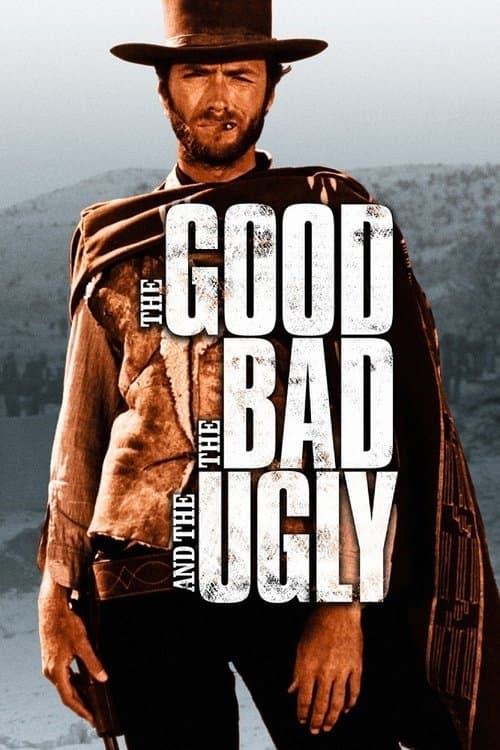
Duck, You Sucker is a 1971 western and action film directed by Sergio Leone. This breakdown covers 4 techniques (2 narrative, 1 editing and 1 sound), each with the scene where you can see it. If you like how it is made, The Good, the Bad and the Ugly uses several of the same techniques.

Narrative

Odd Couple Class Structure

Pairing characters from opposite social worlds who find each other strange. Their friction produces the comedy, and what they learn from each other produces the emotion.

How this film uses it

Juan is a peasant bandit who wants money and has no use for politics. John is an explosives expert who has fled Ireland. They trick each other and bicker, and slowly they come to depend on one another.

Where to see it

The bank plan: Juan frames John for a killing to make him help rob the Mesa Verde bank. John escapes and joins the revolutionaries.
Editing

Fractured Memory Editing

Cutting between the present and scattered, out-of-order flashbacks, the way a painful memory comes back in pieces. You put the backstory together as the character remembers it.

How this film uses it

John's past returns in short flashes of his friend Nolan, a betrayal in Ireland and a woman they both loved. The memories come when John faces another betrayal, and they come again at the end.

Where to see it

The firing squad camp: John sneaks into the army camp and sees that Dr. Villega has informed on the revolutionaries. This evokes his memory of Nolan's betrayal in Ireland.

Narrative

Civil War as Moral Backdrop

Setting personal stories against the Civil War or another historical war. The large-scale violence of armies gives context and extra weight to what the individual characters do.

How this film uses it

The revolution turns a robber into a hero by accident. Juan's small, greedy plans run into big history, and the personal story gains weight from the war around it.

Where to see it

The bank that is a prison: Juan breaks into the Mesa Verde bank expecting cash and finds it full of political prisoners. After he frees them, he becomes a hero of the revolution.

Sound

Ennio Morricone Structural Score

Treating the score as part of the film's structure, sometimes writing it before the shoot and playing it on set. The acting, camera and editing are then shaped around the music.

How this film uses it

Morricone scored the film, as he did Leone's earlier Westerns. A theme called Invention for John plays over the opening credits and sets the film's mix of the comic and the epic.

Where to see it

The opening credits: The theme plays over the credits and introduces the tone before the story begins.

Questions

Duck, You Sucker: quick answers

What filmmaking techniques does Duck, You Sucker use?
CineCode breaks down 4 techniques in Duck, You Sucker (1971): Odd Couple Class Structure, Fractured Memory Editing, Civil War as Moral Backdrop and Ennio Morricone Structural Score.
Who directed Duck, You Sucker?
Sergio Leone directed Duck, You Sucker, released in 1971. CineCode also covers A Fistful of Dollars (1964), For a Few Dollars More (1965), The Good, the Bad and the Ugly (1966), Once Upon a Time in the West (1968), Once Upon a Time in America (1984).
What films are similar to Duck, You Sucker?
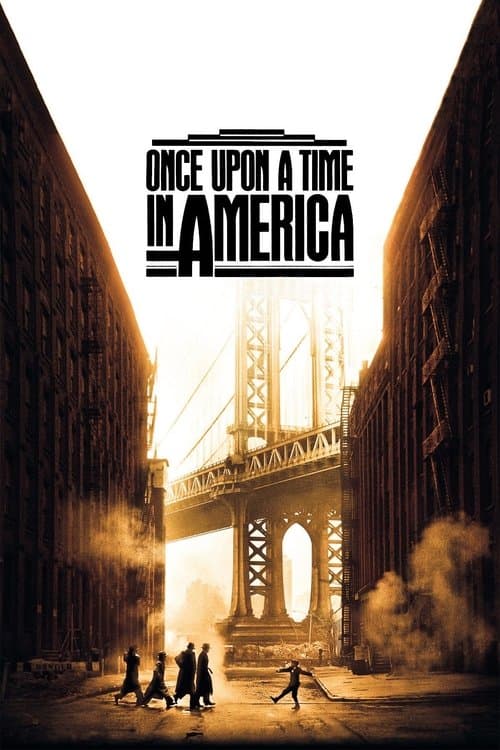
Films that share techniques with Duck, You Sucker include The Good, the Bad and the Ugly (1966), Once Upon a Time in America (1984), Midnight Cowboy (1969), Project Hail Mary (2026).