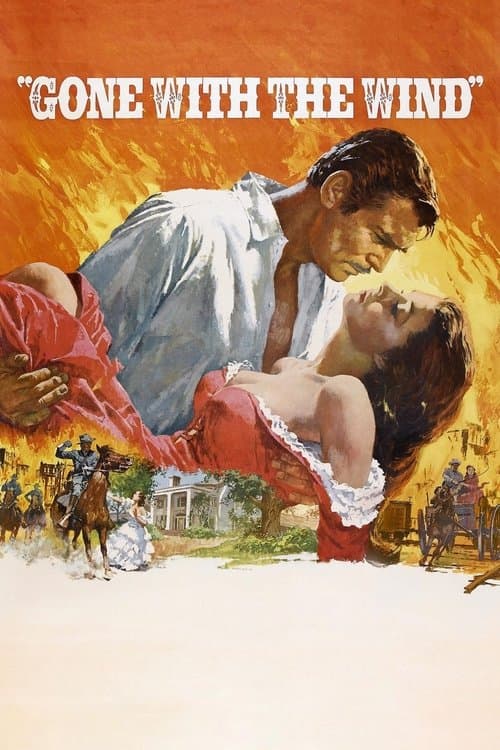
Gone with the Wind
Victor Fleming · 1939
Scarlett O'Hara — willful, vain, and extraordinarily resilient — navigates the Civil War's destruction of her world and its aftermath, in love with the wrong man while being loved by the right one. Hollywood's most ambitious production made the antebellum South into mythology.
Techniques Used
4 techniques identified in this film
Civil War as Moral Backdrop
NarrativeUsing the Civil War's historical scale and moral weight as a backdrop against which individual stories play out — the war as both setting and ethical context that gives private drama historical resonance.
How this film uses it
The war destroys Tara, disperses the O'Haras, and eliminates the social world Scarlett was raised to inhabit. But the film uses the war primarily as a force of personal transformation — what it does to Scarlett is the film's subject, the historical destruction serving as the pressure that reveals character. The war is both historically specific and functionally a character in the story.
Historical Compositing
CinematographyIntegrating actors with historical reconstructions — sets, backgrounds, period materials — to create an environment that reads as historically authentic rather than theatrical.
How this film uses it
William Cameron Menzies's production design and Jack Cosgrove's matte paintings create antebellum Georgia and Civil War Atlanta with a visual detail that makes the period feel inhabited rather than costumed. The burning of Atlanta sequences use real fire composited with full-scale sets and back projections — the spectacle of destruction made credible through production scale.
Character Arc Inversion
NarrativeA protagonist's arc that inverts the conventional trajectory — moving from apparent weakness to strength, or from apparent morality to compromise — with the inversion revealing character rather than destroying it.
How this film uses it
Scarlett begins as a privileged, shallow girl defined by social performance and romantic delusion. She ends as a woman who has survived everything — starvation, war, death, failure — through willpower and ruthlessness. The inversion is not moral improvement; it is the revelation of who she always was beneath the social script she was given to perform.
Sentimental Realism
NarrativeA mode that presents emotional and social life with genuine feeling while maintaining the conventions of melodrama — using heightened emotion as a legitimate instrument for rendering real human experience.
How this film uses it
The film does not apologize for its emotional register. Scarlett's love for Ashley, her grief for Melanie, her final loss of Rhett — these are played at full melodramatic pitch, and the film's sustained emotional conviction makes them land. The sentimentality is not weakness; it is the film's commitment to its characters' feelings as genuinely important.
You Might Also Like
Films that share at least one technique with Gone with the Wind
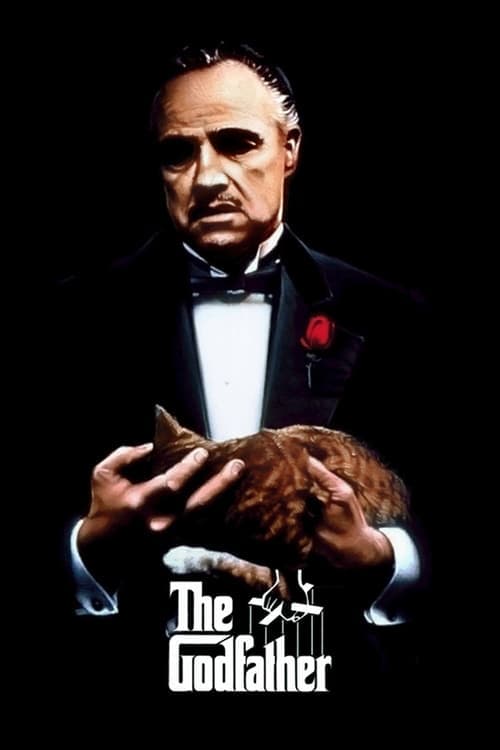
The aging patriarch of the Corleone crime family refuses to support a rival's drug empire and is nearly assassinated, setting off a war that draws his reluctant youngest son into the center of power. A meditation on loyalty, corruption, and the terrible gravity of family obligation.
The Godfather
Francis Ford Coppola · 1972
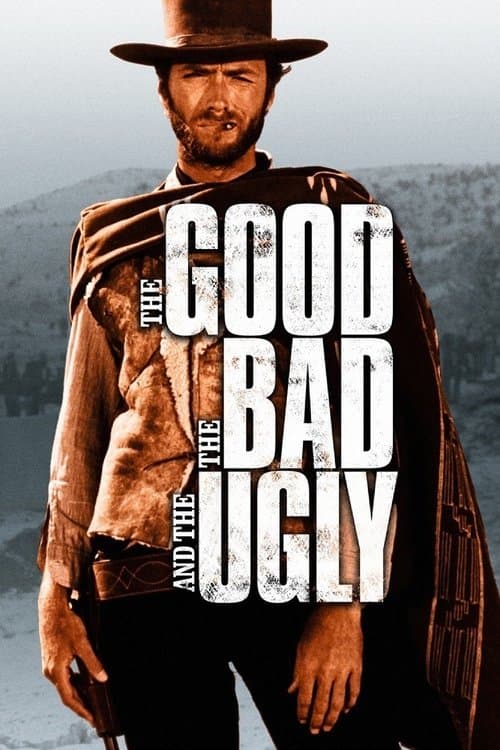
Three gunslingers — an amoral bounty hunter, a sadistic mercenary, and a Mexican bandit — compete to find a buried cache of Confederate gold during the American Civil War. A masterclass in tension engineering and the aestheticization of moral ambiguity.
The Good, the Bad and the Ugly
Sergio Leone · 1966

A man from Alabama with a below-average IQ moves through fifty years of American history by accident, touching the lives of presidents and pop stars while never losing his fundamental decency. An emotional myth of American innocence told through the country's most turbulent decades.
Forrest Gump
Robert Zemeckis · 1994