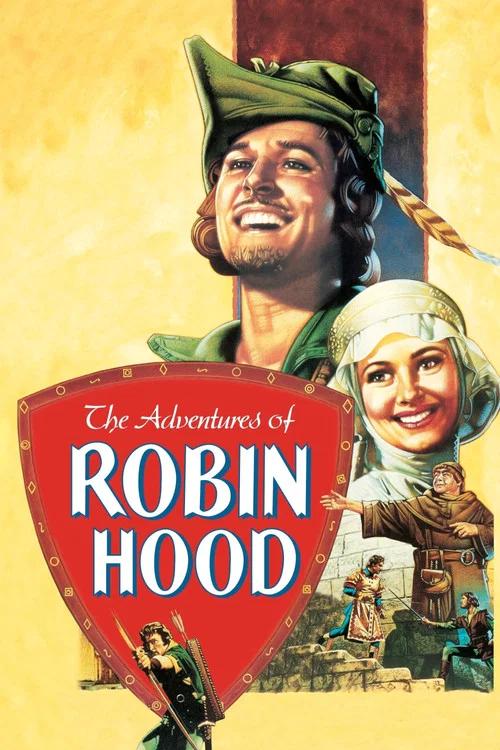
While King Richard is held captive, Robin of Locksley becomes an outlaw in Sherwood Forest and fights Prince John and the Sheriff of Nottingham with his band of Merry Men. Errol Flynn defines the swashbuckler, and it was one of the first big hits in three-strip Technicolor.
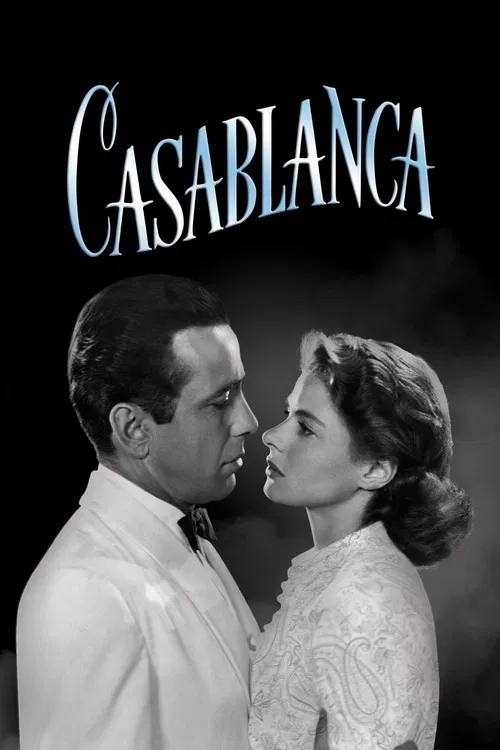
The Adventures of Robin Hood is a 1938 adventure, action and romance film directed by Michael Curtiz. This breakdown covers 4 techniques (1 cinematography, 1 sound, 1 narrative and 1 editing), each with the scene where you can see it. If you like how it is made, Casablanca uses several of the same techniques.
Lighting a scene with strong contrast between bright light and deep shadow, a style borrowed from old paintings called chiaroscuro. How lit a character is hints at their moral or mental state.
How this film uses it
In the final castle fight, strong light and long shadows turn the swordfight into a dance of silhouettes on the wall. Robin and Gisbourne look like shapes in the dark. The contrast makes a hero and a villain look as clear as a drawing.
Where to see it
The castle duel. Robin fights Sir Guy of Gisbourne in a long sword duel in Nottingham Castle.
Repeating a short piece of music or a sound every time a certain character, idea or feeling comes up. You learn to connect the 2.
How this film uses it
Erich Wolfgang Korngold's orchestral score gives the action its own bold themes. He worked on the film week by week and won an Academy Award for it. The music tells you when to cheer before the hero lands a blow.
Where to see it
The castle finale. Korngold's music drives the sword fight and the rescue of Marian.
Hiding who someone is behind a costume or a stand-in so pursuers and the audience read the wrong person. Who is under the mask drives the twist.
How this film uses it
Disguises drive some of the best turns. King Richard returns disguised as a monk, and Robin's men sneak into the castle dressed as monks. Who is under the cloak changes who wins.
Where to see it
The castle infiltration. Robin's band enters Nottingham Castle disguised as monks, and Richard reveals himself.
Editing so smoothly that you forget you are watching edited film. Matching where actors look, cutting back and forth in conversations and keeping screen direction consistent make space and time feel unbroken.
How this film uses it
The film cuts so cleanly that you follow every action. Fights, chases and speeches are matched on movement and eyelines, so you always know where everyone is. The studio craft hides itself and keeps you watching.
Where to see it
The archery tournament. Robin enters, is recognized and captured, and his men help him escape the castle.
Questions
The Adventures of Robin Hood: quick answers
What filmmaking techniques does The Adventures of Robin Hood use?
CineCode breaks down 4 techniques in The Adventures of Robin Hood (1938): Chiaroscuro Lighting, Leitmotif, Swapped Identity Disguise and Classical Hollywood Continuity.
Who directed The Adventures of Robin Hood?
Michael Curtiz directed The Adventures of Robin Hood, released in 1938. CineCode also covers Casablanca (1942).
What films are similar to The Adventures of Robin Hood?
Films that share techniques with The Adventures of Robin Hood include Casablanca (1942), Amadeus (1984), Get Out (2017), Black Swan (2010).