Biography · Drama

Steve Jobs

Danny Boyle, 2015

Three product launches in 1984, 1988 and 1998, each shown in the minutes before Steve Jobs walks on stage. Backstage, the same people keep cornering him, from his daughter's mother to his old partner Steve Wozniak. Aaron Sorkin wrote it like a play, and Boyle changes the film format for each act.

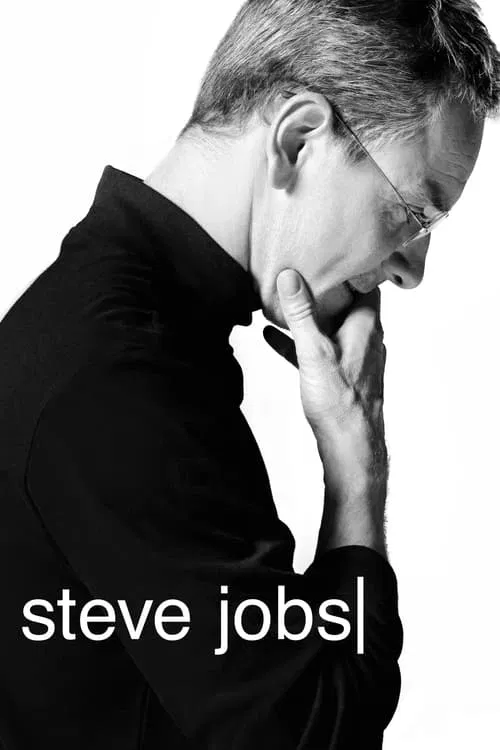
Steve Jobs (2015) poster

At a glance

Steve Jobs is a 2015 biography and drama film directed by Danny Boyle. This breakdown covers 4 techniques (2 narrative, 1 cinematography and 1 sound), each with the scene where you can see it. If you like how it is made, City of God uses several of the same techniques.

Narrative

Ticking Clock Structure

Building the story around a clear deadline the hero must beat. The time pressure and the obstacles grow with each scene until the climax.

How this film uses it

Each act is built around 1 launch with the doors about to open. In the first, the Macintosh voice demo fails less than an hour before the show, and Jobs has to get it fixed. Every conversation happens under that deadline, so people arrive, argue and leave while the event gets closer.

Where to see it

The Macintosh voice demo. Jobs pressures engineer Andy Hertzfeld to fix the failing demo less than an hour before the 1984 launch.
Cinematography

Era-Coded Visual Grammar

Changing the color, film texture and camera style for each time period, and using the fashion and architecture of the day. Every era gets its own distinct feel.

How this film uses it

Boyle and cinematographer Alwin Küchler shot 1984 on 16 mm film, 1988 on 35 mm and 1998 digitally. Each format has its own texture, so the picture tells you what decade you are in. You feel Jobs's world getting cleaner and more digital as the years pass.

Where to see it

The 3 launches. 1984 at the Flint Center, 1988 at the War Memorial Opera House and 1998 at Davies Symphony Hall each get their own look.

Narrative

Repeating Encounter Structure

Staging the same kind of confrontation again and again with different counterparts, so each encounter reveals a new side of the protagonist.

How this film uses it

Wozniak asks in the first and last acts for the Apple II team to get credit, and Jobs says no both times. Lisa, her mother and Joanna Hoffman keep turning up too. Because the questions repeat, you can see what has and has not changed in him.

Where to see it

The 1998 backstage talk. Wozniak asks again for credit for the Apple II team and Jobs refuses again. Later in the act, Jobs apologizes to his daughter Lisa.

Sound

Period Instrument Score

Building a score from instruments and sounds that match the story's era, like ancient lyres, bronze and folk singing. The music feels made from the world on screen.

How this film uses it

Daniel Pemberton's score changes with each act. 1984 uses analog synthesizers, 1988 moves to operatic music for the Opera House and 1998 was composed on an iMac. The music follows the technology Jobs is selling.

Where to see it

The 1988 launch. Operatic music plays at the War Memorial Opera House while Jobs argues with Wozniak about how he treats people.

Questions

Steve Jobs: quick answers

What filmmaking techniques does Steve Jobs use?
CineCode breaks down 4 techniques in Steve Jobs (2015): Ticking Clock Structure, Era-Coded Visual Grammar, Repeating Encounter Structure and Period Instrument Score.
Who directed Steve Jobs?
Danny Boyle directed Steve Jobs, released in 2015. CineCode also covers Shallow Grave (1994), Trainspotting (1996), A Life Less Ordinary (1997), The Beach (2000), 28 Days Later (2002), Sunshine (2007).
What films are similar to Steve Jobs?
Films that share techniques with Steve Jobs include City of God (2002), Back to the Future (1985), North by Northwest (1959), Uncut Gems (2019).