Fantasy · Adventure · Family

The BFG

Steven Spielberg, 2016

A London orphan named Sophie spots a giant at night and is carried to Giant Country, where she becomes friends with the gentle BFG, who catches and gives out dreams. They team up against bigger, crueler giants. For filmmakers, watch how size is used to tell you who has power.

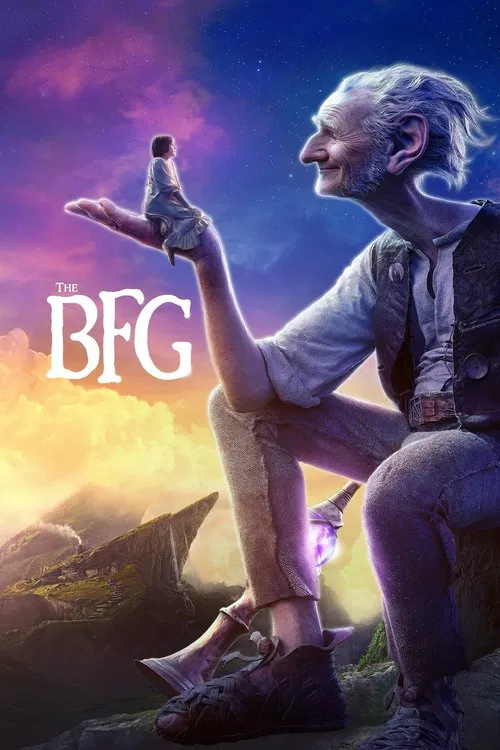
The BFG (2016) poster

At a glance

The BFG is a 2016 fantasy, adventure and family film directed by Steven Spielberg. This breakdown covers 5 techniques (3 cinematography, 1 narrative and 1 psychology), each with the scene where you can see it. If you like how it is made, Pan's Labyrinth uses several of the same techniques.

Cinematography

Contrast Scale Framing

Putting a very large character and a very small one in the same shot. The size gap shows you who has the power and how the 2 feel about each other.

How this film uses it

Sophie is tiny and the BFG is huge, and the camera keeps them in the same frame. Her small hand sits in his huge palm. The difference tells you she is safe in his care and also completely at his mercy.

Where to see it

The first meeting: The BFG lifts Sophie from her bed and carries her to Giant Country in his hand.
Narrative

Secondary World Construction

Building a fictional world with its own consistent rules, history, culture and visual detail. It feels like the world keeps going beyond what you see on screen.

How this film uses it

Giant Country has its own rules, food, creatures and language. The giants eat strange vegetables, and the BFG catches dreams in jars. The detail makes it feel like a place that exists when you leave.

Where to see it

Dream Country: The BFG takes Sophie to a place where dreams grow and are caught in jars.

Cinematography

Color Palette as Worldbuilding

Limiting the film to a tightly chosen set of colors, or giving each place or state its own set. The colors tell you about the world and its mood without dialogue.

How this film uses it

The dream scenes glow in soft blues and purples, while the bullies' land is rough and brown. The colors tell you where the story is gentle and where it is hostile.

Where to see it

The dream jars: The BFG shows Sophie glowing jars of dreams, each with its own light.

Psychology

Psychological Doubling

Pairing the main character with a second character who mirrors them. The double shows what the hero wants, fears or secretly is.

How this film uses it

Sophie is an orphan with no friends, and the BFG is a giant who is bullied by the others. Each sees their own loneliness in the other. One reading is that the friendship is the film's real story.

Where to see it

The first conversation: Sophie and the BFG talk in his cave, each one learning the other is lonely.

Cinematography

Performance Capture

Recording an actor's body and face with sensors, then transferring the movement onto a digital character. The actor's subtle expressions carry over to a creature that does not exist.

How this film uses it

The BFG's face and voice come from a real actor, and his small, shy gestures carry through the digital giant. You read his feelings as if he were a real person. The big digital body still carries the actor's small reactions.

Where to see it

Meeting the Queen: The BFG gets nervous at Buckingham Palace, and his awkward gestures and shy face show how out of place he feels.

Questions

The BFG: quick answers

What filmmaking techniques does The BFG use?
CineCode breaks down 5 techniques in The BFG (2016): Contrast Scale Framing, Secondary World Construction, Color Palette as Worldbuilding, Psychological Doubling and Performance Capture.
Who directed The BFG?
Steven Spielberg directed The BFG, released in 2016. CineCode also covers Duel (1971), Jaws (1975), Close Encounters of the Third Kind (1977), 1941 (1979), Raiders of the Lost Ark (1981), E.T. the Extra-Terrestrial (1982).
What films are similar to The BFG?
Films that share techniques with The BFG include Pan's Labyrinth (2006), The Witch (2015), Hulk (2003), Avatar (2009).