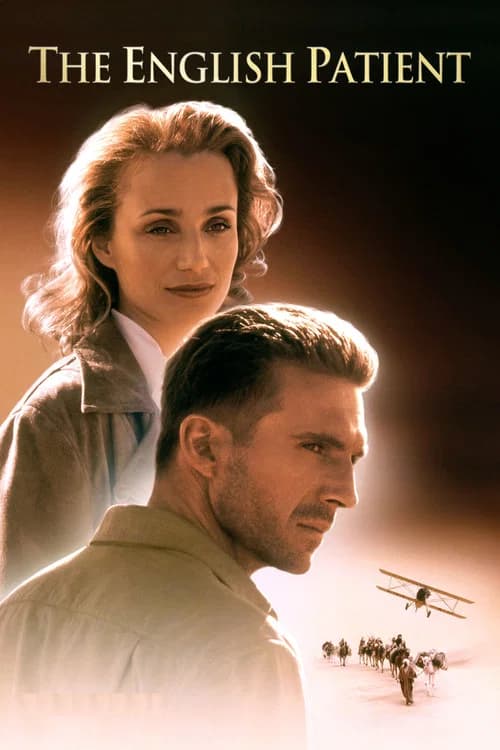
A burned, unidentified man is nursed through his final days in a ruined Italian villa. Bit by bit, his fragmented memories of a doomed love affair in the North African desert are pieced together. I feel like Anthony Minghella made an elegy, a mourning farewell, for a pre-war world that passion and politics destroyed.
The English Patient is a 1996 drama, romance and war film directed by Anthony Minghella. This breakdown covers 3 techniques (2 cinematography and 1 editing), each with the scene where you can see it. If you like how it is made, Project Hail Mary uses several of the same techniques.
Treating a desert or vast landscape as a main character with as much screen time as the actors. It has its own arc and can dwarf, kill and transform the people in it.
How this film uses it
In Minghella's film, the love affair between Almásy and Katharine plays out in and through the Sahara. The desert is vast and doesn't care about human suffering. That indifference is the film's central irony.
Where to see it
Almásy carrying Katharine across the dunes after the plane crash. The desert is what ruins them. For a short time, it is also the last world they have.
Cutting between the present and scattered, out-of-order flashbacks, the way a painful memory comes back in pieces. You put the backstory together as the character remembers it.
How this film uses it
Minghella cuts between the present in the Italian villa and the past in North Africa with nothing to signal the change. The memories are soaked in morphine, so they come the way a fever does. Chronology has pretty much nothing to do with it.
Where to see it
The transitions between the villa and the desert past. The film has over 40 temporal transitions, and Murch cut them so that past and present flow into each other.
Using the full width of a very wide 2.35:1 frame to set small human figures against huge, empty landscapes. All that empty space makes the characters look isolated and insignificant.
How this film uses it
John Seale shot the film with spherical lenses in a 1.85:1 frame, which is narrower than anamorphic widescreen. He still gives the desert sequences the scale of a David Lean epic. The love scenes use the same frame and feel much more intimate. The format ends up holding both the vast and the tender.
Where to see it
The desert sequences, where the curves of the sand dunes look like the curves of a body. The framing makes the landscape erotic.
Questions
The English Patient: quick answers
What filmmaking techniques does The English Patient use?
CineCode breaks down 3 techniques in The English Patient (1996): Desert as Protagonist, Fractured Memory Editing and Anamorphic Scope Composition.
Who directed The English Patient?
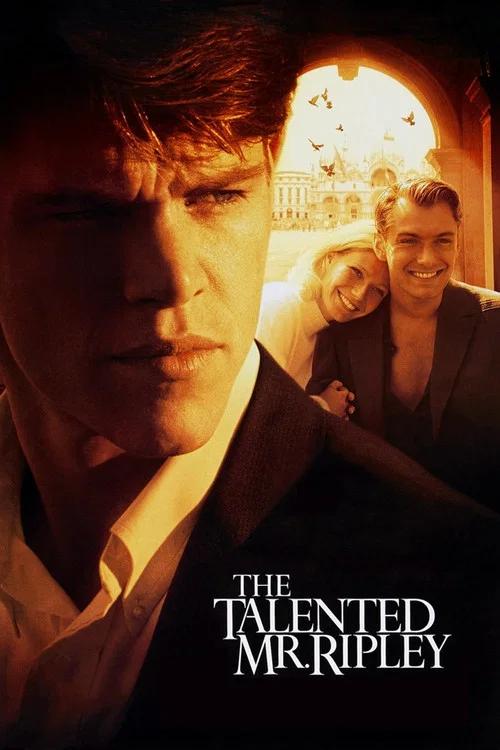
Anthony Minghella directed The English Patient, released in 1996. CineCode also covers The Talented Mr. Ripley (1999).
What films are similar to The English Patient?
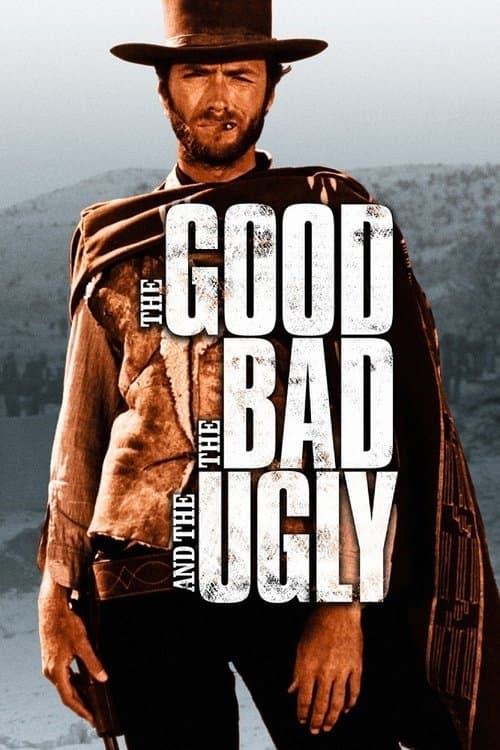
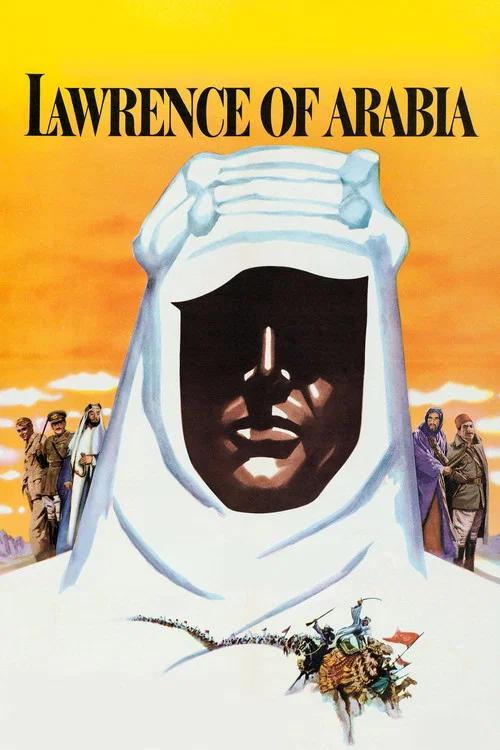
Films that share techniques with The English Patient include Project Hail Mary (2026), The Good, the Bad and the Ugly (1966), Lawrence of Arabia (1962), Ran (1985).