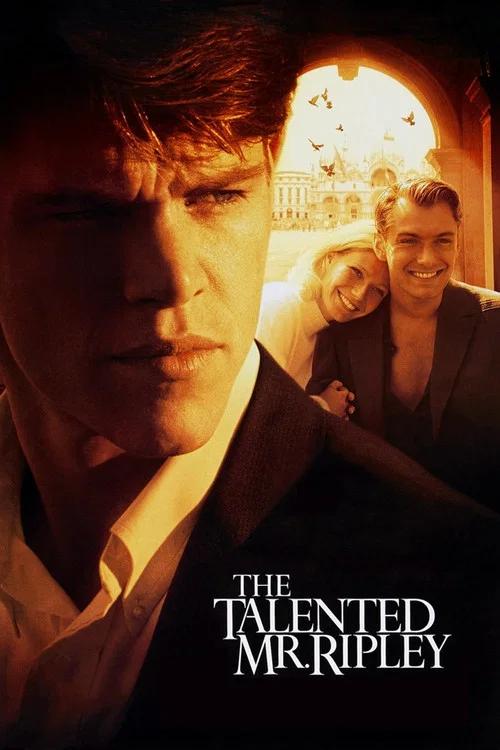
In 1958, Tom Ripley is sent to Italy to bring home a rich man's son, Dickie Greenleaf. Tom falls for Dickie's glamorous life and, after a boat trip goes wrong, starts living as him. It is a good study in how a film keeps you on the side of someone whose lies keep growing.
The Talented Mr. Ripley is a 1999 thriller, crime and drama film directed by Anthony Minghella. This breakdown covers 5 techniques (2 psychology, 2 narrative and 1 sound), each with the scene where you can see it. If you like how it is made, Amadeus uses several of the same techniques.
Pairing the main character with a second character who mirrors them. The double shows what the hero wants, fears or secretly is.
How this film uses it
Tom is an outsider who longs to be Dickie, a rich young man who has everything. Dickie is the life Tom wants, and Tom studies him closely. Once Tom starts wearing Dickie's identity, the two seem to merge.
Where to see it
Boat trip to San Remo: Dickie says he is tired of Tom and plans to marry Marge. The argument turns violent, and Tom kills Dickie with an oar.
Showing a character's sense of self being built, borrowed or stripped away by pressure, roles or the group. Who they are shifts with what they wear, say or join.
How this film uses it
Tom forges letters, signs checks and lives in hotels as both men. Each new lie needs another lie, and the real Tom disappears. By the end he has no self left except the one he made up.
Where to see it
Living as Dickie: Tom forges letters to convince Marge that Dickie has left her for Rome. He stays in hotels as both men.
Letting the audience know something a character doesn't. You watch them act without that knowledge, which creates suspense, dread or dark comedy.
How this film uses it
You know Tom killed Dickie, but the people around him do not. Every friendly chat in Rome carries the risk that someone will see through him. Chats that would be harmless anywhere else make you hold your breath.
Where to see it
Rome opera: Tom, still posing as Dickie, attends an opera with Meredith. Marge and Peter Smith-Kingsley appear and nearly expose him.
Letting characters perform the songs on screen, so the music comes from their own hands and voices. You hear the song and the performer's nerves at the same time.
How this film uses it
Jazz is the soundtrack of Tom's new life. Matt Damon sings in his own voice, and you hear both the song and the nervous wish to impress. The music shows how much Tom wants to belong.
Where to see it
Jazz club: Tom sings My Funny Valentine in an Italian jazz club.
Building the whole plot on one character's fixation with a person, goal or rival. Every scene ties back to it, and the obsession keeps feeding itself while it destroys them.
How this film uses it
Tom's fixation on Dickie's life drives nearly every scene after the first. It leads him from a job offer to murder and then to a bigger lie. The plot is the obsession feeding itself.
Where to see it
Mongibello: Tom meets Dickie and Marge, claims to be a Princeton classmate and becomes fixated on Dickie's glamorous life.
Questions
The Talented Mr. Ripley: quick answers
What filmmaking techniques does The Talented Mr. Ripley use?
CineCode breaks down 5 techniques in The Talented Mr. Ripley (1999): Psychological Doubling, Identity Construction and Loss, Dramatic Irony, Diegetic Musical Performance and Obsession as Structural Engine.
Who directed The Talented Mr. Ripley?
Anthony Minghella directed The Talented Mr. Ripley, released in 1999. CineCode also covers The English Patient (1996).
What films are similar to The Talented Mr. Ripley?
Films that share techniques with The Talented Mr. Ripley include Amadeus (1984), All About Eve (1950), Phantom Thread (2017), The Power of the Dog (2021).