
Amores Perros
Alejandro González Iñárritu · 2000
A car crash in Mexico City intersects three separate stories: a young man trying to escape with his brother's wife, a supermodel's life destroyed by an accident, and a hitman reuniting with the family he abandoned. Iñárritu's debut is a portrait of how violence connects strangers who would never otherwise meet.
Techniques Used
4 techniques identified in this film
Braided Thread Motif
EditingThe use of a repeated visual or narrative element across multiple storylines that creates thematic unity through recurrence.
How this film uses it
The car crash is the film's braiding point — each story leading toward it or emanating from it, the accident the physical event through which three unconnected lives briefly touch before separating back into their private tragedies.
Non-Linear Narrative
NarrativeA story structure that disrupts chronological order to create thematic rather than causal connections between scenes.
How this film uses it
Iñárritu moves between the three stories without chronological respect — the crash appearing at different points in each story's timeline — creating a portrait of Mexico City in which the same moment has completely different meanings depending on whose life it interrupts.
Handheld Cinema Vérité
CinematographyA documentary-influenced shooting style using handheld cameras to create spontaneous, unpolished images that feel observed rather than constructed.
How this film uses it
Rodrigo Prieto shoots Mexico City's streets with an unstable, documentary handheld that puts the audience in the traffic, the tenements, and the dog fights — the city's real texture inseparable from the fictional characters moving through it.
In Medias Res
NarrativeBeginning a story in the middle of its action, then using flashbacks or exposition to fill in the events that led to the opening situation.
How this film uses it
The film opens with the chase that ends in the crash — already in motion, already in crisis — before pulling back to show each story from its beginning, the audience having already seen the destination before understanding the journeys.
You Might Also Like
Films that share at least one technique with Amores Perros
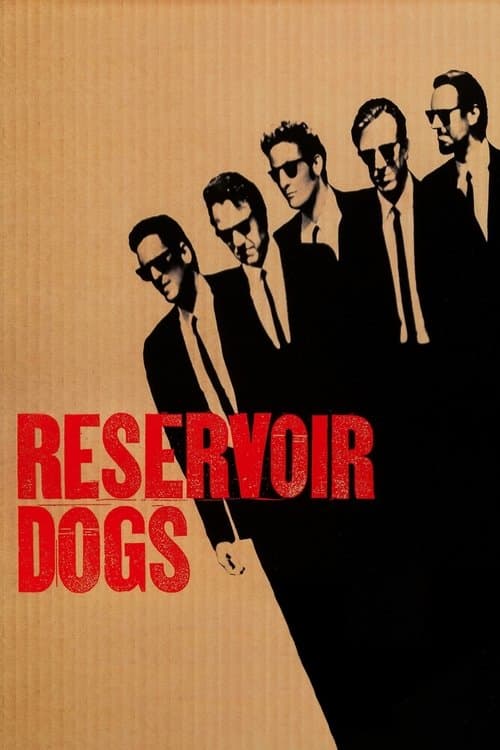
The aftermath of a diamond heist gone catastrophically wrong plays out in a warehouse as the surviving thieves — all using color-coded pseudonyms — try to determine which of them is the police informant. Tarantino's debut is a diamond-sharp exercise in tension, dialogue, and the grammar of the crime film.
Reservoir Dogs
Quentin Tarantino · 1992

An eighteen-year-old from the Mumbai slums is one question away from winning Who Wants to Be a Millionaire when he is arrested on suspicion of cheating — and each answer he knew is revealed through a flashback to a specific trauma in his childhood. Danny Boyle's film is structured as a puzzle whose pieces are memories.
Slumdog Millionaire
Danny Boyle · 2008

A skilled thief who enters people's dreams is offered a chance to have his criminal record erased if he can implant an idea into a CEO's mind. A labyrinthine heist film about grief, reality, and the architecture of the unconscious.
Inception
Christopher Nolan · 2010