Horror · Fantasy · Drama

Cronos

Guillermo del Toro, 1993

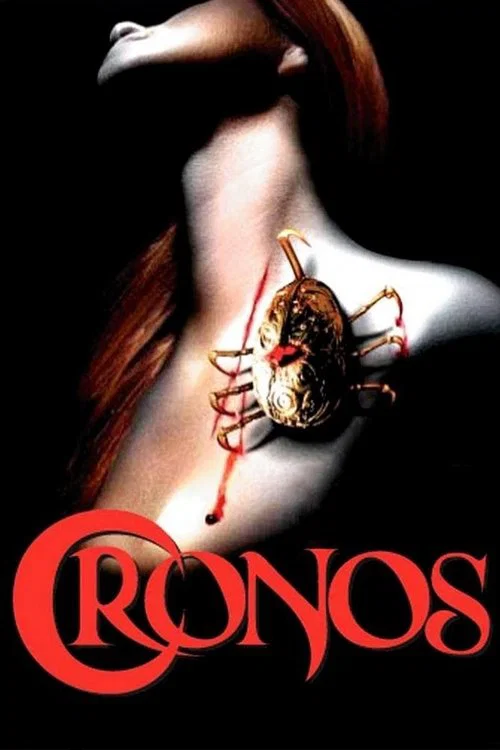
An elderly antique dealer finds a golden insect-shaped device inside an old statue. It makes him young again and gives him a thirst for blood, while a dying millionaire and his nephew hunt for the machine. Del Toro's first feature shows how he turns a vampire story into a gentle tragedy built around one strange object.

Cronos (1993) poster

At a glance

Cronos is a 1993 horror, fantasy and drama film directed by Guillermo del Toro. This breakdown covers 4 techniques (2 narrative, 1 psychology and 1 cinematography), each with the scene where you can see it. If you like how it is made, Parasite uses several of the same techniques.

Narrative

Symbolic Object

Returning to the same physical object again and again until it means more than what it is. It moves the plot and also stands for the film's main ideas.

How this film uses it

The scarab-shaped device is in nearly every important scene. It is found in the statue, wound by Gris, wanted by Dieter and finally destroyed. Each time it appears, it means more: eternal life, addiction and a trap, all in one small machine.

Where to see it

The statue: Jesus Gris finds the device in the hollow base of an archangel statue, winds it and feels its legs grip his hand.

Psychology

Body Horror

Showing the human body being changed, damaged or falling apart. The horror works because you imagine it happening to your own body, and it often stands for mental suffering.

How this film uses it

The film keeps the horror close to Gris's skin. A needle goes in, his body gets younger and then it craves something it should not. You feel the change as something happening to a body like yours.

Where to see it

New Year's Eve: Gris, drawn by his new thirst, licks spilled blood from a men's room floor.

Narrative

Genre Subversion

Setting up a film to look like a familiar genre, then breaking that genre's rules on purpose. You have to rethink what kind of story you are watching.

How this film uses it

The film sets up vampire rules: blood hunger, danger from sunlight, a hidden sleeping place. Then it changes the source from a bite to a clockwork machine and makes the vampire an old, gentle antique dealer. Once you see that, you stop waiting for a monster and start feeling for the man.

Where to see it

After the party: Gris writes to his wife, sleeps in a box to avoid sunlight and takes the device with him.

Cinematography

Mechanical Creature and Machine Design

Designing machines and creatures from visible gears and older-looking parts, sometimes joined with living forms. The mix of old and new makes them feel both handmade and alive.

How this film uses it

The device is described as scarab-shaped, with spider-like legs and clockwork inside meshed with a living insect. You never see it as pure machine or pure animal. That mix is why it feels both creepy and fascinating on screen.

Where to see it

The statue: Gris winds the device, and it grips him with its legs and inserts a needle.

Questions

Cronos: quick answers

What filmmaking techniques does Cronos use?
CineCode breaks down 4 techniques in Cronos (1993): Symbolic Object, Body Horror, Genre Subversion and Mechanical Creature and Machine Design.
Who directed Cronos?
Guillermo del Toro directed Cronos, released in 1993. CineCode also covers Mimic (1997), The Devil's Backbone (2001), Blade II (2002), Hellboy (2004), Pan's Labyrinth (2006), Hellboy II: The Golden Army (2008).
What films are similar to Cronos?
Films that share techniques with Cronos include Parasite (2019), Black Swan (2010), The Shawshank Redemption (1994), Léon: The Professional (1994).