Comedy · Drama · Music

Sweet and Lowdown

Woody Allen, 1999

Emmet Ray is a brilliant, selfish 1930s jazz guitarist who thinks he is the second-best player in the world, after Django Reinhardt. The film is told through the stories people tell about him, including Allen himself. It is worth watching for how genius and bad behavior share one man.

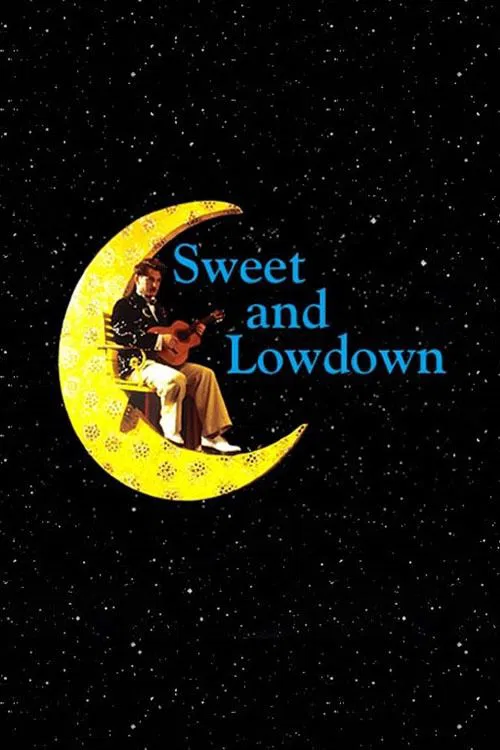
Sweet and Lowdown (1999) poster

At a glance

Sweet and Lowdown is a 1999 comedy, drama and music film directed by Woody Allen. This breakdown covers 5 techniques (3 narrative, 1 psychology and 1 sound), each with the scene where you can see it. If you like how it is made, Inside Llewyn Davis uses several of the same techniques.

Narrative

Mock Documentary Framing

Presenting an invented story with the tools of a documentary, such as talking-head interviews, narration and archive footage. The factual look makes the fiction feel like history and sets up the jokes.

How this film uses it

Real critics and biographers, including Woody Allen, Nat Hentoff and Daniel Okrent, appear on screen and discuss Emmet Ray as if he were a real historical figure. They conclude that his late compositions rival those of Django Reinhardt. The framing gives a made-up man a past.

Where to see it

The expert interviews. The critics and biographers talk about Ray's life and legend between scenes.
Narrative

Obsession as Structural Engine

Building the whole plot on one character's fixation with a person, goal or rival. Every scene ties back to it, and the obsession keeps feeding itself while it destroys them.

How this film uses it

Ray idolizes Django Reinhardt so completely that he flees a club on a false rumor that Django is in the audience. That worship shapes his choices and his playing. Every scene links to his need to measure up.

Where to see it

The rumor. Ray hears that Reinhardt is in the club and flees before he plays.

Narrative

Disability Without Pity

Writing a disabled character as a full person with humor, anger, desire and choices of their own. The disability is one part of their life, and the film never plays it for tragedy or inspiration.

How this film uses it

Hattie is a mute laundress. She is warm, playful and capable, and Samantha Morton was told to play her like Harpo Marx. The film never plays her silence for tragedy.

Where to see it

Hattie and Ray. They build a close relationship, and Ray later finds her happily married with children.

Psychology

Self-Image Sabotage

Letting a character's belief about themselves undermine their talent or fortune. They wreck their own chances because of how they see who they are.

How this film uses it

Ray believes a great musician should not settle down. He marries a socialite, Blanche Williams, instead of staying with Hattie. When he returns to Hattie he finds her married with children, and he regrets it. You can read his talent as the thing he hides behind.

Where to see it

The return. Ray goes back to Hattie and finds her happily married, and regrets what he gave up.

Sound

Diegetic Musical Performance

Letting characters perform the songs on screen, so the music comes from their own hands and voices. You hear the song and the performer's nerves at the same time.

How this film uses it

Howard Alden played all the guitar solos, and the guitar is where Ray gets to be generous. You can read his playing as the feeling he cannot say aloud.

Where to see it

The playing. Ray's guitar solos are the one place the film shows his feelings.

Questions

Sweet and Lowdown: quick answers

What filmmaking techniques does Sweet and Lowdown use?
CineCode breaks down 5 techniques in Sweet and Lowdown (1999): Mock Documentary Framing, Obsession as Structural Engine, Disability Without Pity, Self-Image Sabotage and Diegetic Musical Performance.
Who directed Sweet and Lowdown?
Woody Allen directed Sweet and Lowdown, released in 1999. CineCode also covers Take the Money and Run (1969), Bananas (1971), Everything You Always Wanted to Know About Sex *But Were Afraid to Ask (1972), Sleeper (1973), Love and Death (1975), Annie Hall (1977).
What films are similar to Sweet and Lowdown?
Films that share techniques with Sweet and Lowdown include Inside Llewyn Davis (2013), The Talented Mr. Ripley (1999), The Prestige (2006), The Intouchables (2011).