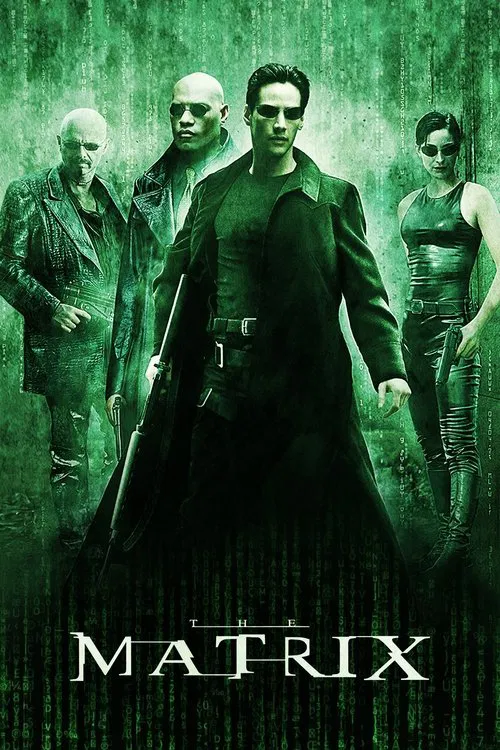
A computer programmer discovers that reality is a simulation built to keep humanity quiet while machines harvest their energy. He joins a resistance that fights inside the illusion. It's a philosophical action film that fuses Baudrillard, Hong Kong martial arts and cyberpunk style into a new visual language.
The Matrix is a 1999 action and science fiction film directed by Lana Wachowski, Lilly Wachowski. This breakdown covers 5 techniques (3 cinematography, 1 narrative and 1 editing), each with the scene where you can see it. If you like how it is made, The Godfather Part II uses several of the same techniques.
Using camera arrays or special effects to freeze or slow a moment while the viewpoint keeps moving. The pause lets you study an instant that normally passes too fast to see.
How this film uses it
Visual effects supervisor John Gaeta developed bullet time for the film's action sequences. He surrounded subjects with up to 120 still cameras and filled in the gaps between their frames. The technique lets you see the Matrix's simulation physics (reality's rules are different here). Its influence on action filmmaking was immediate and global.
Where to see it
Neo dodging bullets on the rooftop. It's the film's most famous bullet time shot, and it defines the film's visual identity. The first bullet time moment comes earlier, when Trinity freezes in midair during her kick in the opening scene.
Giving each time period or social world in the film its own set of colors. You always know where and when you are, and the colors carry a mood too.
How this film uses it
Cinematographer Bill Pope and the Wachowskis gave the Matrix sequences a green tint, the color of phosphor monitors. The real world (the Nebuchadnezzar) is shot in cool blue-grey. The shift in color is subtle but consistent, and it works on you without you noticing.
Where to see it
Neo's first re-entry into the simulation. The Nebuchadnezzar's blue-grey gives way to the Matrix's green tint.
Hanging performers on wires so they can fly, float and move in ways no body can, then erasing the wires digitally. The gravity-defying fights also express character and power.
How this film uses it
Yuen Woo-ping choreographed the action using Hong Kong wire-fu, where performers are lifted on wires, adapted to a Western context. Keanu Reeves and the cast trained for months so they could perform the moves believably. Alongside that, the wires combined with bullet time to create a way of showing people bending reality with superhuman power.
Where to see it
The lobby shootout. Neo and Trinity move through a marble hall with wire-assisted precision.
Building the story on the idea that the characters' world may be an artificial simulation. The film uses that idea to ask what is real and how anyone could know.
How this film uses it
The Wachowskis drew openly on Jean Baudrillard's Simulacra and Simulation (the book Neo hides discs inside). They built a world where freeing your mind from illusion is the central dramatic act. The film turns philosophy into action.
Where to see it
Morpheus's red pill/blue pill offer. The film's main idea is delivered as a choice.
Building an action sequence as a chain where each solution creates a new problem. The layout of the space stays clear, so the escalation follows its own logic.
How this film uses it
The lobby sequence lasts about 3 minutes and was shot over about 10 days. It shows several techniques the film has introduced (wire work, multiple camera angles and real destruction) at full scale. It pulls the film's whole approach to action together and proves that it works.
Where to see it
Neo and Trinity's entry into the building. The sequence runs from the metal detector to the elevator.
Questions
The Matrix: quick answers
What filmmaking techniques does The Matrix use?
CineCode breaks down 5 techniques in The Matrix (1999): Frozen Time Camera Effects, Period Color Separation, Wire Work Action Choreography, Simulation Narrative and Kinetic Set Piece Architecture.
Who directed The Matrix?
Lana Wachowski, Lilly Wachowski directed The Matrix, released in 1999. CineCode also covers Speed Racer (2008), Cloud Atlas (2012).
What films are similar to The Matrix?
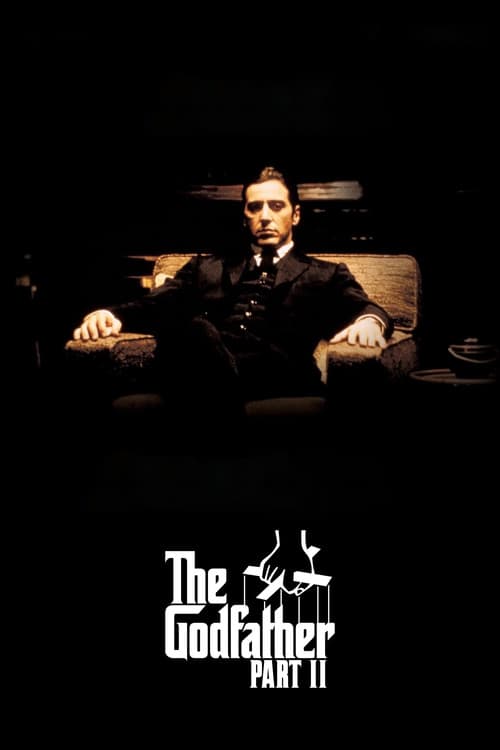
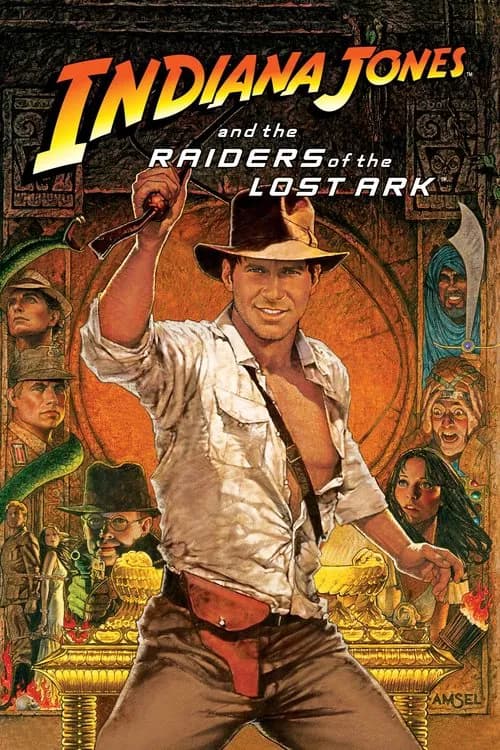
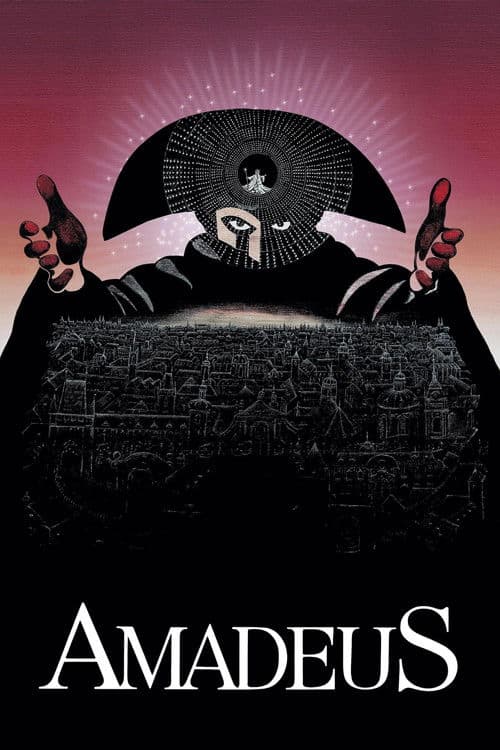
Films that share techniques with The Matrix include The Godfather Part II (1974), Raiders of the Lost Ark (1981), Amadeus (1984), The Grand Budapest Hotel (2014).