Drama · Mystery · Thriller

Eyes Wide Shut

Stanley Kubrick, 1999

After his wife confesses a sexual fantasy, Manhattan doctor Bill Harford wanders through a single night of erotic temptation and conspiracy. Stanley Kubrick's final film is a fever dream about desire and class. It is also about the terror of knowing what hides beneath the surface of a respectable life.

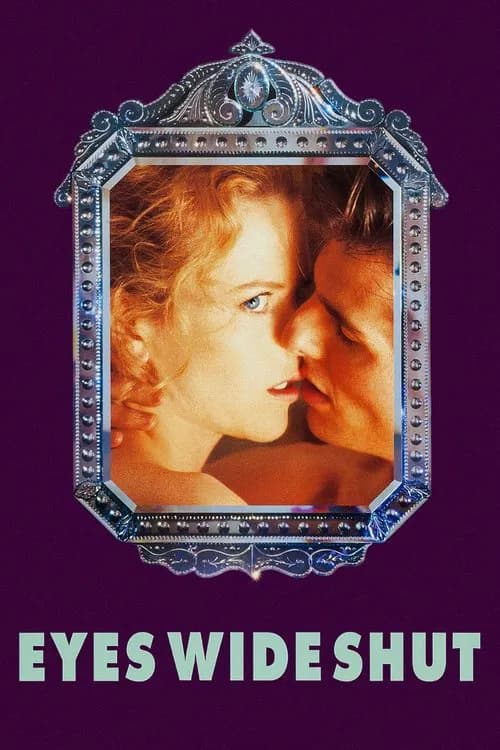
Eyes Wide Shut (1999) poster

At a glance

Eyes Wide Shut is a 1999 drama, mystery and thriller film directed by Stanley Kubrick. This breakdown covers 5 techniques (2 cinematography, 2 narrative and 1 psychology), each with the scene where you can see it. If you like how it is made, Amadeus uses several of the same techniques.

Cinematography

One-Point Perspective

Framing a shot so every line in it runs toward 1 point in the center. The picture looks perfectly symmetrical, which can feel hypnotic, stagey or oppressive.

How this film uses it

Kubrick frames the Harford apartment hallways and the hotel corridors as symmetrical tunnels that run to one central point. The visual order is a trap, and the perfect home is a lie.

Where to see it

Bill walking through the Greenwich Village streets at night. The city's lines are perfectly centered and dreamlike.
Narrative

The Party as Transgression

Using a party or celebration as the place where normal rules are dropped and characters show who they really are. Afterwards, order often comes back down hard.

How this film uses it

The Ziegler Christmas party and the orgy at the Somerton mansion are both places where the rules of Bill's life are switched off. They are also where his inadequacy gets exposed.

Where to see it

The Somerton masked ceremony. Bill's costume is rented and he doesn't own it. That marks him as an outsider right away.

Narrative

Slow Build Runtime

Running the film longer than its genre normally needs, on purpose. The extra time lets you live with the characters, so the emotional payoff feels in proportion to the wait.

How this film uses it

The 159-minute runtime matches Bill's long journey. Each encounter runs just past the point of comfort. You get the same paranoid feeling he has, that the night will never end.

Where to see it

Bill's 2 visits to Milich's costume shop, first to rent the costume and then to return it. Each visit is slightly more unsettling than the last.

Psychology

Psychological Doubling

Pairing the main character with a second character who mirrors them. The double shows what the hero wants, fears or secretly is.

How this film uses it

Alice put a fantasy into words, and Bill's adventures in the night are that fantasy acted out. The film follows both sides of the same sexual anxiety. One side is action and the other is imagination.

Where to see it

Alice's confession about the naval officer. It is intercut with the images Bill imagines of her with a stranger.

Cinematography

Chiaroscuro Lighting

Lighting a scene with strong contrast between bright light and deep shadow, a style borrowed from old paintings called chiaroscuro. How lit a character is hints at their moral or mental state.

How this film uses it

Larry Smith and Kubrick soak the film in Christmas tree lights and candlelight. These warm, intimate glows seduce you and hide things at the same time. Every room in a home turns into a possible stage for secrets.

Where to see it

The Harford bedroom scenes. The Christmas lights make a golden haze. It makes Alice's confession feel intimate and threatening at once.

Questions

Eyes Wide Shut: quick answers

What filmmaking techniques does Eyes Wide Shut use?
CineCode breaks down 5 techniques in Eyes Wide Shut (1999): One-Point Perspective, The Party as Transgression, Slow Build Runtime, Psychological Doubling and Chiaroscuro Lighting.
Who directed Eyes Wide Shut?
Stanley Kubrick directed Eyes Wide Shut, released in 1999. CineCode also covers Fear and Desire (1953), Killer's Kiss (1955), The Killing (1956), Paths of Glory (1957), Spartacus (1960), Lolita (1962).
What films are similar to Eyes Wide Shut?
Films that share techniques with Eyes Wide Shut include Amadeus (1984), The Conformist (1970), Hulk (2003), Skyfall (2012).