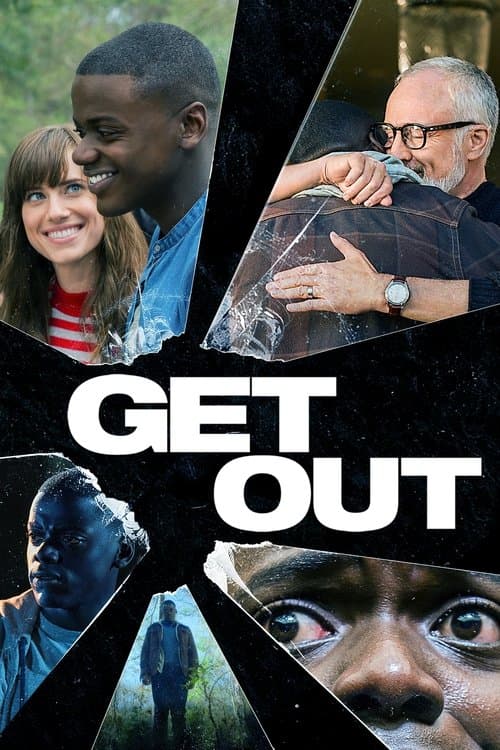
Get Out
Jordan Peele · 2017
A Black man visiting his white girlfriend's family for the weekend uncovers a disturbing secret beneath their liberal veneer. A precision-engineered social horror film that uses genre mechanics to externalize systemic racism.
Techniques Used
5 techniques identified in this film
Dramatic Irony
NarrativeWhen the audience possesses knowledge that a character does not, creating suspense, dread, or dark comedy from the gap between what we know and what they know.
How this film uses it
From the opening scene, visual and dialogue cues signal danger to the audience while Chris remains partially blind to the threat, keeping tension relentlessly elevated.
Psychoanalytic Horror
PsychologyUsing psychoanalytic concepts — the unconscious, repression, dissociation — as literal story mechanics to externalize internal psychological experience.
How this film uses it
The Sunken Place visualizes dissociation as a physical space: Chris is conscious but imprisoned behind his own eyes, unable to act — a metaphor for racialized psychological powerlessness.
Chekhov's Gun
NarrativeEvery significant element introduced in a story must ultimately pay off; nothing should be shown unless it will be used.
How this film uses it
The cotton stuffing in the chair's armrests, the deer antler, Rod's TSA job, and the broken camera flash are all introduced and each becomes a crucial survival tool.
Leitmotif
SoundA recurring musical phrase, sound, or theme associated with a specific character, idea, or emotional state throughout a film.
How this film uses it
Michael Abels's score incorporates the Swahili phrase 'sikiliza kwa wahenga' (listen to the ancestors) as a choral motif that sounds throughout the film, signaling danger before Chris consciously recognizes it.
The Gaze
CinematographyThe power dynamics encoded in who looks, who is looked at, and from whose point of view the camera positions the audience.
How this film uses it
Peele repeatedly places the camera in Chris's perspective during scenes of racial microaggression, forcing the audience to experience the exhaustion of being surveilled, fetishized, and otherized.
You Might Also Like
Films that share at least one technique with Get Out
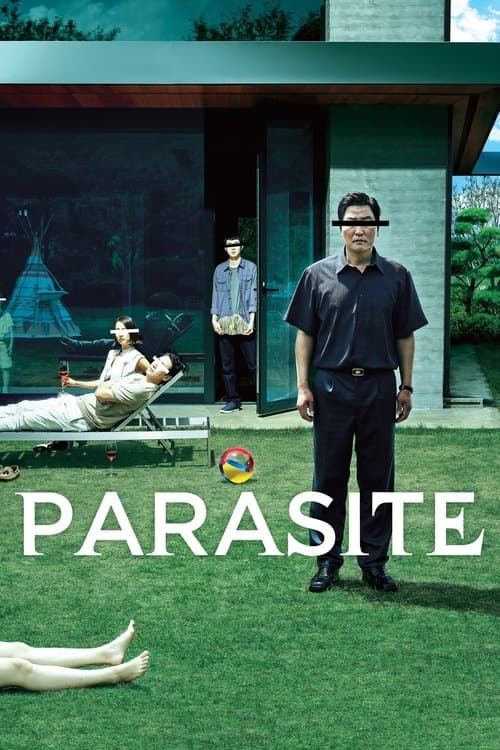
A poverty-stricken family schemes their way into the lives of a wealthy household, until a shocking discovery upends everything. A darkly comic thriller that dissects class inequality through meticulous mise-en-scène.
Parasite
Bong Joon-ho · 2019

A perfectionist ballerina wins the lead in Swan Lake but becomes consumed by paranoia and hallucination as opening night approaches. A psychosexual horror film about the violence of perfectionism and the dissolution of identity.
Black Swan
Darren Aronofsky · 2010

An aging warlord divides his kingdom among his three sons, only to watch them turn against each other and against him. Kurosawa's adaptation of King Lear is the most visually overwhelming film he ever made.
Ran
Akira Kurosawa · 1985