Comedy · Drama · Romance

The Terminal

Steven Spielberg, 2004

Viktor Navorski lands at JFK Airport just as a coup in his home country makes his passport worthless. He cannot enter the United States or fly home, so he settles into the terminal. For filmmakers, watch how one giant set is used to make a small place feel like a town.

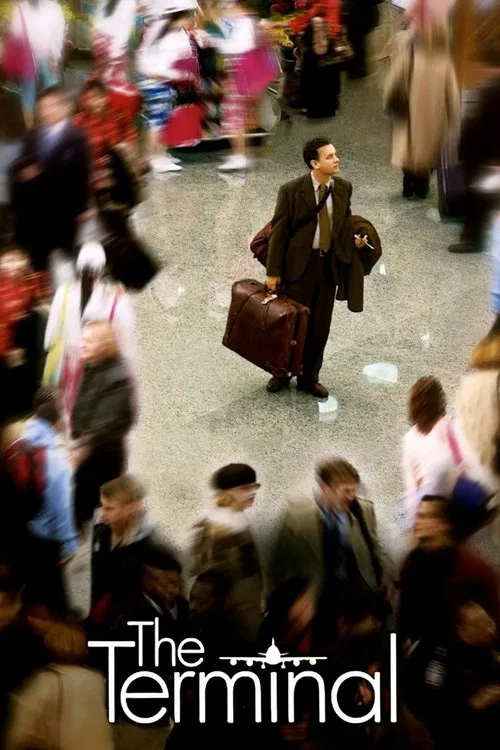
The Terminal (2004) poster

At a glance

The Terminal is a 2004 comedy, drama and romance film directed by Steven Spielberg. This breakdown covers 4 techniques (2 narrative, 1 cinematography and 1 editing), each with the scene where you can see it. If you like how it is made, Back to the Future uses several of the same techniques.

Narrative

Fish-Out-of-Water Comedy

Dropping a character into a world whose social rules they don't understand. The comedy, and some insight too, comes from the constant mismatch between them and everyone around them.

How this film uses it

Viktor does not speak much English and does not know the airport's unwritten rules. He learns by watching signs, travelers and television. The jokes come from his sincere reading of a world that is not sincere.

Where to see it

Learning to live in the terminal: Viktor makes a bed in an unused gate and learns English from travel books and the news.

Cinematography

Single-Location Cinematography

Shooting almost the whole film in 1 confined place. Set design and camera movement keep it visually interesting, and the space itself takes on meaning as the story goes on.

How this film uses it

Nearly all of the film takes place inside one airport terminal, built as a full set. The shops, gates and hallways let the camera find new angles and make new routines. The place goes from a trap to a home to a community.

Where to see it

The terminal as a town: Viktor makes friends with workers at the shops and the food counter, and the terminal becomes his neighborhood.

Editing

Callback Editing

Bringing back an earlier image, line, location or piece of staging later in the film, often with the situation reversed. You enjoy recognizing it, and the comparison adds meaning.

How this film uses it

Viktor carries a can of peanuts and has a promise to keep for his late father. The film saves that detail for the end, when it pays off. The earlier setup makes the final step feel earned.

Where to see it

The autograph: Viktor leaves the terminal at the end to get a jazz musician's autograph that his father wanted.

Narrative

Earned Catharsis

Building up to a big emotional release slowly, by investing in the characters and giving small bits of hope. When the release comes, it feels deserved after all the suffering.

How this film uses it

The film spends a long time on small acts of kindness and on the airport staff slowly siding with Viktor. When he finally walks out, the release is big. You have waited for it as long as he has.

Where to see it

The exit: Dixon's attempts to stop Viktor fail, and Viktor finally leaves the terminal and steps out into New York.

Questions

The Terminal: quick answers

What filmmaking techniques does The Terminal use?
CineCode breaks down 4 techniques in The Terminal (2004): Fish-Out-of-Water Comedy, Single-Location Cinematography, Callback Editing and Earned Catharsis.
Who directed The Terminal?
Steven Spielberg directed The Terminal, released in 2004. CineCode also covers Duel (1971), Jaws (1975), Close Encounters of the Third Kind (1977), 1941 (1979), Raiders of the Lost Ark (1981), E.T. the Extra-Terrestrial (1982).
What films are similar to The Terminal?
Films that share techniques with The Terminal include Back to the Future (1985), Lost in Translation (2003), The Big Lebowski (1998), Marriage Story (2019).