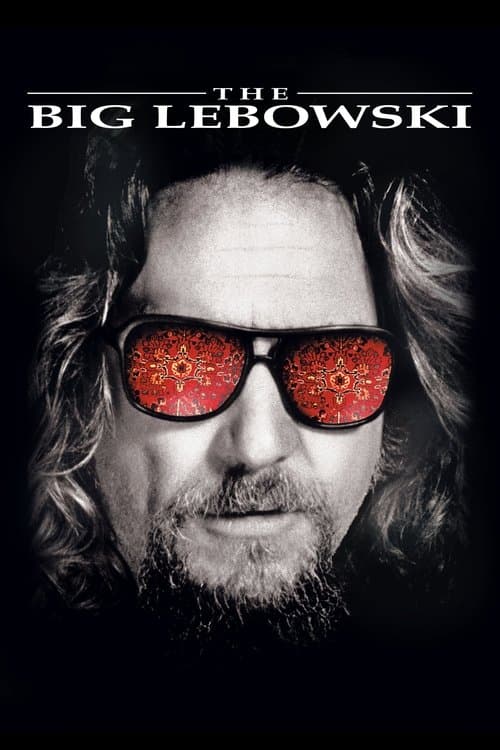
The Big Lebowski
Joel Coen, Ethan Coen · 1998
Jeff 'The Dude' Lebowski — an unemployed bowler — is mistaken for a millionaire of the same name and drawn into a kidnapping scheme, a ransom drop, and a series of increasingly surreal encounters with nihilists, pornographers, and Vietnam veterans. The Coen Brothers use the crime genre as a vehicle for the most relaxed philosophical argument in American cinema.
Techniques Used
5 techniques identified in this film
Picaresque Structure
NarrativeA narrative organized around an episodic journey — a protagonist moving through a series of loosely connected encounters that illuminate a social world rather than building toward a single dramatic climax.
How this film uses it
The Dude does not drive the plot; he is driven through it by forces he cannot understand and does not particularly want to. Each encounter — the Big Lebowski, Maude, the nihilists, Jackie Treehorn — is a station in a picaresque journey whose real subject is the Dude's unshakeable equanimity in the face of everything.
Deadpan Absurdism
NarrativeRendering extreme or violent events through flat affect, mundane dialogue, and bureaucratic procedure — creating comedy from the collision between event and response.
How this film uses it
The Coens treat kidnapping, extortion, murder, and nihilism with the same register as bowling league disputes and White Russian recipes. The Dude's response to every catastrophe is mild inconvenience — the deadpan gap between event and response is the film's entire comic and philosophical argument.
Non-Diegetic Insert
EditingCutting to an image or sound that exists outside the film's story world — functioning as commentary, memory, or emotional annotation.
How this film uses it
The Dude's fantasy sequences — the Busby Berkeley musical number, the Viking bowling dream — are elaborate non-diegetic inserts that express his unconscious desires and fears with a visual language entirely disconnected from the film's realistic surface. They are the film's id made image.
Fish-Out-of-Water Comedy
NarrativePlacing a character in an environment whose codes they cannot read — using their disorientation as both comedy and a means of revealing character through response.
How this film uses it
The Dude is constitutionally unequipped for the world of wealth, crime, and nihilism into which he wanders. The comedy is generated by his refusal to be equipped — his response to every environment is to be precisely himself, the fish who declines to acknowledge it is out of water.
Callback Editing
EditingReturning to a visual motif, line of dialogue, or narrative element established earlier in the film — using the repetition to generate meaning through comparison rather than forward momentum.
How this film uses it
The rug, the White Russians, the bowling alley, Walter's Vietnam — each is established and returned to with accumulated meaning. The film's structure is circular rather than linear: the callbacks are not plot mechanics but the Coens' argument that the Dude's world is self-contained, sufficient, and perpetually returning to itself.
You Might Also Like
Films that share at least one technique with The Big Lebowski
A teenager accidentally travels thirty years into the past and must engineer his parents' first meeting while finding a way home — without erasing himself from existence. A perfectly constructed Rube Goldberg narrative machine in which every element planted in Act 1 pays off in Act 3.
Back to the Future
Robert Zemeckis · 1985
Two musicians witness the St. Valentine's Day Massacre and hide from the mob by joining an all-female band in drag — and one of them falls in love with the band's singer. Wilder's fastest, most accomplished comedy, and the most fully achieved farce in American cinema.
Some Like It Hot
Billy Wilder · 1959
Frank Abagnale Jr. successfully impersonates an airline pilot, a doctor, and a lawyer — and cashes millions in forged checks — before his nineteenth birthday, evading FBI agent Carl Hanratty across multiple continents. Steven Spielberg's film is about the con man as a lost boy performing the father he doesn't have.
Catch Me If You Can
Steven Spielberg · 2002