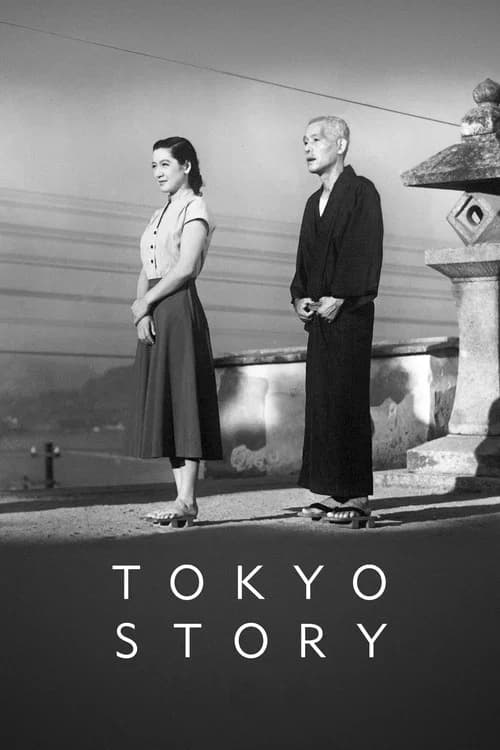
An aging couple travel from rural Onomichi to Tokyo to visit their adult children. They find that they are treated as a burden to be managed, when they should be parents to be cherished. Yasujiro Ozu's masterpiece watches the quiet tragedy of a family drifting apart. It does so with total stillness and devastating precision.
Tokyo Story is a 1953 drama film directed by Yasujiro Ozu. This breakdown covers 5 techniques (3 narrative, 1 sound and 1 cinematography), each with the scene where you can see it. If you like how it is made, 12 Years a Slave uses several of the same techniques.
Watching events from a measured distance with no swelling music, tear-jerking close-ups or showy camera moves. The film trusts what happens to carry the weight on its own.
How this film uses it
Ozu's camera almost never moves or reacts, and it never judges. It simply watches the family fail each other, which leaves all the moral judging to you.
Where to see it
The scene where the children send their parents off to a hot spring resort at Atami so they don't have to spend time with them. It is filmed in still medium shots.
Removing music, background sound or dialogue from a moment where most films would fill it. The quiet forces you to sit with what is on screen.
How this film uses it
During the most painful moments of the film, Ozu uses no music at all and leaves only background sound. You can pretty much hear the distance between people.
Where to see it
Tomi's death scene. You watch it through nearby rooms and hallways, with only the sound of breathing.
Staging a single confrontation where a family visibly breaks apart. It is usually the emotional peak of a slow decline, and it shows how far apart the members really are.
How this film uses it
Every gathering of the Hirayama family shows more emotional distance than the last. Each shared meal is a polite show of closeness that neither side believes.
Where to see it
The family's last gathering after the funeral. Shige is already asking for her mother's clothes as keepsakes, and the other children leave right after.
Framing the story as an old person's memory of events from decades ago. You know from the start how things ended, so even the happy memories carry some grief.
How this film uses it
Ozu refuses to push Shukichi and Tomi into supporting roles in their children's stories. Their disappointment and their dignity are the entire subject of the film.
Where to see it
Shukichi drinking with old friends in Tokyo. His children have already moved on.
Placing characters with care inside a wide frame that is mostly empty space. The emptiness makes them look small, isolated or boxed in by the place around them.
How this film uses it
Ozu works in the nearly square Academy frame of the time. He films tatami rooms, corridors and railway platforms from a low angle. These framings turn everyday Japanese home life into a moral setting, measured with great care.
Where to see it
The final shot. Shukichi is alone in the empty house. Through the window, you can see the horizon of the Inland Sea.
Questions
Tokyo Story: quick answers
What filmmaking techniques does Tokyo Story use?
CineCode breaks down 5 techniques in Tokyo Story (1953): Observational Restraint, Strategic Silence, Familial Dissolution Scene, Elderly Frame Narrative and Minimalist Widescreen Staging.
Who directed Tokyo Story?
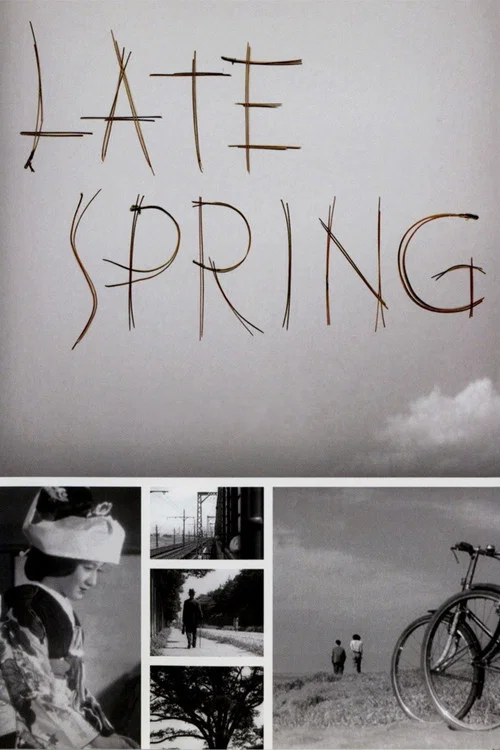
Yasujiro Ozu directed Tokyo Story, released in 1953. CineCode also covers Late Spring (1949).
What films are similar to Tokyo Story?
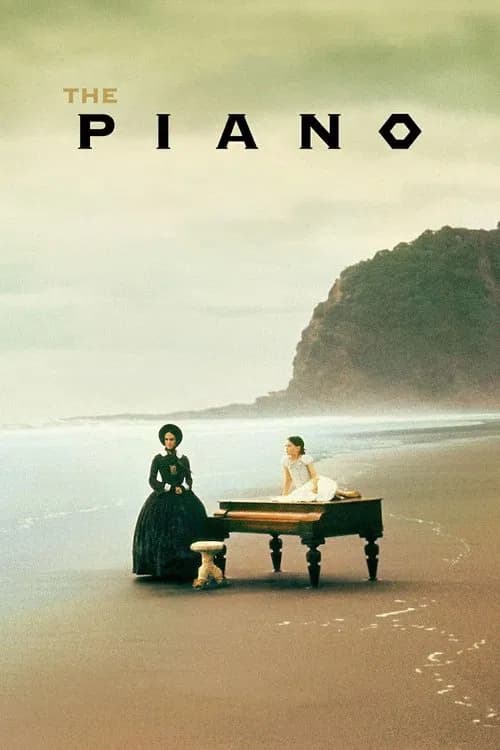
Films that share techniques with Tokyo Story include 12 Years a Slave (2013), A Ghost Story (2017), Manchester by the Sea (2016), The Piano (1993).