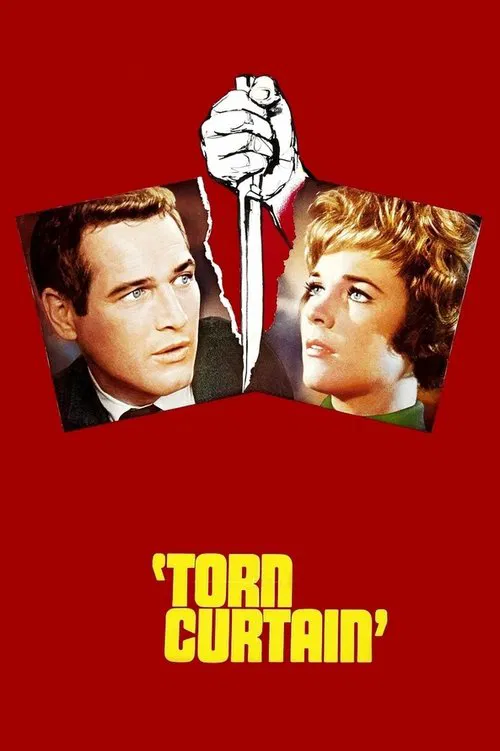
Thriller · Drama · Adventure

Torn Curtain

Alfred Hitchcock, 1966

An American rocket scientist seems to defect to East Germany and his fiancee follows him. He is really on a secret mission to learn a scientist's anti-missile formula, and getting home is the hard part.

Torn Curtain (1966) poster

At a glance

Torn Curtain is a 1966 thriller, drama and adventure film directed by Alfred Hitchcock. This breakdown covers 5 techniques (2 narrative, 1 psychology and 2 editing), each with the scene where you can see it. If you like how it is made, True Lies uses several of the same techniques.

Narrative

The MacGuffin

Giving the characters an object, secret or goal that everyone chases. What it actually is barely matters, because its job is to set the characters against each other.

How this film uses it

The anti-missile equations of Professor Lindt are what everyone wants. The film never explains the math, and the equations matter only because both sides want them. Armstrong goads Lindt into revealing them by making Lindt think he has made mathematical mistakes.

Where to see it

The classroom duel. Armstrong angers Lindt over what Lindt thinks are mathematical errors, and Lindt gives away his equations.

Narrative

Dramatic Irony

Letting the audience know something a character doesn't. You watch them act without that knowledge, which creates suspense, dread or dark comedy.

How this film uses it

Once you learn Armstrong's defection is a ruse, you know more than his fiancee Sarah and his East German hosts. Every scene of him cooperating with them carries a second meaning. You watch Sarah worry about a man you know is not what he appears.

Where to see it

The Leipzig interrogation. Scientists ask Sarah about the American anti-missile program, and she refuses and runs from the room, believing Armstrong has truly defected.

Psychology

Betrayal and Withheld Truth

Driving drama from what one person hides from or fails to do for another. Loyalty goes unrewarded and silence works like betrayal.

How this film uses it

Armstrong hides his real purpose from Sarah, so she believes the man she loves has chosen the enemy. Their closeness is strained by what he cannot tell her. He only confides in her after she runs from the interrogation.

Where to see it

The university escape. Sarah runs from a room of scientists and Armstrong catches up to tell her his real motives.

Editing

Anti-Epic Combat Staging

Refusing the heroic habits of war films, like grand wide shots, rousing speeches and clear victories. Combat is shown from ground level as chaotic, anonymous and traumatic.

How this film uses it

The killing of the Stasi agent Gromek is slow and exhausting. Armstrong and the farmer's wife fight him in a long, clumsy struggle. It feels physical, and neither of them looks like a hero.

Where to see it

The farm struggle. Gromek discovers Armstrong's secret, and he is killed in a tortuous fight by Armstrong and the farmer's wife.

Editing

Kinetic Set Piece Architecture

Building an action sequence as a chain where each solution creates a new problem. The layout of the space stays clear, so the escalation follows its own logic.

How this film uses it

At the ballet, Armstrong and Sarah slip away by shouting 'fire' and letting the panic hide them. Later, they hide in costume hampers shipped to Sweden. Each escape depends on the pursuers looking at the wrong people.

Where to see it

The ballet escape. They are spotted at the ballet, shout 'fire' and escape through the crowd, then are smuggled out in 2 hampers.

Questions

Torn Curtain: quick answers

What filmmaking techniques does Torn Curtain use?
CineCode breaks down 5 techniques in Torn Curtain (1966): The MacGuffin, Dramatic Irony, Betrayal and Withheld Truth, Anti-Epic Combat Staging and Kinetic Set Piece Architecture.
Who directed Torn Curtain?
Alfred Hitchcock directed Torn Curtain, released in 1966. CineCode also covers The 39 Steps (1935), The Lady Vanishes (1938), Rebecca (1940), Suspicion (1941), Saboteur (1942), Shadow of a Doubt (1943).
What films are similar to Torn Curtain?
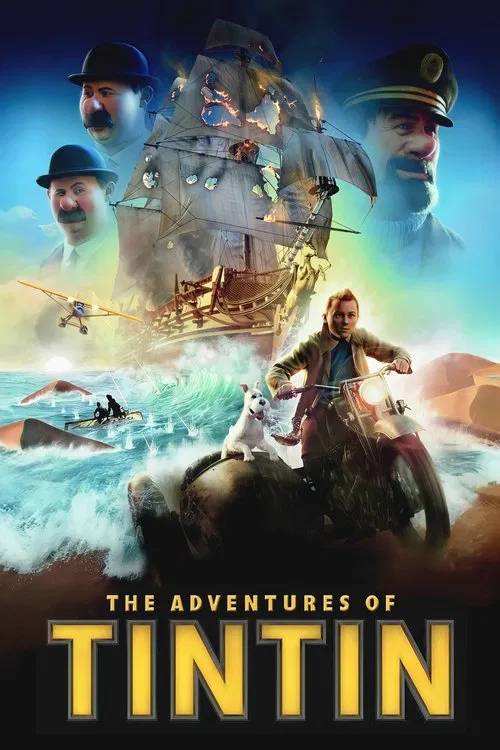
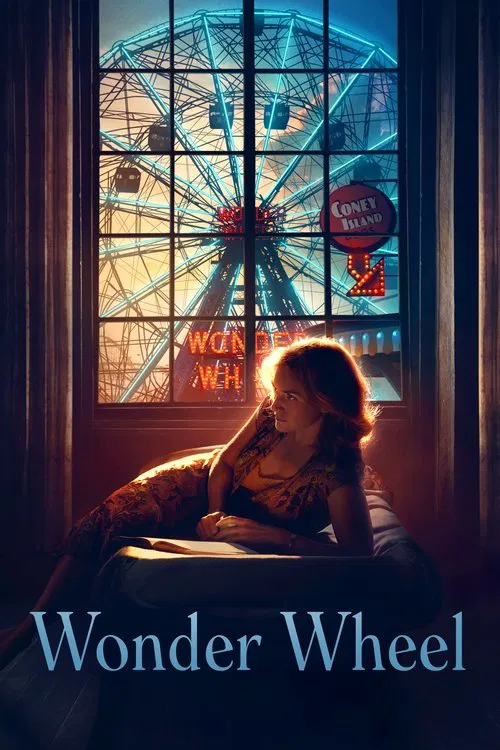
Films that share techniques with Torn Curtain include True Lies (1994), Flight (2012), The Adventures of Tintin (2011), Wonder Wheel (2017).