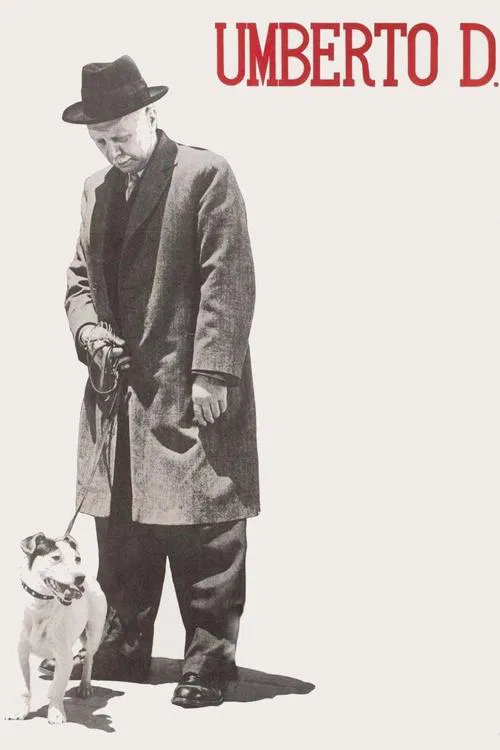
Umberto Ferrari is a retired government clerk in Rome who cannot pay his rent. With his small dog Flike as his only companion, he tries to find money, then a home for the dog, then a way out. A plain, patient film that shows how much you can say by watching an ordinary day.
Umberto D. is a 1952 drama film directed by Vittorio De Sica. This breakdown covers 5 techniques (1 cinematography, 3 narrative and 1 editing), each with the scene where you can see it. If you like how it is made, Bicycle Thieves uses several of the same techniques.
Filming entirely on location in a real city with non-professional actors. The city's texture and its people work as a social document and become part of what the film is saying.
How this film uses it
The film was shot in Rome with mostly non-professional actors, and Carlo Battisti, who plays Umberto, was one of them. The streets look like real life. The city becomes part of the story.
Where to see it
Pension march: Police break up a demonstration by elderly men demanding higher pensions. Umberto is among the marchers.
Making money or one necessary possession the force that moves the plot, so every choice is shaped by what characters can afford or keep.
How this film uses it
The landlady wants her overdue rent by the end of the month. Umberto sells his belongings but raises only a third of it. Every choice he makes from then on is shaped by what he can afford.
Where to see it
Rent due: Umberto sells his belongings but raises only a third of the rent, and the landlady refuses partial payment.
Watching events from a measured distance with no swelling music, tear-jerking close-ups or showy camera moves. The film trusts what happens to carry the weight on its own.
How this film uses it
The camera watches from a calm distance and lets sad things happen with little music or comment. The film trusts each scene to do the work. You notice small details, such as how Umberto keeps looking for Flike.
Where to see it
Park farewell: Umberto leaves Flike playing with children and slips away, but Flike finds him under a footbridge.
Holding on quiet shots of characters watching and taking in the world around them, without cutting away. Glances, gestures and shared silence carry as much as any action.
How this film uses it
The film stays on quiet moments of daily life without cutting away. Time passes the way it does for people with little to do. Glances and gestures carry as much as any line.
Where to see it
Maria's morning: The maid starts her day in the kitchen, and the camera stays with her routine.
Giving a lonely character an animal companion who gives their life meaning. Any threat to the animal raises the stakes more than a speech could.
How this film uses it
Flike is the only creature who stays by Umberto's side. His despair is measured by how he tries to find the dog a home. You fear for the dog as much as for the man.
Where to see it
City pound: Umberto finds Flike at the city pound after the dog ran off from the renovated apartment.
Questions
Umberto D.: quick answers
What filmmaking techniques does Umberto D. use?
CineCode breaks down 5 techniques in Umberto D. (1952): Neorealist Location Grammar, Money as Plot Driver, Observational Restraint, Silent Observation Pacing and Pet as Emotional Anchor.
Who directed Umberto D.?
Vittorio De Sica directed Umberto D., released in 1952. CineCode also covers Bicycle Thieves (1948).
What films are similar to Umberto D.?
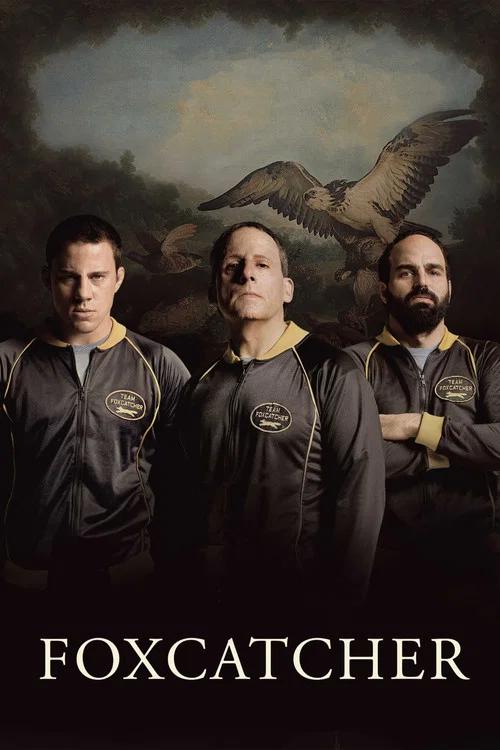
Films that share techniques with Umberto D. include Bicycle Thieves (1948), Foxcatcher (2014), Spirited Away (2001), The Pianist (2002).