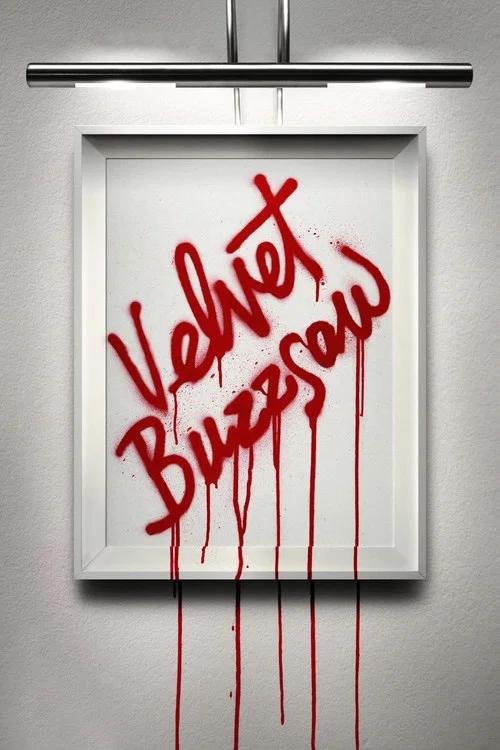
In the Los Angeles art world, a critic, a dealer and an assistant discover a dead man's paintings and decide to sell them. Soon the people who cash in on the work start dying. Gilroy makes a slasher out of gallery openings, and the fun is watching how much the art world deserves it.
Velvet Buzzsaw is a 2019 horror, thriller and comedy film directed by Dan Gilroy. This breakdown covers 5 techniques (3 narrative, 1 psychology and 1 cinematography), each with the scene where you can see it. If you like how it is made, Brazil uses several of the same techniques.
Mocking a specific world, such as an industry, an institution or consumer culture, by exaggerating what is already there. A sci-fi future built from present trends can do this with no direct argument.
How this film uses it
Gilroy exaggerates what is already there: critics who make careers by trashing or praising, dealers who talk about art like stock and artists who are only worth something after they die. The jokes work because the world on screen is not far from the real one.
Where to see it
The Dease discovery. Josephina finds the paintings of the dead Vetril Dease, and the people around her start planning how to profit.
Forcing a creator to choose between the integrity of their work and the human cost of making it. The film asks what a good piece of art is worth.
How this film uses it
Josephina takes Dease's paintings when he wanted them destroyed, and the others start selling them. The film asks what a work of art is worth when making or selling it hurts someone. The art answers back by killing the people who profit.
Where to see it
The decision to sell. The group chooses to market Dease's work even though it was meant to be burned.
Making a machine or object the main threat, with no face and no explained motive. You can't bargain with it or understand it, so the danger feels relentless.
How this film uses it
The threats have no faces or reasons. A painting, a robot and an interactive sculpture go after their victims and cannot be argued with. Each death is cruel and a little absurd.
Where to see it
Gretchen and the Sphere. The night before an exhibit she reaches into the interactive piece, and it malfunctions and takes her arm.
Centering a character's fear of being unimportant, replaced or left behind. Their pursuit of rank, success or recognition shows how fragile their self-worth is.
How this film uses it
Everyone in the film is afraid of being left behind. Morf worries about his reviews, Rhodora about her gallery and Josephina about being a nobody. The paintings feed on that fear, and so does the plot.
Where to see it
Morf and the Hoboman. He is chased by a robotic piece he had once panned in a review.
Designing the sets to reflect what is going on inside a character. The place they live in tells you things about them that the dialogue doesn't.
How this film uses it
The clean white galleries and the polished homes look like places where nothing real could happen, which is the point. The art on the walls is lit like products. When the art starts attacking, the spaces feel like traps built to display it.
Where to see it
The gallery exhibits. The film puts the Sphere installation and the paintings in bright, cool rooms before they turn deadly.
Questions
Velvet Buzzsaw: quick answers
What filmmaking techniques does Velvet Buzzsaw use?
CineCode breaks down 5 techniques in Velvet Buzzsaw (2019): Environmental Satire, Art Versus Life Dilemma, Object as Antagonist, Status and Self-Worth Anxiety and Production Design as Psychological Space.
Who directed Velvet Buzzsaw?
Dan Gilroy directed Velvet Buzzsaw, released in 2019. CineCode also covers Nightcrawler (2014).
What films are similar to Velvet Buzzsaw?
Films that share techniques with Velvet Buzzsaw include Brazil (1985), The Zero Theorem (2013), Time Bandits (1981), 28 Years Later: The Bone Temple (2026).