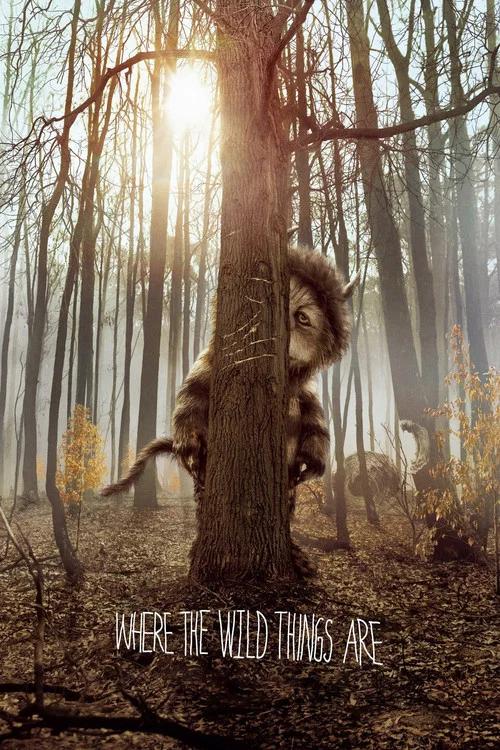
After a fight with his family, 8-year-old Max runs away and sails to an island of huge, moody monsters who crown him king. He tries to keep them happy and finds that he cannot. Look at how real the creatures feel, since they were mostly built as physical suits.
Where the Wild Things Are is a 2009 fantasy, adventure and family film directed by Spike Jonze. This breakdown covers 4 techniques (1 cinematography, 1 psychology, 1 sound and 1 narrative), each with the scene where you can see it. If you like how it is made, Frankenstein uses several of the same techniques.
Creating effects physically on set with makeup, prosthetics, built props and camera tricks, with no computer graphics added later. The results look solid and real.
How this film uses it
The Wild Things were played by performers in suits with animatronic heads built by Jim Henson's Creature Shop. Digital work was added later to give their faces expression. Because the creatures were physically there, Max reacts to something real, and you can feel the weight when they touch him.
Where to see it
Max meets the Wild Things. They nearly eat him before he talks them into crowning him king.
Pairing the main character with a second character who mirrors them. The double shows what the hero wants, fears or secretly is.
How this film uses it
Each monster is a piece of Max's own mood, and Carol is the angry one who looks most like him. When Carol melts down over the fort, Max sees the kind of person his own rage could make him. The monsters show what he cannot yet say.
Where to see it
Carol's meltdown. Carol loses his temper over the fort and Max's failure as a king.
Writing songs for the film that carry story, feeling or payoff. Characters burst into music or a theme song resolves the plot.
How this film uses it
Karen O and Carter Burwell wrote the music, and Karen O's songs carry feeling the characters cannot name. The songs sound childlike and rough, like something Max might sing. They fill the gaps that dialogue leaves.
Where to see it
Max's goodbye. The Wild Things see him off, and Carol howls as the boat sails away.
Shaping the story with fairy tale elements such as quests, enchanted figures and moral tests, or letting them break into a realistic world.
How this film uses it
Max leaves home after a fight, sails across the sea to an island of strange creatures, and is crowned king. He has to pass a test, which is to keep everyone happy, and he fails. Then he sails home to a plate of supper. The old shape gives a child's tantrum a mythic size.
Where to see it
The trip out and back. Max bites his mother, runs away by boat, and later sails home and reconciles with her.
Questions
Where the Wild Things Are: quick answers
What filmmaking techniques does Where the Wild Things Are use?
CineCode breaks down 4 techniques in Where the Wild Things Are (2009): Practical In-Camera Effects, Psychological Doubling, Original Songs as Narrative and Fairy Tale Structure.
Who directed Where the Wild Things Are?
Spike Jonze directed Where the Wild Things Are, released in 2009. CineCode also covers Being John Malkovich (1999), Adaptation. (2002), Her (2013).
What films are similar to Where the Wild Things Are?
Films that share techniques with Where the Wild Things Are include Frankenstein (2025), Lost Highway (1997), Fear and Desire (1953), Point Break (1991).