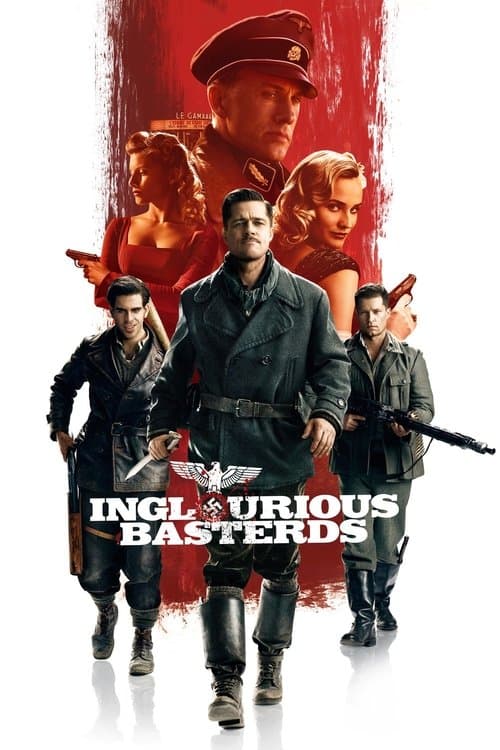
Inglourious Basterds
Quentin Tarantino · 2009
Two separate plots to assassinate Nazi leadership converge on a Paris cinema in 1944: a Jewish refugee who has rebuilt her identity and a unit of Jewish-American soldiers who scalp Nazis. Tarantino rewrites World War II as a revenge fantasy delivered through the grammar of cinema itself.
Techniques Used
4 techniques identified in this film
Genre Collage
NarrativeAssembling a film from multiple genre traditions simultaneously — so that the work belongs to several genres at once and uses each genre's conventions to comment on the others.
How this film uses it
The film is simultaneously a spaghetti Western (the opening chapter, the face-offs, the Morricone score), a war film (the Basterds' mission), a thriller (the tavern scene), and a revenge fantasy. Each chapter adopts a different genre's visual language, making the film's argument about cinema — that it can rewrite history — through formal means.
Unbroken Dialogue Scene
EditingAn extended scene of sustained dialogue — running well beyond conventional scene length — that builds unbearable tension through conversational escalation rather than action.
How this film uses it
The tavern scene runs over twenty minutes and is almost entirely dialogue. Landa's interrogation of the Basterds' cover story tightens with each exchange — the audience understanding the danger before the characters acknowledge it. Tarantino proves that conversation can generate more dread than action through control of what is and isn't said.
Anachronistic Soundtrack
SoundPlacing music from a different era onto a historical film, creating deliberate anachronism that comments on the relationship between past events and present cultural memory.
How this film uses it
David Bowie's 'Cat People' plays over Shosanna preparing for the cinema's final night. Tarantino places 1980s pop against 1944 Paris not as error but as argument: this is a film about how contemporary imagination reclaims historical violence. The anachronism is the point — we are watching the past through the present's eyes.
Pop Culture Monologue
NarrativeExtended speeches in which characters demonstrate encyclopedic knowledge of films, music, or cultural artifacts — the monologue functioning as both character development and authorial commentary.
How this film uses it
Hans Landa's conversational style is a sustained performance of film-historical knowledge and rhetorical control. His speeches about detection, about milk, about cinema — always perfectly constructed — reveal a man who understands that reality is performance. Tarantino uses the monologue to make Landa the film's most terrifying character through words alone.
You Might Also Like
Films that share at least one technique with Inglourious Basterds
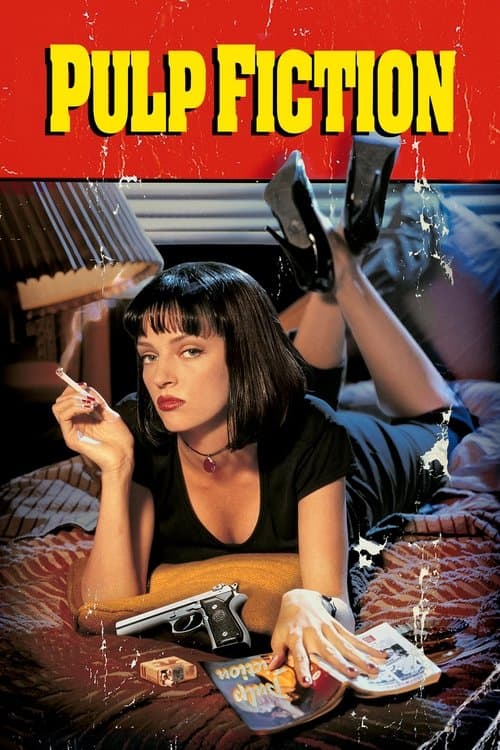
Several intersecting criminal storylines play out across Los Angeles in a non-linear structure that scrambles chronology to create new meaning from familiar genre material. A film about violence, redemption, and cinema itself — assembled from pop culture into something genuinely original.
Pulp Fiction
Quentin Tarantino · 1994
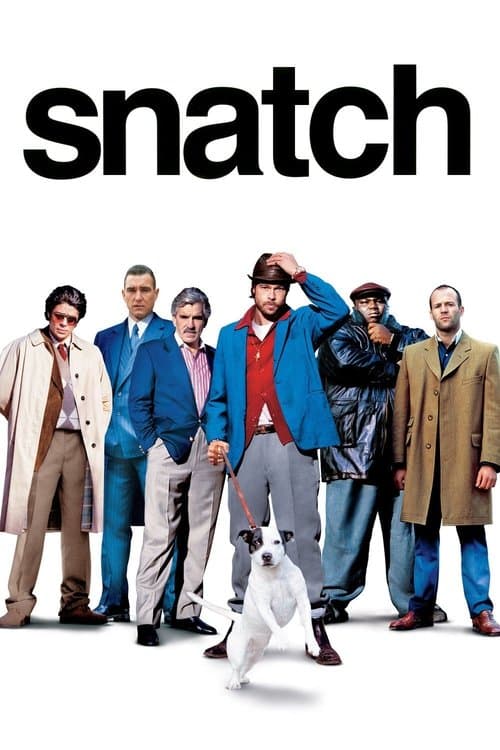
A stolen diamond passes through London's criminal underworld — through bare-knuckle boxing promoters, incompetent thieves, a gypsy fighter, and a psychotic gangster — in a film that manages to make elaborate coincidence feel inevitable.
Snatch
Guy Ritchie · 2000
A stolen diamond, a bare-knuckle boxing match, and a series of spectacularly unlucky criminals converge in a chaos of escalating misfortune across London's criminal underworld. Guy Ritchie's second feature is a machine for controlled disorder — every complication is the setup for a worse complication.
Snatch
Guy Ritchie · 2000